
After Drywall Repair: Touch Up, Repaint One Wall, or Paint the Room?
Updated September 23, 2026
A drywall repair does not automatically require painting the whole room. Choose the smallest painting area that can meet your agreed appearance expectations.
- Trusted since 2005
- Fully insured
- Dust-controlled sanding
- Paint-ready finishing
- 3-year workmanship warranty
Quick Answer
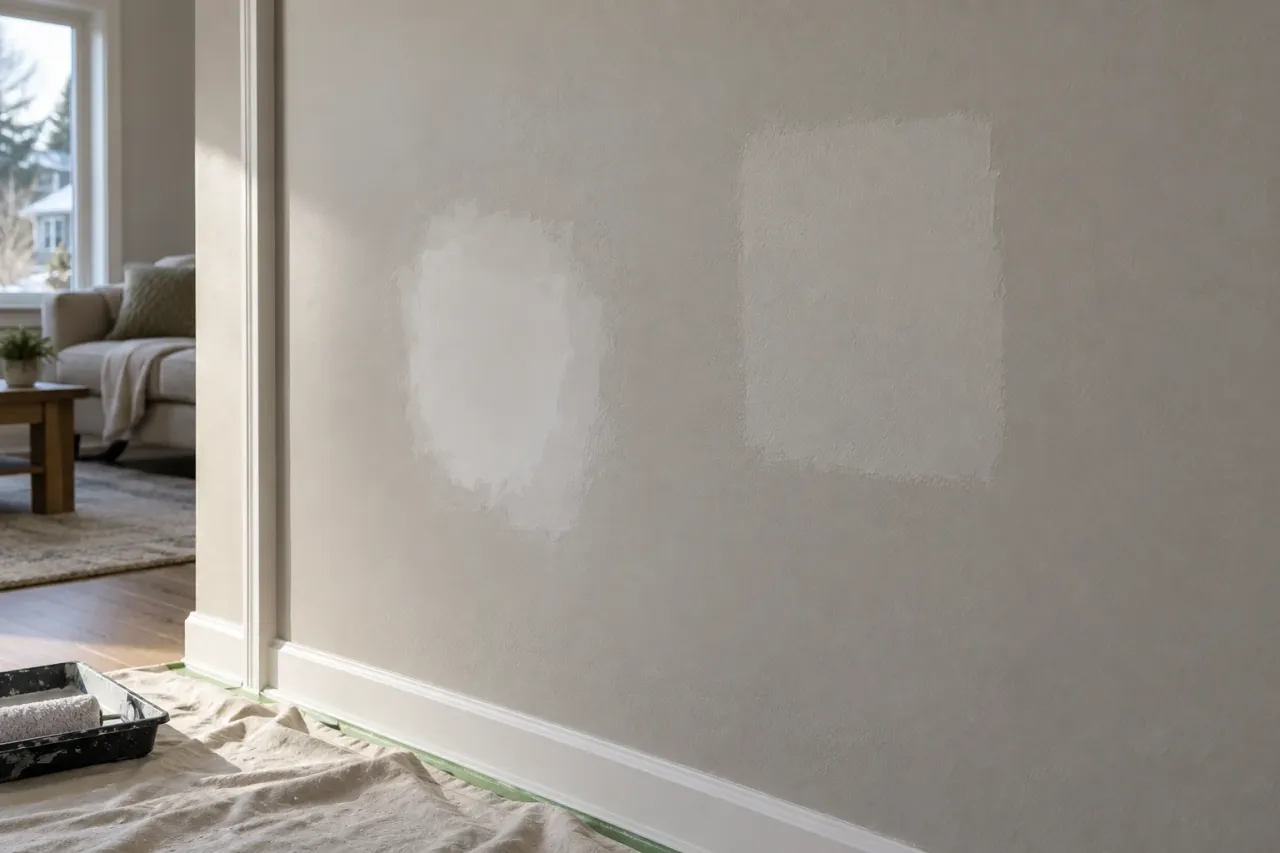
A touch-up may work when the repair is properly prepared and the existing paint can be matched acceptably. If the dried test remains visible, painting the affected wall to its natural boundaries is often the more dependable next step. Repainting the room is a separate choice for colour consistency, widespread wear or multiple affected surfaces; it is not an automatic requirement after one repair.
You do not automatically need to repaint a whole room after drywall repair. The right painting boundary depends on the repaired surface, the existing coating and the appearance you expect once the paint has dried. A small, well-prepared repair may accept a reasonable touch-up. A visible patch on a continuous wall may need that wall repainted. Neither situation automatically means the ceiling, trim and remaining walls belong in the same quotation.
When arranging professional drywall repair, ask where the repair work ends and the painting work begins. A paint-ready patch, a primed repair and a finished painted wall are different deliverables. Defining that handoff before work starts makes it easier to compare estimates and avoids discovering at the end that the price only covered compound and sanding.
Choose the painting boundary before comparing prices
| Option | When to consider it | What to confirm |
|---|---|---|
| Touch up the repaired area | A small prepared repair with an acceptable dried paint match | Test area, product, sheen and expectations |
| Repaint one wall | Touch-up remains visible or several repairs share a wall | Corner-to-corner boundaries and preparation |
| Repaint the room | Several surfaces need work or a colour change is wanted | Exactly which walls, ceiling and trim are included |
| Repair the surface again first | A ridge, depression or failed joint remains visible | Correction before more primer or finish paint |
Start with the repair quality rather than choosing a paint quantity. Repainting a whole wall will not flatten a raised patch. Similarly, a perfectly flat repair can still show because the surrounding coating has a different colour, texture or sheen. These are different problems with different solutions. The useful sequence is to assess the substrate, prepare it correctly, then decide how much painting is needed.
Identify what is visible before adding another coat
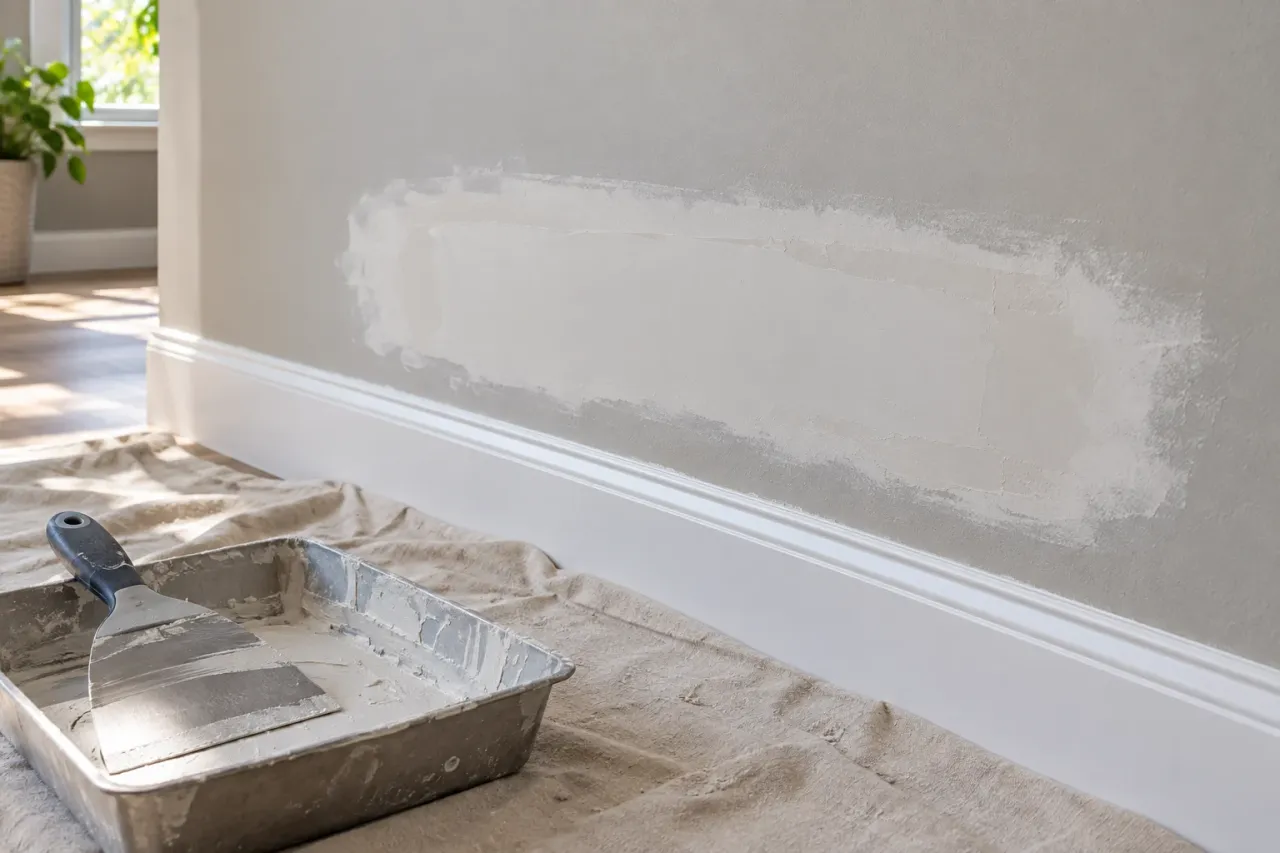
A patch can show as a physical edge, a hollow, a texture change or a difference in reflected light. Look from the normal room positions and note whether the mark changes as you move. A clear shadow beside a raised edge suggests a surface-shape issue. A patch that looks similar head-on but changes under side light may involve sheen or texture. Photographs can help explain the concern, but they do not always establish its cause.
Our guide to why drywall patches show through paint covers that diagnosis in more detail. This article starts at the next decision: once the repair is sound, how much of the room should be painted? Keeping those two decisions separate prevents a broad repaint from becoming an expensive attempt to hide a repair that still needs correction.
If the wall is damp, the paint is repeatedly bubbling or a crack continues to change, discuss the underlying condition before choosing a decorative finish. The repair should not simply conceal an unresolved issue. Stop at the assessment stage when the cause is uncertain. A painting scope can be finalized once the wall is suitable for finishing and the necessary repair boundaries are understood.
Gather the paint information you actually need
A colour name is useful, but it is not the whole specification. Photograph the label on any retained paint can, including the product line, sheen, base and tint information where available. Note whether the wall was rolled, brushed or sprayed if you know. Two products using the same colour name may still look different on a wall because their coating and application characteristics are not identical.
Leftover original paint can be useful for testing, provided it remains suitable to use. Do not assume every stored can is usable or that its label proves what was applied to the wall. A previous owner may have kept several similar colours. Ask the painter to assess the material and make a test in the agreed location rather than applying it across multiple repairs before confirming the match.
If no reliable paint information remains, matching starts with an approximation and an appearance test. A colour-matching service can help, but the result still needs to be evaluated on the prepared surface after drying. Tell the estimator when a close match is acceptable and when you want a uniform wall with no noticeable repair boundary under the room's usual lighting.
When a local touch-up is worth trying
A small repair in a less conspicuous area may be a reasonable candidate for touch-up, especially when a matching coating is available and the surrounding finish is in good condition. The size of the original hole is not the only consideration. A sound repair often extends beyond that opening through feathered compound and primer. The actual painting area should follow the preparation, not a tiny outline around the damage.
A low-sheen surface can be more forgiving, but that does not guarantee an invisible repair. Existing roller texture, previous cleaning, coating condition and the direction of light still affect the result. A touch-up behind furniture may be satisfactory even if the same finish would disappoint on a feature wall. Agree on the intended viewing conditions and result rather than promising that a particular sheen always blends.
The important advantage of a test is that it limits uncertainty. If the touch-up works, the scope can remain small. If it does not, you have evidence for a full-wall repaint before spending time repeatedly enlarging the painted spot. Include that decision point in the quotation so both parties know whether the test is part of the agreed work and how an expanded scope will be priced.
Use a prepared, dried test instead of guessing
The repair needs to be properly finished and ready for coating before a paint match can be judged. Dust, raw compound, glossy surrounding paint or an uneven repair can distort the result. The painter should choose suitable preparation and primer for the substrate and finish system. A trial over an unfinished patch does not fairly test what the completed painted wall will look like.
Have the test applied with a method suited to the surrounding wall. A brushed square on a rolled wall may introduce an application difference that has little to do with colour. Let the coating reach the manufacturer's recommended assessment or drying condition, then view it from the usual doorway, seating area and other normal positions. Wet paint is not a reliable basis for the final decision.
Inspect in the light you actually use. Daylight from a window and evening lighting can show different aspects of the finish. If a test is acceptable only when the blinds are closed, discuss whether that meets the intended result. Record the decision with the painter before continuing so the rest of the work follows an agreed standard rather than changing expectations halfway through.
For basic product-selection context, Benjamin Moore's touch-up guidance discusses matching colour and sheen. Use the specific coating's instructions for preparation, application and drying. Manufacturer guidance helps select a system, but the practical acceptance decision still belongs to the actual wall, lighting and agreed project scope.
When repainting the entire affected wall is sensible
If the prepared test remains conspicuous, painting the wall to natural boundaries often makes more sense than chasing the edge of the touch-up. Corners and architectural breaks define a clear stopping point. The painter can produce a more consistent application across that plane without attempting to merge fresh paint into the middle of an older finish. Surface defects still need correction before that repaint begins.
Multiple repairs on one wall can also favour broader painting, but there is no universal number of patches that makes it mandatory. Consider their combined preparation area, spacing, visibility and the condition of the surrounding coating. Several small repairs near one another may effectively become one broad finishing area. A single repair in strong light may be more demanding than several inconspicuous marks elsewhere.
Do not stop at an arbitrary vertical line beside a patch simply because it reduces the measured paint area. The line can remain visible across a continuous plane. Discuss the real boundary, including sections above doors, narrow returns and walls extending into adjoining spaces. A photograph marked with the intended start and stop points is often clearer than an estimate that says only paint one wall.
One wall does not automatically mean the whole room
Adjacent walls meet at corners where changes in light can make a close colour match less conspicuous. That can allow one wall to be repainted while the rest remain as they are. It is still worth reviewing a sample if colour consistency is important. A corner is a useful boundary, not a guarantee that different coatings will become indistinguishable.
A room repaint becomes reasonable when several walls need preparation, a new colour is wanted or the remaining coating has widespread wear. It may also fit a larger renovation where furniture is already moved and the room is being refreshed. Those are positive reasons to expand the job. They should be explained separately from the requirements of repairing one hole or seam.
Ceilings, doors, baseboards and window trim remain separate surfaces unless the written scope includes them. A full-room wall repaint does not automatically cover every painted object in the room. Ask for each surface to be named. This is especially useful when a small drywall job turns into a broader refresh and several conversations have gradually changed what everyone thinks is included.
Primer, drying and texture belong in the scope
Primer is part of preparing a suitable base for the finish paint. It cannot flatten a proud edge or replace the reinforcement needed in a failed joint. Discuss which areas need priming and whether corrections made after the first inspection will be primed again. The visible whiteness of compound does not mean the surface has already been sealed or is ready for a finish coat.
Allow the repair materials to become ready for coating according to the system used and actual room conditions. Our guide to drywall repair drying time before primer and paint explains why hardening and drying are different milestones. A rushed painting appointment can produce unnecessary rework if the surface preparation has not reached the appropriate stage.
Texture matching matters even on walls described as smooth. Roller stipple, earlier coats and the prepared patch can reflect light differently. Explain whether the job aims to blend with the retained finish or improve the entire plane. A full-wall repaint can unify application texture to a degree, but broad substrate differences may require additional preparation. Make that decision before assuming more paint will solve every variation.
Compare quotations using the same finish boundary
Ask each contractor to identify repair preparation, dust control, primer, finish coats, painting area, trim protection and cleanup. Confirm the selected paint system and responsibility for supply. A quotation for patching and spot priming cannot be compared directly with a quotation for a repaired, fully painted wall. The headline amount only becomes meaningful once the deliverables match.
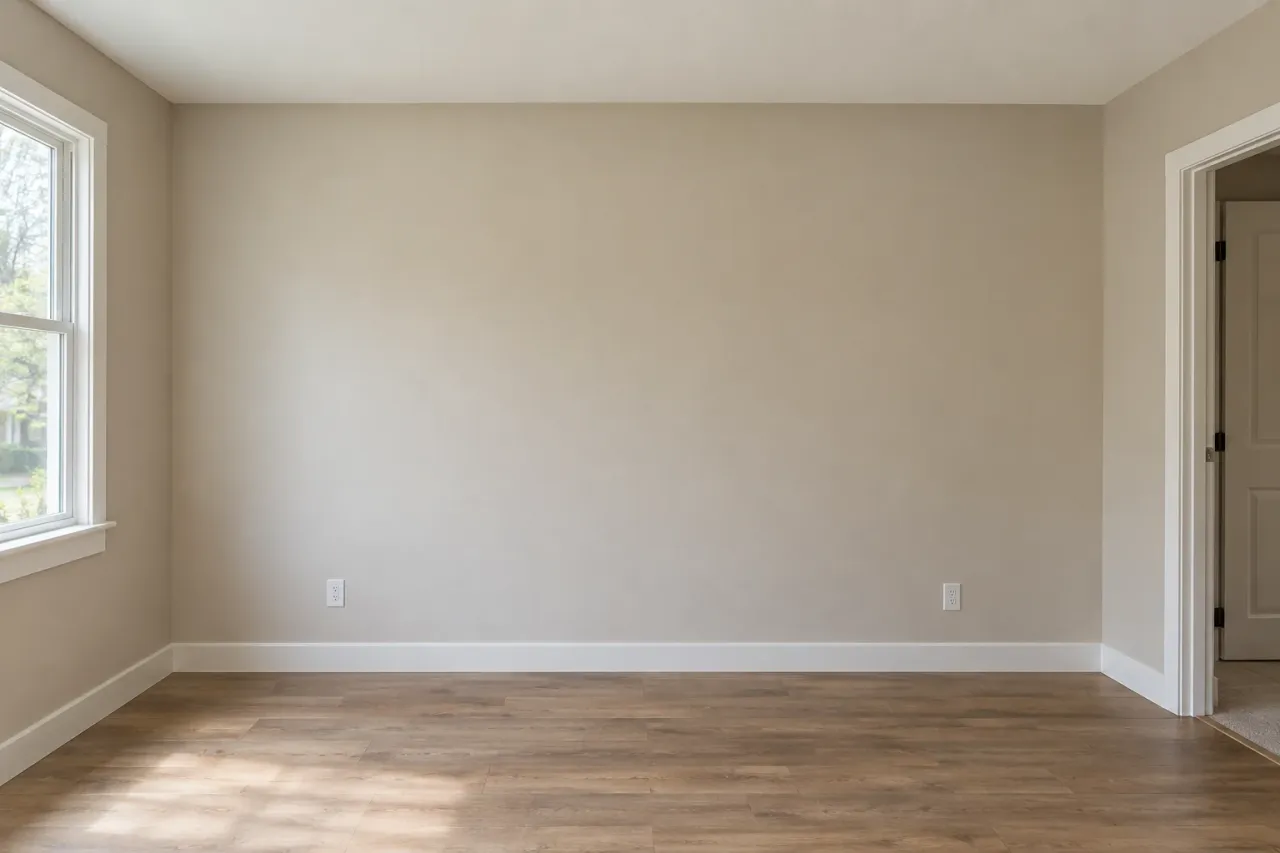
Our drywall repair quotation checklist helps organize those questions. For this decision, add the test area, acceptable outcome and full-wall alternative. Confirm how additional work will be approved if the first test is unsuitable. A clear option price is more useful than an open-ended instruction to keep trying until nobody can find the patch.
Access and setup can be significant even for a modest repair. Moving furniture, protecting flooring and allowing drying visits take time regardless of the original hole size. Repainting a tall stairwell wall introduces different access needs from repainting a small bedroom wall. Provide the height and complete wall dimensions so the estimator can price the actual surface and access rather than infer them from a close-up.
A simple homeowner decision sequence
First, establish that the repair is sound and the surface is suitable for decoration. Second, identify the existing paint as closely as possible. Third, agree whether a touch-up test is worthwhile. Fourth, judge the dried result under normal lighting. Finally, choose the defined wall or room boundary if the smaller scope cannot meet the agreed appearance expectation.
Keep the decision in that order even when a deadline is approaching. Booking the final painter before the repair has been assessed can leave no allowance for corrections or drying. If the room is being prepared for photography, furniture delivery or a move, discuss those dates early and allow room for the chosen sequence. A practical schedule includes the possibility that a test will lead to wider painting.
Coordinating drywall repair and painting with EPF
EPF works across the GTA and nearby communities. The scope should follow the actual wall, access and finish rather than a city-based assumption about what a repair needs. Our interior painting service can be considered alongside the drywall work when the intended result is a finished surface instead of a patch left ready for another painter.
For a useful assessment, send a wide wall photo, the repair close-up, room and wall dimensions, ceiling height and any paint information. Include a photo taken with the room's normal lighting on. Say whether the remaining walls are staying the same colour and whether the ceiling or trim is part of the request. Those details help define a proportionate job without automatically expanding one repair into an entire-room repaint.
FAQ
Must I repaint the whole room after one drywall repair?
No. A touch-up or a repaint of the affected wall may be enough. A room repaint is a separate decision based on colour goals, widespread wear, multiple affected walls and the appearance you want.
Does leftover original paint guarantee a match?
No. It provides useful product information and may be suitable for testing, but wall condition, application texture and sheen can still affect the match. Assess a prepared test after drying.
Will another coat hide a raised drywall patch?
Paint does not flatten a raised repair. The surface should be assessed and corrected before adding more coating or expanding the repainting area.
What does corner-to-corner painting include?
It should identify the complete wall plane and any returns or connected sections. Ask for the boundary to be described or marked on a photo; ceilings, trim and other walls are separate unless included.
Is primer included in drywall repair?
It depends on the quotation. Confirm whether the deliverable is unfinished, ready for primer, primed or fully painted, and identify the products and surfaces included.
Useful next steps
Plan the Right Drywall Service Next
Drywall repair services
Define the repair before choosing the painting area.
Interior painting
Plan a finished wall or room.
Why patches remain visible
Separate surface defects from paint differences.
Compare repair quotations
Check preparation, paint and cleanup inclusions.
Request a repair and painting quote
Send wall photos and paint details.
Field Photos
What the Work Can Look Like
Article Review
AuthorEPF Pro Services
Reviewed byEPF Pro Services
UpdatedSeptember 23, 2026
Plan your drywall scope
Get a drywall quote today
Share photos, room sizes, and timing. We reply the same day with GTA drywall availability and a clearer written scope.
Quick next step