
How to Compare Drywall Repair Quotes for an Occupied Home
Updated November 8, 2026
Compare drywall repair quotes against the same repair map, painted area and household access plan. The useful price is the one attached to a clearly agreed result.
- Trusted since 2005
- Fully insured
- Dust-controlled sanding
- Paint-ready finishing
- 3-year workmanship warranty
Quick Answer
To compare drywall repair quotes, give each contractor the same damage photos, room details and finish requirements, then resolve any differences in writing. For an occupied home, include furniture clearance, the route through the house and return visits. Compare the confirmed totals only after the repair and painting boundaries match.
Knowing how to compare drywall repair quotes starts with deciding what you need back when the work is finished. Is it a closed opening ready for your painter, one completed wall, or a room you can put back together without arranging another trade? In an occupied home, those decisions affect your daily routine as well as the invoice. A short description such as “repair living room wall” leaves too much open to interpretation.
At EPF Pro Services, our drywall repair service can be scoped around the damage, surrounding finish and access available in your home. The comparison method below helps you turn two different proposals into a useful decision. It is especially helpful when you have furniture in place, several small repairs across different rooms, or a limited window between other renovation tasks.
How to compare drywall repair quotes using one room brief
| Decision | Your instruction to every contractor | Clarify if different |
|---|---|---|
| Repair boundary | Identify each damaged area on the same photos | What surrounding material must also be repaired? |
| Finished appearance | Name the surface that should be ready to use | Does painting stop at the patch or a room corner? |
| Household access | Show furniture and the route into the room | Who clears, protects and restores each area? |
| Schedule | State when the room must be available | Which stages and return visits are included? |
| Uncertain conditions | Share damage history and known limitations | How are additional findings priced and approved? |
Use the table before asking which price is better. A missing answer is a question to resolve, not proof of poor workmanship. Contractors may reasonably propose different methods because they have interpreted the photos differently. Ask them to explain the difference and revise the scope where necessary. Keep the final versions together so an old estimate does not accidentally become your reference during the job.
Draw a repair map that everyone can follow
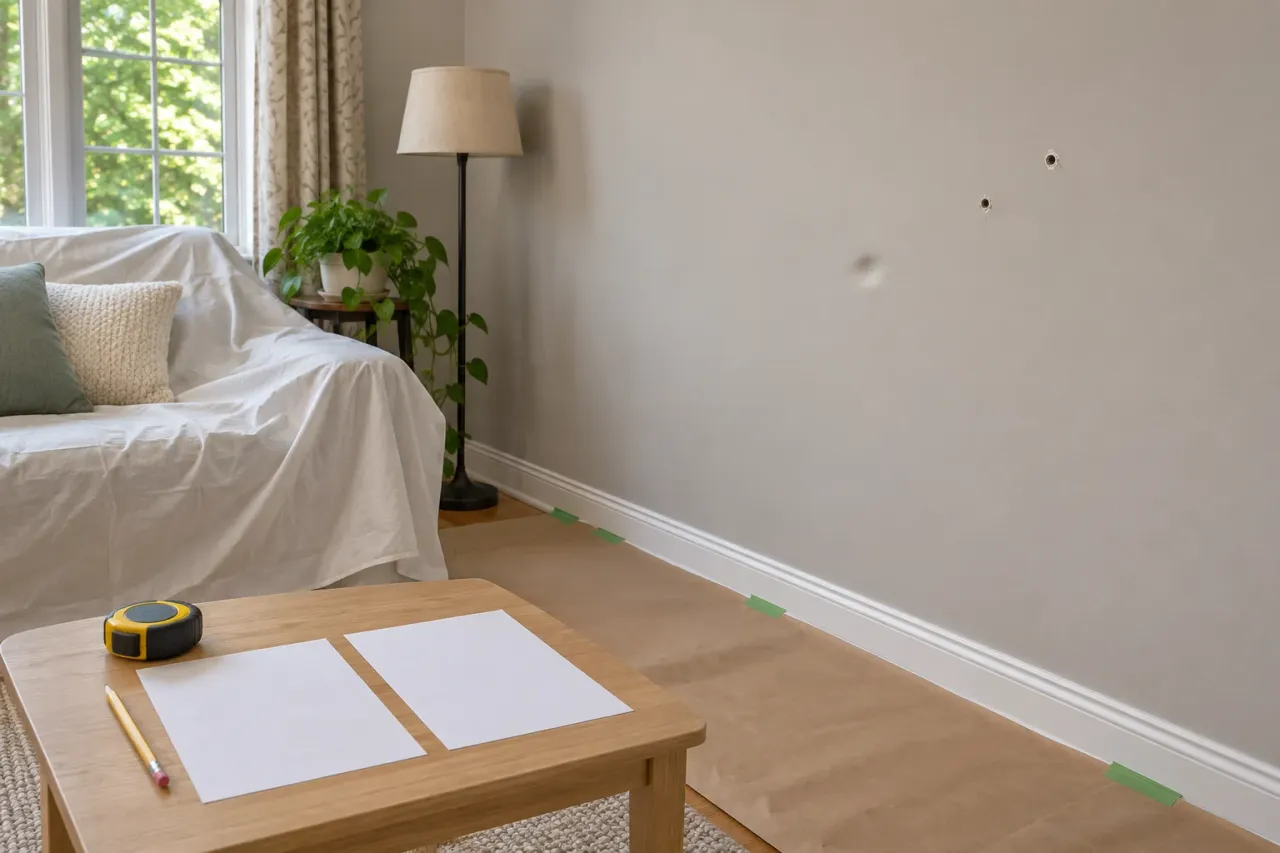
Number each repair on a simple room sketch or a set of wide photographs. For example, identify the old curtain fixings beside the window separately from the plumbing opening behind the sofa. These are hypothetical planning examples, not completed EPF projects. The point is to make sure both contractors have priced the same collection of defects rather than assuming that every mark visible in the room is included.
Add a close photograph and approximate measurements for each numbered area. Record whether it is a wall, ceiling, inside corner or outside corner. Mention anything you know about its history: an accidental impact, a removed fixture, an old repair that reopened, or access made by another trade. Do not enlarge an opening or disturb an uncertain coating simply to make the photograph clearer.
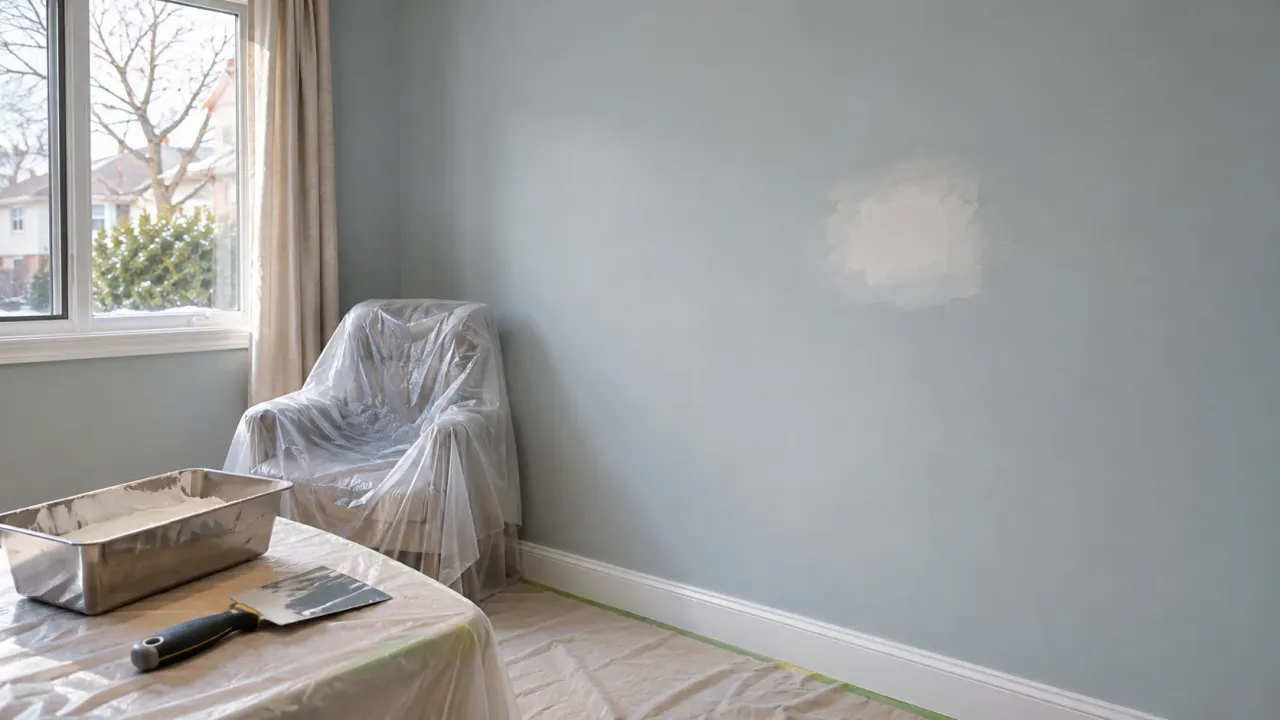
Then distinguish the damage footprint from the finishing footprint. Compound commonly extends beyond the original opening to make a gradual transition. Painting may extend much farther. If a quote describes only the hole dimensions, ask whether the wider finishing area is included. This simple distinction prevents a homeowner from expecting a fully blended wall when the contractor has priced only the local drywall work.
Choose the endpoint before negotiating the amount
“Finished” can mean different things in a conversation. One proposal may end with sanded compound. Another may include primer, while a third includes the final paint coats. Write down who is responsible for the next stage. If your own painter is coming later, ask that painter what condition they expect and whether they want to supply the primer as part of their coating system.
A useful endpoint describes both the work and its boundary. “Repair the numbered opening and prepare the wall for painting” is more informative when it also identifies who primes, who corrects defects found after priming and who paints. “Repaint the repaired wall from corner to corner” gives a clearer visual boundary than “paint to match,” particularly on an older eggshell or satin finish.
Our drywall repair quote inclusion checklist covers the individual trade items to look for. Use this article alongside it to decide whether different proposals will leave your household with the same completed result. A long specification is not automatically a better quote; the important details are those that settle your actual repair and handover.
Where does the painting stop?
Look at the wall under daylight and the lights you normally use in the evening. A patch near a window may be more noticeable than one inside a cupboard. Existing paint may have changed through wear, cleaning or exposure. Even the correct colour name does not establish that a small touch-up will blend with the surrounding sheen and roller texture.
Ask each contractor to separate the preferred painting scope from any optional wider repaint. That lets you compare a local touch-up, a complete wall and a room repaint without mixing them into one unexplained amount. The guide to choosing the paint area after drywall repair explains those boundaries in more detail. Choose according to the room and your expectations, not a promise that a colour code makes every repair invisible.
Price the room as it will actually be occupied
A photograph focused tightly on a hole can hide the biggest access issue: the bed, desk or sectional directly in front of it. Send a wide view showing those objects. Explain whether you can move them before work starts or need that work included. Heavy or fragile items may require separate arrangements, and a contractor should not discover those requirements after arriving with finishing materials.
Discuss the path between the entrance and the work area as well. Stairs, narrow hallways and a shared family entrance affect protection and carrying materials. For ceiling work, clearance below the repair matters even when the damaged area is small. Ask where equipment and materials can remain between visits, and which doorways or rooms will be unavailable while the work area is set up.
Think through ordinary use of the home: a child coming back from school, a pet that follows people through doors, or a work call in the next room. Tell the contractor about those constraints so the proposed schedule reflects them. They do not necessarily prevent the work, but they can change how it is organized and whether repairs should be grouped or staged.
Compare protection and cleanup as specific tasks
“Clean work” is easier to assess when the quote explains what gets protected and what gets cleaned. Ask about flooring, adjacent furniture, nearby shelving and the route through the house. Establish what you should remove beforehand, particularly small objects, textiles and electronics. Protection cannot work well if the work area is repeatedly opened or items are moved into it during finishing.
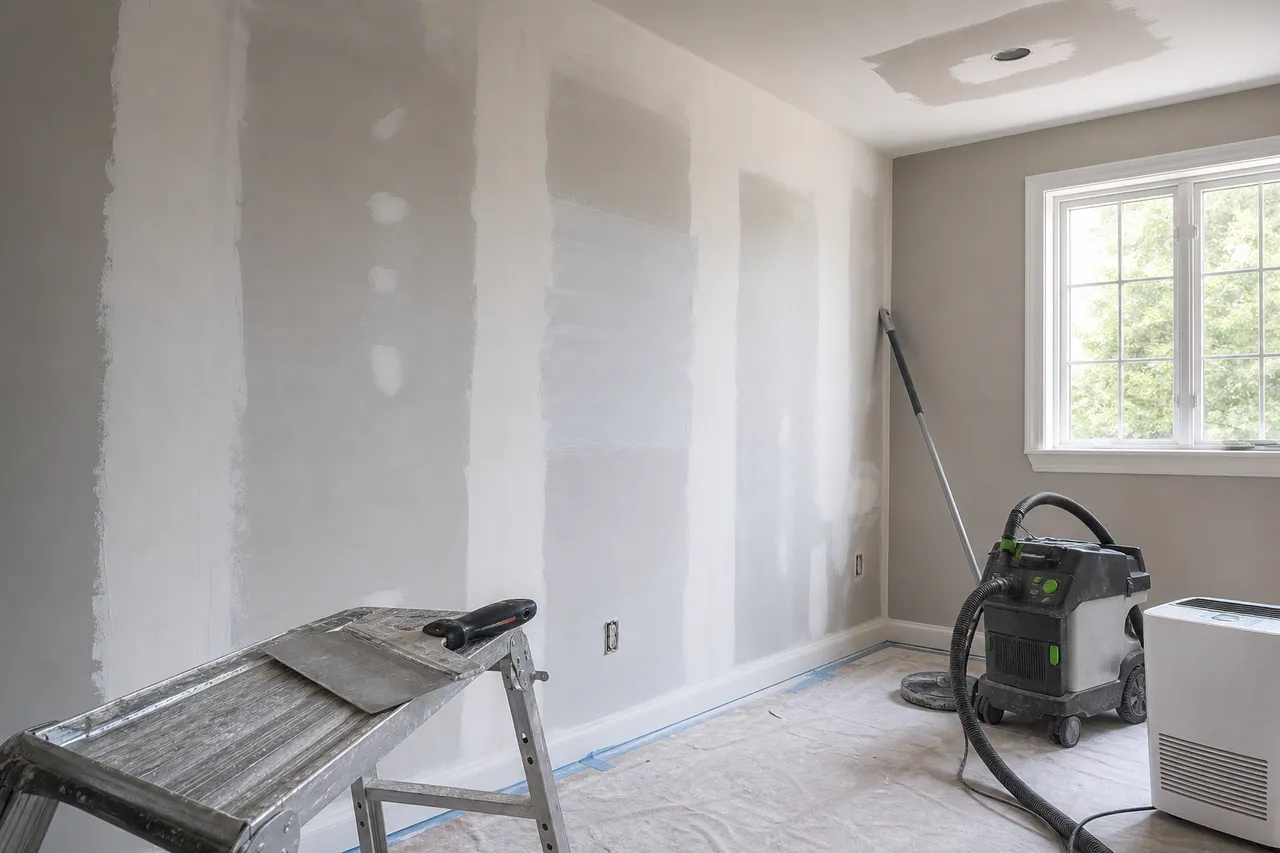
EPF uses dust-controlled sanding with HEPA vacuum systems where suitable, together with protection and cleanup. This reduces ordinary finishing dust but does not make renovation completely dust-free. A useful comparison asks how sanding dust is controlled at the work, how adjacent spaces are separated and what happens before the protective materials are taken away. Equipment names alone do not describe the whole process.
Clarify the final cleanup boundary too. Removing drywall debris and vacuuming the work zone is different from cleaning every cupboard or laundering soft furnishings. If you expect a particular room reset, discuss it before booking. Agree who puts furniture back and when it can safely return near newly painted surfaces. That avoids treating fresh paint as fully cured simply because the tools have left.
Separate working time from the room's calendar time
A repair may involve several short visits rather than one continuous day. Your household still needs access arrangements for each visit, even when the contractor is on site briefly. Ask for the likely sequence and the conditions that could require a return. A clear schedule should accommodate the actual compound and coating requirements rather than use your preferred finish date as a substitute for surface readiness.
If one proposal promises a much earlier finish, ask what its endpoint is and what assumptions support the timing. It may cover a smaller paint area, use a different suitable material or assume a cleared room. Our one-day drywall repair planning guide helps distinguish a feasible short repair from a deadline that leaves no room for drying or correction.
Compare the disruption you can realistically manage. Grouping several repairs may reduce repeated setup, but it can also take several rooms out of use at once. Staging one room at a time may be more practical for an occupied home. Ask for those alternatives as separate options. The lowest total and the least disruptive plan are not always the same choice.
Need help defining the same scope for each estimate? Send your numbered damage photos, wide room views and preferred finish boundary through our drywall repair quote form. Include the rooms you need to keep using so the work plan reflects your home.
Make uncertainty visible before comparing totals
Some conditions cannot be settled from photographs. An opening may need more support than expected, or loose material may extend beyond the visible edge. Ask which assumptions are included in the price and which findings would require a revised scope. A realistic allowance for uncertainty is more useful than pretending a photograph reveals everything behind the painted face.
Agree how a change will be documented. You should be able to understand the newly found condition, the proposed response, its price and any schedule effect before additional work proceeds. Avoid treating every possible issue as an automatic extra; equally, do not expect a local cosmetic price to cover unrelated hidden damage without a discussion. Keep the distinction between necessary repair and optional improvement clear.
Water staining, persistent dampness, sagging or repeated movement needs assessment before cosmetic work. Resolve the cause with the appropriate professional. Where older materials may contain asbestos, avoid disturbing them and arrange professional assessment or testing; Health Canada explains precautions before renovation. Ordinary drywall finishing and HEPA sanding are not substitutes for hazardous-material assessment or specialist removal.
Read the final amount without filling in missing numbers
Ask whether materials, disposal, required visits and applicable taxes are included in the total you are comparing. If a proposal includes an allowance or optional paint work, keep it separate from the confirmed repair amount. Do not add your own guessed figure for a missing item and then assume the contractor will honour that figure. Request the actual amount or the basis for calculating it.
For a small repair, setup and travel can account for a substantial part of the work. Dividing a total by the visible hole area can produce a misleading comparison. For several rooms, repeated protection and different finishes may explain a price difference even if the damaged square footage is similar. Ask for the reason in plain language rather than assuming one contractor is simply charging more for identical work.
If a proposal is beyond your budget, ask about reducing optional work while preserving a sound repair. You might defer a room colour change or group non-urgent repairs into a later visit. Avoid removing necessary support, preparation or material drying from the plan to reach a number. A smaller agreed scope is easier to manage than a full scope with essential stages left uncertain.
Agree on the walkthrough before the job starts
Before you accept a revised proposal, check that it still refers to the same numbered repairs and room instructions. A contractor may have added painting but unintentionally left an earlier furniture-clearance assumption in place. Read the final document as a complete plan rather than relying on separate text messages to supply the missing pieces. If you change the scope afterward, keep a dated record that both sides can refer to. This is especially useful when a household member who did not arrange the work will be home for the first visit. They should know which areas are included and whom to contact before agreeing to a change.
Describe how the finished area will be reviewed: normal viewing positions, the room's usual light and the paint boundary you selected. Check the repair transition, nearby trim and cleanup against the written scope. Make a short location-based correction list if something needs attention. This is more productive than debating a vague promise of perfection without a shared understanding of the original condition.
Ask what follow-up is available and get any workmanship terms in writing. Do not assume a universal warranty period or that every future crack has the same cause. Keep the final quote, approved changes and paint information together. Those records are useful if you later need another repair or want to repaint the room with the same product.
Plan an EPF repair in Mississauga or the surrounding GTA
For a home in Mississauga, start with our Mississauga drywall repair service and share the actual access conditions. EPF also serves Toronto, Oakville, Burlington and nearby areas. The room condition and finished scope determine the proposal; a city name does not establish the type of wall or the amount of repair needed.
If you want the painting included, identify it when requesting the repair estimate so our interior painting service can be considered in the same plan. Send wide and close photos, approximate dimensions, ceiling height, damage history, paint details and your required dates. With the same information in every contractor's hands, you can choose a proposal based on what it will actually deliver to your home.
FAQ
Should I always choose the middle drywall repair quote?
No. The position of a price does not establish its value. Compare the repair area, finish boundary, access plan and confirmed inclusions before deciding which proposal fits your home.
Can I compare a photo estimate with an inspected quote?
Yes, but first identify assumptions that remain unconfirmed in the photo estimate. Ask whether an inspection could change the method, finish area, price or schedule.
Does a small hole mean a small painting bill?
Not necessarily. The compound transition extends beyond the hole, and achieving a consistent painted appearance may require coating a complete wall or ceiling area.
What if the two contractors suggest different repairs?
Ask each to explain the substrate condition and intended result behind the method. Resolve the difference before requesting matching prices; the cheapest method may not meet the same need.
What should I send when I want a quote for an occupied home?
Send numbered damage photos, wide room views, approximate measurements, ceiling height, damage history, furniture restrictions, paint details and the dates when each room must be available.
Drywall service pages and guides
Plan the Right Drywall Service Next
Renovation planning illustrations
What the Work Can Look Like
Article Review
AuthorEPF Pro Services
Reviewed byEPF Pro Services
UpdatedNovember 8, 2026
Plan your drywall scope
Get a drywall quote today
Share photos, room sizes, and timing. We reply the same day with GTA drywall availability and a clearer written scope.
Quick next step