
Can Drywall Be Patched and Painted in One Day? Plan Your Deadline
Updated November 8, 2026
Some small, straightforward repairs can be patched and painted in one day when each material is ready. Plan around the finished stage you need and leave room for a return visit.
- Trusted since 2005
- Fully insured
- Dust-controlled sanding
- Paint-ready finishing
- 3-year workmanship warranty
Quick Answer
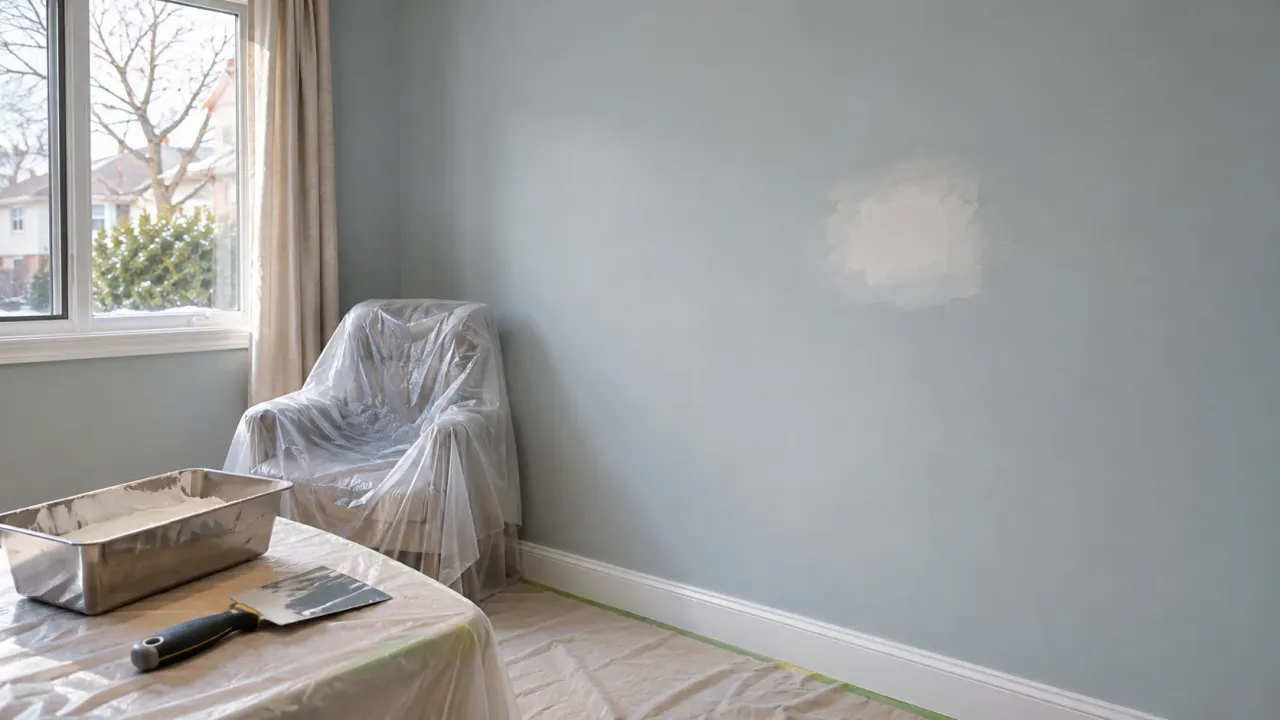
Drywall can sometimes be patched and painted in one day when the damage is limited, the base is sound, room conditions are suitable and every compound and coating stage meets its product instructions. A set patch is not automatically dry or ready for paint. Confirm the paint area and a fallback completion plan before organizing guests, movers or another trade around the repair.
Can drywall be patched and painted in one day? Sometimes, yes, but a useful answer must describe your repair and the finish you expect. A shallow cosmetic defect on a sound wall is different from a ceiling opening, failed joint or area affected by a leak. The practical question is whether the repair, primer and paint can all reach their required condition within the time available, without skipping an inspection or finishing stage.
At EPF Pro Services, we plan wall and ceiling drywall repairs around that sequence. If you have guests arriving, movers booked or a painter scheduled, tell us about the deadline with the first photos. A deadline helps organize the work; it cannot make damp compound ready. This guide explains how to choose a realistic endpoint and what to do if the room needs more time.
Can drywall be patched and painted in one day for your situation?
| What you need | What must be confirmed | Practical fallback |
|---|---|---|
| A small wall blemish finished before guests | Stable surface, limited filling and suitable paint match | Schedule earlier or keep the room out of use |
| An access opening closed after a trade visit | Underlying work complete, suitable support and finishing scope | Separate closure from final decoration |
| A bright feature wall ready for photographs | Repair transition and full paint boundary | Allow a review and correction visit before photography |
| A stained ceiling made presentable | Moisture cause resolved and affected materials assessed | Complete investigation before scheduling cosmetics |
| A room ready for furniture or a new finish | Paint care or next-product curing requirements | Delay contact with the surface until permitted |
This table is a planning aid rather than a same-day service promise. Photos cannot establish hidden conditions or guarantee that a particular product will be ready at a particular hour. Ask the contractor what can reasonably be confirmed beforehand and what must be checked on arrival. The most useful short schedule includes a clear decision point if the original assumptions turn out to be wrong.
Work backward from the event, not from a repair slogan
Start by describing what happens after the repair. Guests need a room that can be used comfortably, a painter needs an agreed prepared surface, and movers need a clear route that will not damage fresh coatings. These are different requirements. Saying “I need it done Friday” leaves the contractor guessing which condition is essential and which part of the finish could happen later.
Allow a margin before an immovable event wherever possible. Even a straightforward repair can reveal a paint mismatch after drying or need a small correction under window light. Scheduling right up to the event leaves no room to respond. If there is no margin, discuss whether the work should happen afterward or whether a clearly limited first stage would still meet your immediate need.
Do not plan to hide an unfinished repair behind furniture and call the work complete. The surface still needs its specified preparation and coating, and furniture can interfere with access or touch fresh paint. Instead, agree exactly which stage will be reached and how the remaining work will be completed. A staged plan is useful when everyone understands it before the room is protected.
Separate five milestones that often get called finished
Closed and stable
An opening can be closed with suitable backing and board while still needing joint treatment. That may mark useful progress after plumbing or electrical access, but it is not a decorated surface. Before closure, the responsible trade should confirm that its work and any necessary checks are complete. Access that must remain available needs an agreed solution rather than an improvised cover hidden beneath compound.
Finished enough for surface preparation
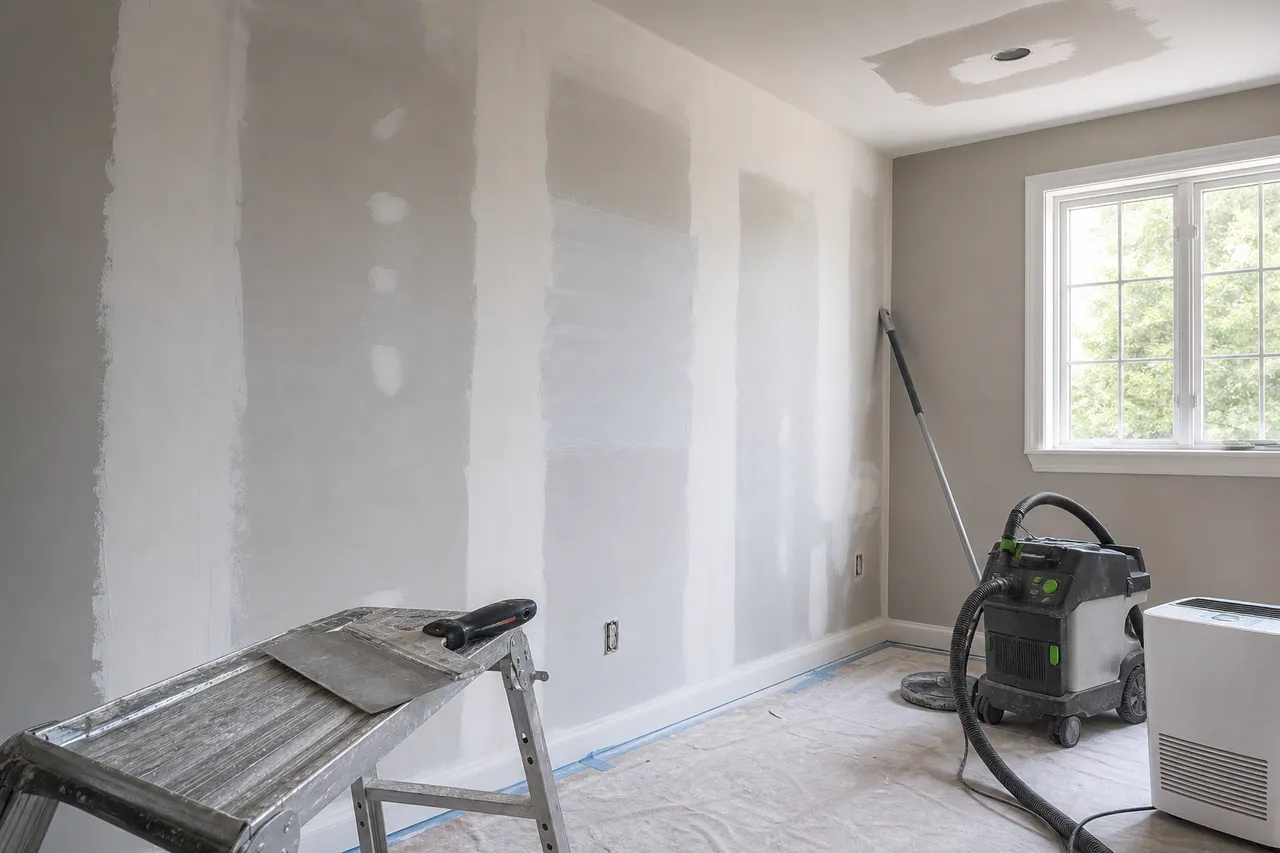
Tape and compound create the transition between the repair and the existing wall. Depending on the repair, more than one application may be needed to fill and flatten it. A patch can feel firm before the entire application is ready for sanding or decoration. The contractor must assess the materials and conditions instead of judging readiness solely by colour or a quick touch.
Ready for primer
The repaired surface needs to meet the primer's requirements as well as the compound's requirements. Remaining ridges, sanding scratches and dust should be addressed before coating. Primer helps prepare the surface; it is not a substitute for flattening a raised repair. If a defect becomes clearer after priming, correcting it can add another local preparation step to the schedule.
Painted to the agreed boundary
Applying the final paint is another stage with its own application and recoat requirements. A small touch-up and a full wall repaint do not take the same work, even if the drywall repair is identical. Colour, sheen, roller texture and existing paint condition affect the result. Agree the paint boundary before relying on a single-day plan.
Ready for ordinary use
Paint can be dry enough for the next stage before it is ready for cleaning, rubbing, adhesive hooks or furniture contact. Follow the selected paint's care instructions. Ask when decorations can return and when the surface can be cleaned. “The painter has finished” does not mean you should immediately press a headboard, moving blanket or stack of boxes against the wall.
Understand what fast-setting compound can and cannot change
Setting-type compounds can help an appropriate repair progress efficiently, but the set time describes hardening rather than a complete patch-to-paint schedule. The repair still needs suitable application, surface preparation and coating readiness. USG's drywall repair kit instructions distinguish the compound's hardening time from sanding and priming when dry. Product directions matter more than a number printed on a bag.
The material needs to suit the joint and application. Using a faster product is not a reason to make one thick mound over a defect, omit reinforcement where needed or sand before the surface is ready. Wider feathering may still be necessary to blend a repair into the wall plane. A rushed narrow patch can remain obvious after painting even when the opening itself is closed securely.
For the fuller explanation of conditions between coats, read our drywall repair drying-time guide. This article focuses on household scheduling rather than prescribing a universal drying interval. The contractor should check the actual products, application thickness and room environment before confirming how far the work can progress that day.
Give the contractor the information that changes the schedule
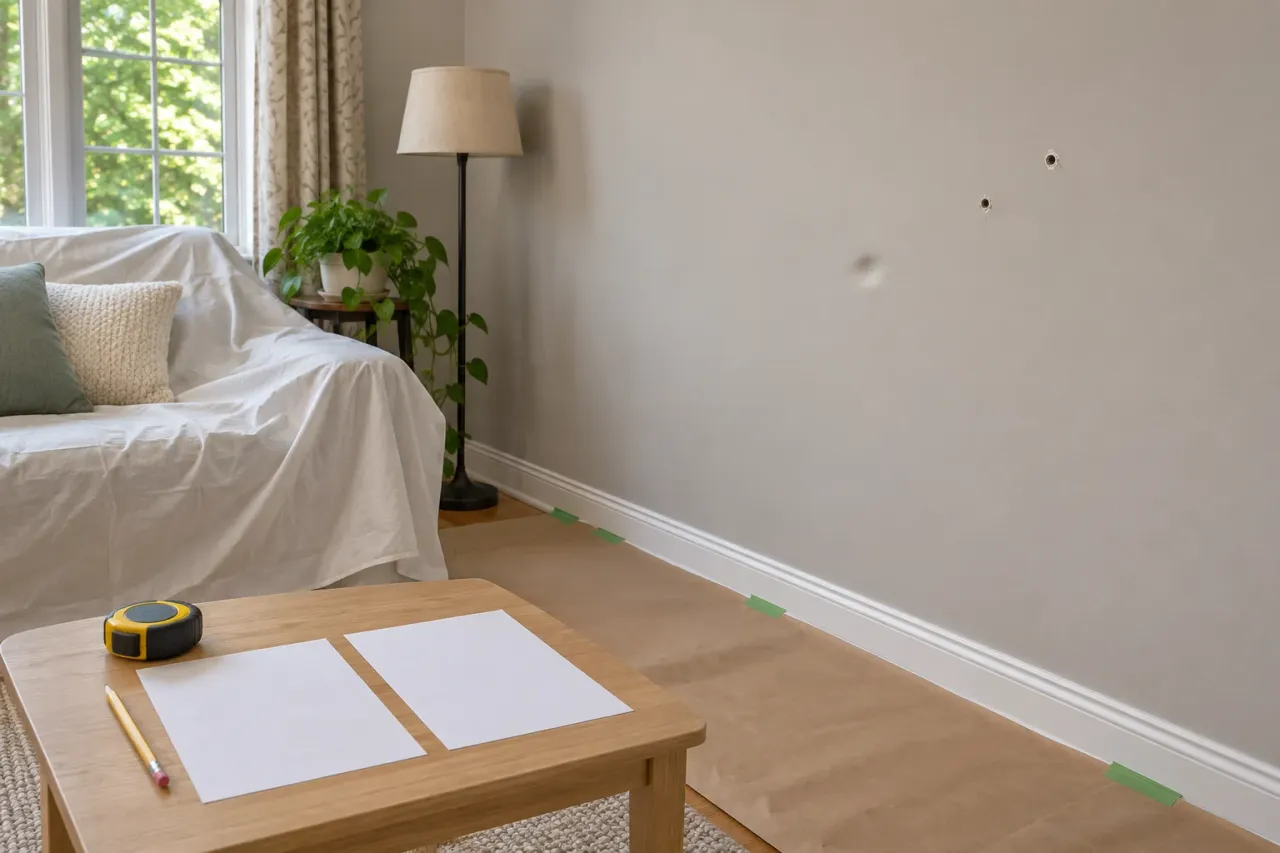
Photograph the damage close up and from across the room. Include an approximate size reference, ceiling height where relevant and nearby windows, corners or fixtures. Say whether the damage is isolated or whether there are several repairs along the same wall. Multiple small defects may share protection and painting work, but they still need to be assessed together rather than quoted as one representative mark.
Share the history as well. A recently removed shelf, an old seam that keeps opening and a leak stain call for different questions. If another trade made an access hole, explain whether that trade has finished. If a previous patch failed, mention it even if the surface currently looks stable. The schedule depends on the reason for the repair as much as its visible dimensions.
Have the available paint information ready: product, colour, sheen and any remaining material. Stored paint needs to be assessed for suitability; an old can is not automatically usable. If matching information is missing, say so early. A plan that depends on a quick touch-up should not discover late in the day that the original coating is unknown or a broader repaint is necessary.
Protect the day by preparing the room properly
Clear the agreed working area before the appointment and arrange somewhere for the removed items to stay. A bed shifted only a few centimetres may still block access to a repair above it. Keep the route into the room open and remove fragile belongings from nearby surfaces. Confirm which furniture-moving tasks belong to you and which are included in the work.
For an occupied home, organize a separate space for pets and children and avoid using the work zone as a through-route. If the repair affects your only practical hallway or home office, explain that when booking. A contractor can plan around known constraints more effectively than repeatedly stopping while the household tries to use the same small space.
EPF uses room protection and HEPA vacuum-assisted sanding where suitable to reduce ordinary finishing dust. No repair process is entirely dust-free. Keep protective arrangements in place until the relevant work and cleanup are complete. Removing them early to make the room look ready can create additional cleaning or expose belongings while a correction is still needed.
Working around a fixed date? Send damage photos, the event date, paint information and the room-use requirement through our drywall repair planning form. We can discuss the appropriate scope and whether a separate finishing visit should be allowed for.
Let room conditions support the work without forcing it
A cold or humid space can behave differently from a normally conditioned living room. Tell the contractor if the room is rarely heated, has poor airflow or has recently had wet work completed nearby. Those conditions can affect how materials become ready between stages. The same repair method may need a different schedule in two rooms that look similar in photographs.
Maintain suitable conditions in line with the selected product instructions. Avoid aiming intense heat at one patch or improvising airflow that spreads dust through the home. Making the surface appear dry quickly is not the same as establishing that the full application is ready. If humidity or moisture remains an unresolved building issue, address it before expecting cosmetic finishing to proceed predictably.
A basement repair also needs the reason for any dampness understood. A dehumidifier running in the room does not establish that a previously wet cavity is ready to close. Persistent moisture, suspected mould or damaged board needs appropriate assessment. The correct fallback is to resolve that condition, not use a deadline to justify covering it.
Decide the paint area before the repair begins
An otherwise quick patch can become a longer painting job when it sits in strong side light or on an older sheen finish. A fresh coating may differ from the surrounding wall even when the colour is close. Inspect the room's normal lighting and discuss how noticeable a local touch-up could be. A small repaired area does not guarantee a small acceptable paint boundary.
Use our touch-up versus full-wall repainting guide to decide the level of blending you need. For a highly visible wall, painting to natural boundaries may be the more practical choice. That decision should be reflected in the schedule from the beginning rather than added after the final local touch-up disappoints.
If EPF is handling the coating as well, include interior painting in the original scope. If another painter is responsible, agree the handoff condition and arrival date with both trades. Avoid booking a painter to start immediately after a repair visit unless readiness and responsibilities have been coordinated. Finishing overlap can create waiting time instead of saving it.
Recognize conditions that should stop a cosmetic deadline
An active leak, soft board, sagging overhead material or unexplained recurring movement should be assessed before planning a decorative patch. Keep clear of an unsafe ceiling and arrange the appropriate professional inspection. A finishing contractor can discuss the cosmetic scope after the underlying condition is understood; a photograph of the face cannot confirm the whole assembly is sound.
Older coatings and building materials may need professional assessment or testing before disturbance. Health Canada advises precautions for materials that may contain asbestos. Do not scrape, sand or cut suspect material to meet a short schedule. Ordinary dust-controlled drywall work is not a replacement for specialist hazardous-material procedures.
In a condo, also check the building's actual renovation and access instructions. Working hours, elevator arrangements and the assembly being repaired can affect the plan. Do not assume a wall or ceiling opening can be closed like an ordinary non-rated partition. Have any fire, sound or service requirements established before selecting the repair system and promising an endpoint.
Set a useful fallback and compare the complete price
Ask what a return visit would involve if drying or paint matching takes longer. Clarify whether it is already part of the agreed scope, how scheduling would work and what remains protected in the meantime. This is particularly important before movers or overnight guests arrive. Knowing the fallback lets you arrange the household without trying to pressure an unfinished surface into service.
Compare the complete repair and painting price rather than just the first visit. Our guide to comparing drywall repair quotes in an occupied home helps identify differences in access, paint boundaries and completion stages. One quote may include a planned return while another assumes a narrower repair; the totals only become comparable once those details are understood.
Arrange the final review and room reset
Check the repaired area in the agreed lighting once the relevant coatings are ready for review. Look at the transition around the patch, the consistency of the painted area and the adjacent surfaces. If a correction is needed, identify its location clearly. Keep paint details and care instructions so later touch-ups do not depend on guessing which product was used.
For an Oakville home, our Oakville drywall repair service can be discussed around your room, access and deadline. EPF also serves Mississauga, Toronto, Burlington and nearby communities. Send the dimensions, wide and close photographs, damage history and the date you need the room back. The aim is a clear repair plan with an honest finish stage, whether that takes one day or a properly scheduled return.
FAQ
Does a same-day repair mean the paint is fully cured?
No. Paint may still need additional time before cleaning, adhesive products or furniture contact. Follow the selected coating’s care instructions after the work is finished.
Can a quick-setting compound guarantee same-day painting?
No. Setting time is not a complete drying or painting schedule. Application thickness, room conditions, finish preparation and coating instructions still determine readiness.
Should I book drywall repair the day before moving?
It is better to allow a margin when possible. Movers need clear access and fresh paint needs protection from contact, so discuss the move date and a fallback plan before booking.
Can a small ceiling stain be patched and painted immediately?
Not without understanding the cause and condition. The moisture source must be resolved and affected materials assessed before planning cosmetic repair or stain treatment.
Does EPF guarantee that every repair takes one day?
No. The repair scope, material readiness, access and painting requirements determine the schedule. Share photos and your deadline so the appropriate sequence can be discussed.
Drywall service pages and guides
Plan the Right Drywall Service Next
Renovation planning illustrations
What the Work Can Look Like
Article Review
AuthorEPF Pro Services
Reviewed byEPF Pro Services
UpdatedNovember 8, 2026
Plan your drywall scope
Get a drywall quote today
Share photos, room sizes, and timing. We reply the same day with GTA drywall availability and a clearer written scope.
Quick next step