
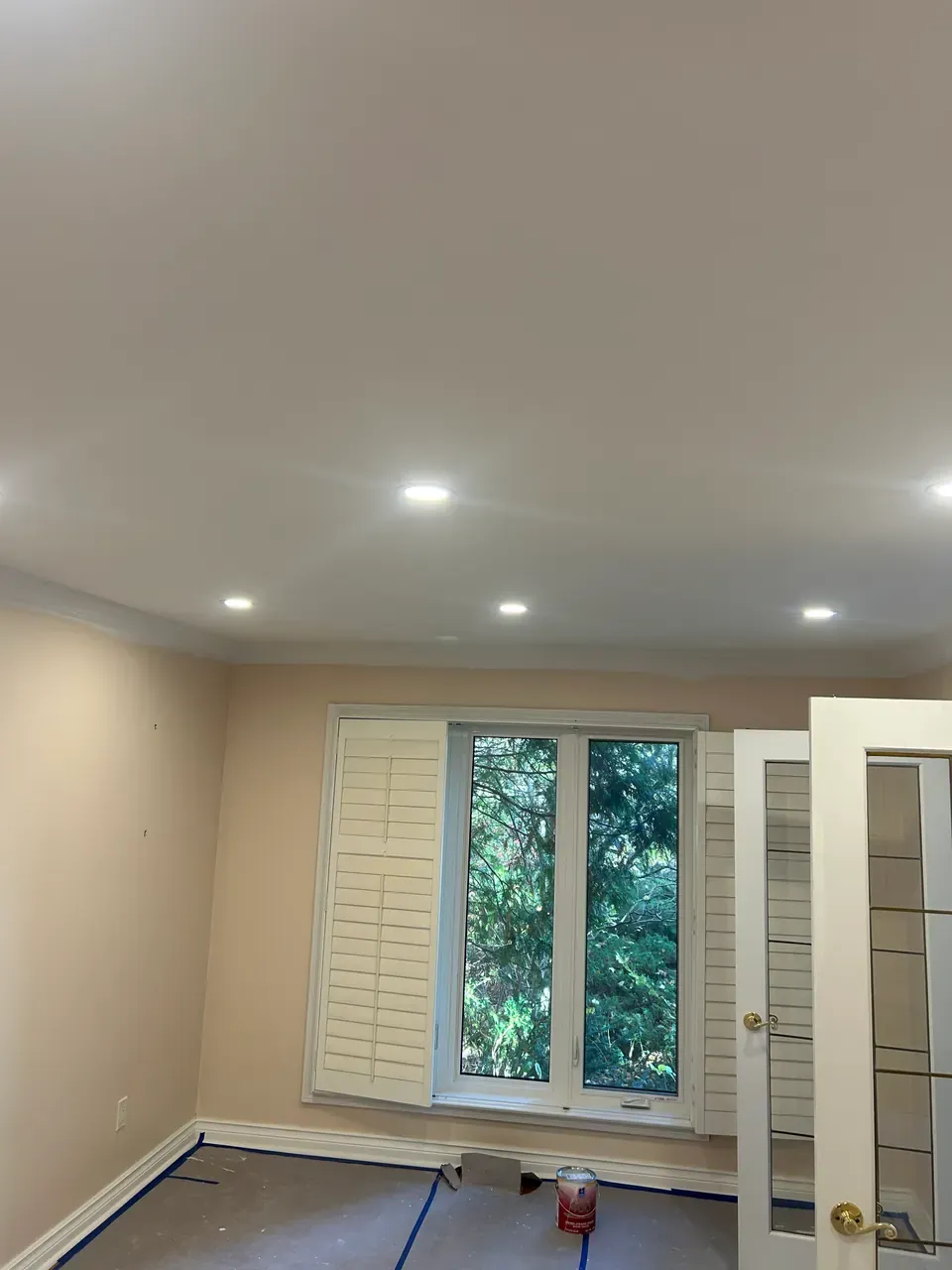
Completed project · Dundas, Ontario
Heavy Texture Ceiling Removal and Replastering in Dundas
Heavy patterned texture removed, ceiling replastered and finished smooth. See the actual preparation and result.
View the Dundas project →EPF Pro Services · Hamilton, Ontario
Less texture.
More room for the light.
We assess textured ceilings, protect the room and plan the repairs, skim coating and finishing needed for a smooth surface. Know what is included before work begins.

Start with the surface
Popcorn, stipple and textured ceiling removal in Hamilton starts with the existing material, paint layers and substrate. The right scope may include controlled removal, surface repairs, skim coating, sanding, primer and flat ceiling paint. We agree on the method and finished endpoint before treating the work as a simple square-foot price.
A ceiling can look uniform while hiding old patches, weak drywall paper or uneven joints. Assessment helps distinguish removable texture from conditions that need repair first. If your project also involves damaged board, compare Hamilton drywall repair with new drywall installation before paying to refinish an unsuitable surface.
| Ceiling condition | What to consider | What to confirm in the quote |
|---|---|---|
| Unpainted texture | Removal may be more straightforward once material concerns are resolved. The exposed surface still needs assessment. | Repair allowance, skim-coat extent and the agreed primer or paint finish. |
| Painted texture | Paint can make removal slower and increase damage to the surface beneath it. | The chosen method and how unsuitable or loose material will be handled. |
| Cracks or water staining | Resolve the cause and assess the substrate before decorative work. | Necessary repairs, drying readiness and suitable primer. |
| Broad ceiling with side light | Small texture differences and surface waves are easier to see. | Full-surface skim versus local finishing, lighting and inspection expectations. |
| Unknown material history | Do not use a scrape test to rule out asbestos. | Professional material assessment before disturbance. |
If the material or its history raises a concern, do not scrape, sand or drill it. Arrange assessment by a qualified professional and resolve any specialist work before ordinary refinishing. Read Health Canada’s advice on asbestos and renovation.
Completed project · Dundas, Ontario
Heavy patterned texture removed, ceiling replastered and finished smooth. See the actual preparation and result.
View the Dundas project →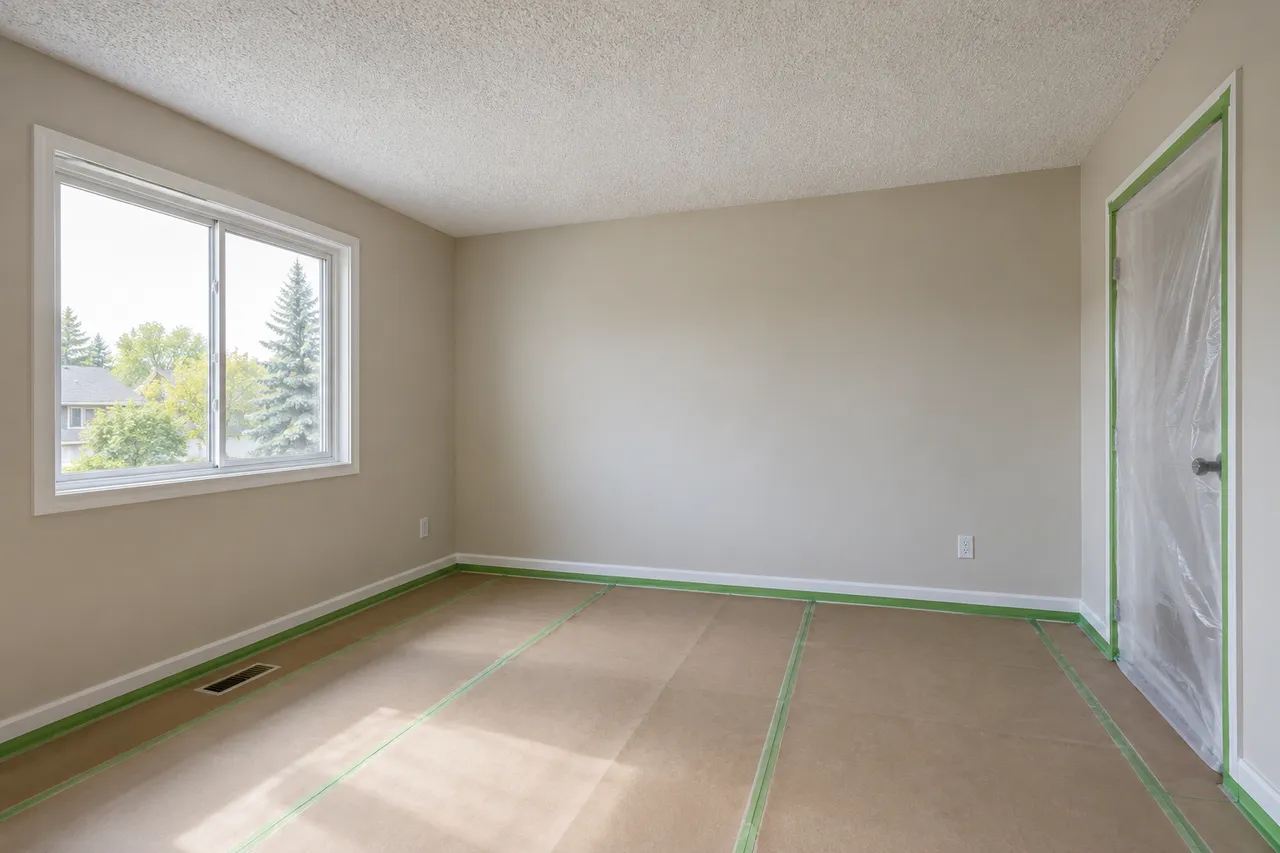
A considered sequence
We discuss furniture, the route through the home and the rooms that need to stay usable. Suitable containment, floor protection, controlled methods and HEPA-assisted sanding help reduce dust. They do not make a renovation completely dust-free.
When lighting is changing, confirm fixture locations and coordinate electrical work before the final skim and paint. Keeping the sequence clear avoids opening a newly finished ceiling for work that could have been planned earlier.
Review material concerns, paint layers, damage, access and the intended finish. Set out inclusions and how discovered conditions will be approved.
Prepare the agreed work zone and use a suitable method once assessment is complete. Retained surfaces and access routes need protection.
Address damaged paper, joints and patches. Apply the specified skim coats, allow drying and sand with dust control. Check under relevant lighting.
Prime with a system suited to the surface, review any touch-ups and apply paint if included. Finish with the agreed cleanup and room handover.
Removed texture, paint-ready, primed and fully painted are different endpoints. Ask which repairs, finish coats, protection and cleanup are included so the written estimate matches the ceiling you expect.
Compare the whole scope
Ceiling area is the starting point. Coating condition, access, repairs and the finish standard determine the work behind the number. We itemize the scope so you can compare the same result across estimates.
Ask for an itemized estimate →Paint layers, loose texture, torn paper, earlier repairs and the amount of smoothing required.
Ceiling height, stairs, connected rooms, furniture, retained trim and protection of completed finishes.
Local repairs or full-surface skim, suitable primer, ceiling paint and any wall touch-ups.
Room count, work staging, compound coats, humidity and temperature. Drying cannot be skipped to meet an arbitrary deadline.
Strong side light can reveal differences between drywall paper, patches and joints. A full-surface skim—often discussed as Level 5 finishing—helps reduce those texture differences. The right specification depends on the substrate and intended paint, not a promise that one skim will straighten every ceiling.
Primer and finish paint matter too. A sealed surface and an appropriate flat ceiling coating support a consistent appearance, while unresolved stains or weak material can still show through. Discuss the lighting and finish expectations before work starts, especially for connected rooms where one ceiling plane is visible from several angles.
For a closer look, read why Hamilton ceiling removal often needs skim coating and the broader popcorn ceiling removal service overview.
Find your local project guidance
Explore service and preparation details for each area. The room, access and surface condition shape the estimate; neighbourhood names alone do not determine a method or price.
Hamilton service location: 37 Dalegrove Crescent, Stoney Creek, ON L8J 3R5. View the service location
Make the estimate useful
Send the details you know. If you have photos, include a shareable link in the form; a wide view and a close-up of texture or damage are both helpful.
We’ll follow up about the scope and any assessment needed.
We use these details to respond to your project enquiry.
Before you book
The price depends on ceiling area, height, paint layers, condition, access and the finish you want. A scraping-only estimate is different from a repaired, skimmed, primed and painted ceiling. Send room measurements and photos so we can itemize the scope and identify conditions that need a site assessment.
Painted texture may be harder to remove and can leave more surface repair. After material concerns are resolved, we assess the coating and substrate to decide whether removal, suitable resurfacing or board replacement is appropriate. There is no single method that suits every painted ceiling.
No renovation is completely dust-free. Room protection, containment, controlled work methods, HEPA-assisted sanding and planned cleanup help reduce dust. We discuss the occupied rooms, access route and preparation needed before the work begins.
If the material or its history creates a concern, arrange assessment by a qualified asbestos professional before scraping, sanding or drilling. Appearance alone cannot confirm whether a ceiling contains asbestos. Specialist assessment and any required asbestos work must be resolved before ordinary ceiling refinishing.
The finishing scope depends on the substrate, repairs, lighting and intended paint. A full-surface skim can reduce texture differences across paper and joints and is worth discussing for broad ceilings or strong side lighting. It does not correct every framing irregularity, and the finish standard should be agreed before work starts.
The sequence includes protection, suitable removal, repairs, finishing coats, drying, sanding and the agreed primer or paint. Size, painted texture, repairs, access, humidity and temperature all affect timing. We set out the stages and room-release plan rather than promise the same duration for every home.
Yes. Finalize the lighting plan and have electrical work handled by the appropriate electrician before the last repair, skim and painting stages. New openings after finishing can require further patching and a broader paint blend.
Our Hamilton coverage includes Ancaster, Dundas, Stoney Creek, Waterdown, Westdale, Kirkendall, Durand, Corktown, Beasley, Hamilton Mountain, Binbrook and Rosedale. Contact us with your address and project details to arrange an estimate.
Practical Hamilton guides