
Why Popcorn Ceiling Removal Needs Skim Coating in Hamilton
2026-04-15
Hamilton homeowner guide to why popcorn ceiling removal often still needs skim coating, what it fixes, and why the final smooth finish depends on more than scraping alone.
Quick Answer
Hamilton homeowner guide to why popcorn ceiling removal often still needs skim coating, what it fixes, and why the final smooth finish depends on more than scraping alone.
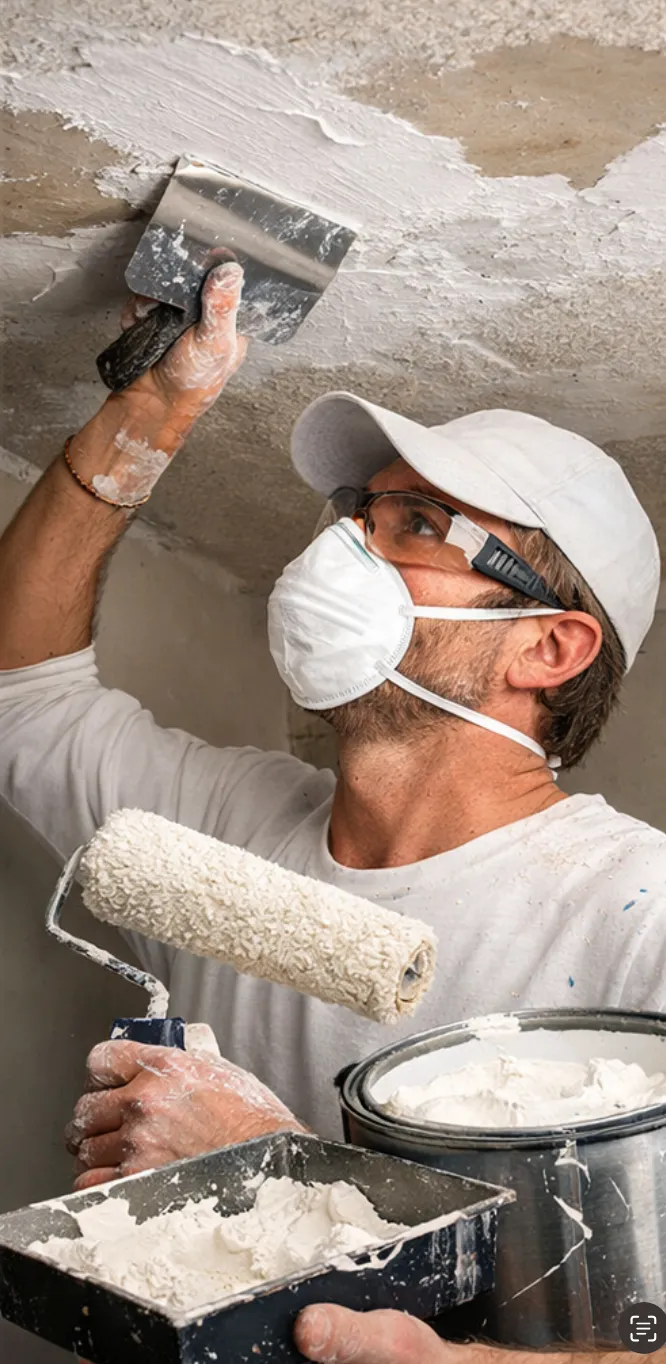
A lot of homeowners assume popcorn ceiling removal is finished once the texture is gone. That is usually the biggest misunderstanding in the whole project. Removing the texture changes the ceiling, but it does not automatically leave the surface smooth, even, or ready for paint. In many Hamilton homes, the ceiling still needs skim coating afterward if the goal is a modern flat finish that looks calm under normal daylight and room lighting.
This is where many quotes sound simpler than the real work. A company may talk about scraping, but homeowners are not really paying for scraped ceilings. They are paying for ceilings that stop looking dated and end up smooth enough to live with every day. That final result often depends more on the skim-coating stage than on the removal stage itself.
If you want to compare the full local service scope first, start with our Hamilton popcorn ceiling removal page. It explains how removal, smoothing, and final paint-ready finishing fit together in real Hamilton homes.
The Ancaster service page looks at connected rooms and broad ceiling planes, where the boundary of a skim coat and the lighting deserve an early discussion. See Ancaster smooth-ceiling scope.
This article focuses on the part homeowners usually underestimate: why skim coating is so often part of popcorn ceiling removal, what it actually corrects, and why some ceilings need more of it than others.
Why scraping alone usually does not leave a smooth ceiling
Old texture hides more than homeowners expect. It can hide patch lines, seam movement, rough repairs, torn paper, water marks, shallow dips, and uneven transitions across the ceiling plane. Once the popcorn comes off, those imperfections become easier to see, not harder. That is why a scraped ceiling can still look rough, busy, or visibly worked on even though the old texture is technically gone.
This is especially true in Hamilton because the housing stock is mixed. Older lower-city homes, bungalows on the Mountain, condo ceilings in Stoney Creek, and renovated family rooms in Ancaster do not all start from the same baseline. Some ceilings have cleaner drywall underneath. Others have years of paint, patching, fixture moves, or prior repairs built into them already.
Homeowners often think skim coating is an extra added by contractors to increase the scope. In reality, it is often the stage that turns a visibly disturbed ceiling into one that actually feels finished. Without it, the room may still read as patched even after primer and paint.
What skim coating actually does after popcorn ceiling removal
Skim coating is not just a cosmetic topping. Its real job is to even out the surface after the texture has been removed or disturbed. It helps flatten low variation, soften repair edges, hide transitions between worked areas and untouched areas, and give the whole ceiling a more consistent plane before sanding and paint.
This matters because the eye reads ceilings differently from walls. A wall can sometimes hide a localized repair if furniture, art, or softer side views break it up. A ceiling sits broad and uninterrupted over the whole room. Even small changes in flatness or texture become easier to notice once the old popcorn is gone.
That is why skim coating often becomes the bridge between removal and final finish. It is the step that helps the entire ceiling behave like one surface again instead of a collection of old repairs, scrape marks, and problem areas.
When skim coating is almost always part of the job
Some ceilings move toward skim coating almost immediately. Painted texture is the clearest example. Once paint seals the popcorn, the surface underneath is more likely to need broad correction after the old texture is disturbed. Water-stained ceilings, rooms with patch history, ceilings with visible seam lines, and surfaces with prior fixture moves also tend to need more skim work rather than less.
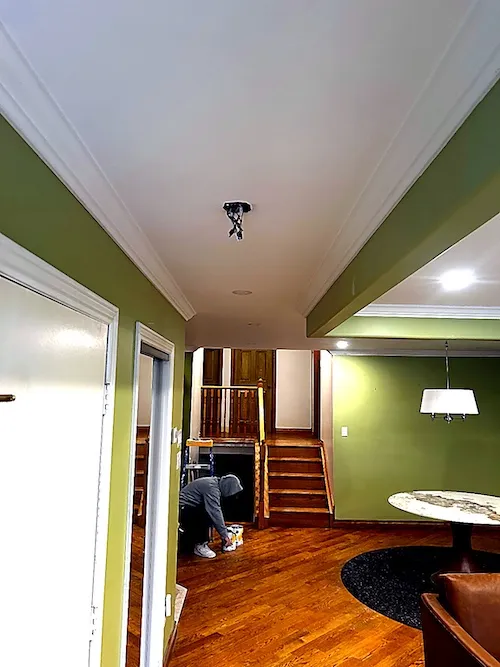
Open-concept rooms are another major category. In larger connected spaces, the eye can travel farther across the ceiling. That makes even subtle unevenness more obvious, especially once the room is painted bright white and sunlight starts crossing the surface from one side of the space to the other.
In practical terms, homeowners should expect skim coating more often when the room is highly visible, the texture has been painted, or the ceiling is already questionable before the first part of the removal even starts.
Hamilton homes where skim coating matters most
Skim coating matters most in exactly the kinds of Hamilton homes where ceilings tend to draw more attention after an update. Character homes in Durand, Westdale, Strathcona, and Kirkendall often have more renovation history, older repairs, or less uniform ceiling surfaces than they appear to from the floor. Mountain homes can have simpler layouts, but once the popcorn comes off, years of patching or repainting can still start showing through.
In Ancaster and other newer or larger homes, the issue is often visibility rather than age. Bigger windows, wider rooms, pot lights, and longer open ceilings make finish quality more important because the eye has fewer interruptions. In condos and townhomes, the ceiling might be smaller, but the room still needs a consistent plane if the homeowner wants the update to look modern rather than merely improved.
This is why skim coating is not only an older-home issue. It is a finish-quality issue across different property types. The cleaner and more visible the room becomes after renovation, the more important the smoothing stage usually becomes.
How painted ceilings change the skim-coating conversation
Painted ceilings are where homeowners usually stop thinking in terms of simple scraping and start dealing with true ceiling restoration. Once the texture has paint on it, the surface is more likely to tear, stay rough, or reveal bigger differences after the old finish is disrupted. That usually means skim coating becomes less optional and more central to the project.
This is also where homeowners often feel the quote changed direction. They expected a removal job and suddenly hear more discussion about smoothing, flattening, and rebuilding the ceiling plane. The reason is simple: painted popcorn often damages the idea that removal alone will get the room where it needs to go.
If the ceiling has already been painted, read our painted vs unpainted popcorn ceiling removal in Hamilton guide next. It explains why painted texture usually pushes more of the project into broad finish work afterward.
Why skim coating affects finish quality more than homeowners expect
Most homeowners judge the result in one simple way: does the ceiling still catch their eye after the room is painted? That outcome usually depends more on the skim-coating and smoothing stages than on the scraping stage. The old texture coming down is visible and dramatic, but the room only starts looking refined when the field of the ceiling becomes even again.
This is why ceilings can still disappoint after what looked like a successful removal day. The texture may be gone, but the surface is still reading all the history that the texture used to hide. Skim coating is often what quiets that history down so the eye stops landing on old repair zones and starts seeing one cleaner surface overhead.
For homeowners, that is the real purpose of the step. It is not just another trade phase. It is what often decides whether the room feels fully updated or still obviously mid-repair even after paint is back on.
Why some rooms need a broader skim coat than others
Not every ceiling needs the same amount of smoothing. Some rooms only need a lighter broad correction after the texture comes off. Others need more complete skim coating because the whole field remains too uneven for a clean final finish. The difference usually comes down to ceiling condition, lighting, and how visible the room is in daily use.
A spare bedroom with soft light may tolerate a narrower correction path. A living room with wide windows, a kitchen ceiling with strong side light, or a hallway ceiling that runs across multiple rooms usually needs a broader approach so the transitions do not stay visible later.
That is why homeowners should not compare skim coating by the number of passes alone. The real question is whether the room needs localized smoothing or a broader field correction to stop the ceiling from reading uneven after paint.
What homeowners usually misunderstand about the process
The first misunderstanding is thinking popcorn ceiling removal and skim coating are two unrelated jobs. They are usually parts of the same finish path. The second is assuming skim coating means something went wrong. It often means the contractor is dealing honestly with the ceiling that was revealed after the old texture came off. The third is expecting primer and paint to make up for weak smoothing underneath. Paint does not erase uneven ceiling work. It usually makes it easier to notice.
Another common misunderstanding is that skim coating is only for perfectionists. In reality, it is often the practical solution for rooms where the ceiling simply will not look right without broader correction. Homeowners do not need a luxury finish to benefit from it. They just need a ceiling that stops looking old, patchy, or visibly scraped once the job is finished.
How skim coating affects timeline and room use
Skim coating usually extends the project because it adds another major finish stage after removal. That is normal. A ceiling that needs broad correction simply has more work between 'texture gone' and 'room finished.' This is why homeowners should plan around the full project instead of assuming the room returns to service as soon as the old texture comes down.
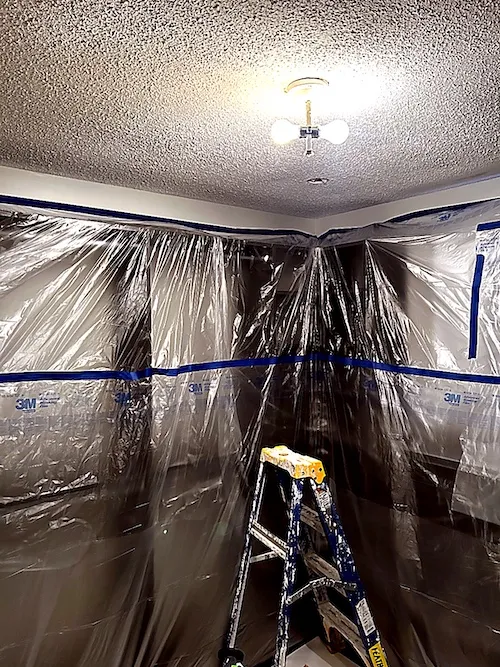
In practical terms, that means floor protection, access planning, and room downtime often remain in place longer than expected when skim coating is part of the scope. The room may look farther along visually, but it is not really finished until the smoothing, sanding, final prep, and paint stages are complete.
This is also why prep guides matter. A room that is staged properly is much easier to move through this longer finish sequence cleanly and predictably.
If you are still planning the room setup, read how to prepare your home for popcorn ceiling removal in Hamilton. Better prep usually makes the skim-coating stage easier to manage afterward.
How skim coating changes the quote
Skim coating changes pricing because it adds time, labour, and finish control to the project. That does not mean it should be treated as a mysterious add-on. It should be treated as part of the work required to get from a disturbed textured ceiling to a clean flat one. If the ceiling needs broad correction, a scrape-only price is not a realistic comparison.
This is one reason homeowners get confused by low quotes. Some quotes describe texture removal in a narrow way, while others describe the actual path to a smooth paint-ready ceiling. When one scope includes broad skim work and the other does not, the numbers are not really pricing the same outcome.
For the local pricing side, review our Hamilton popcorn ceiling removal cost guide. It explains why painted texture, repair history, ceiling height, and smoothing scope move the quote more than square footage alone.
How to judge whether a contractor is being honest about skim coating
A good contractor should be able to explain why the ceiling needs broader smoothing after removal. The explanation should connect to actual conditions in the room: paint on the texture, repair history, visible seams, rough transitions, old stains, or the lighting quality of the space. If the answer is vague, homeowners are right to question it.
At the same time, a contractor who talks only about scraping and never about what the ceiling will look like afterward is often skipping the most important part. The final result should be part of the conversation from the start. If the room needs skim coating to achieve that result, the homeowner is better off hearing that clearly before the project begins.
What happens after skim coating
Skim coating is not the last step either. After the ceiling is smoothed, it still needs sanding, checking, final prep, and flat ceiling paint before the room is fully ready. That is another reason homeowners should treat popcorn ceiling removal as a finish project rather than a scrape project.
A lot of disappointment happens when the room is judged too early. Right after removal, the ceiling looks raw. Right after smoothing, it may look improved but unfinished. The real evaluation belongs at the end, once the whole sequence has been completed and the room is back under ordinary daily light.
Why Hamilton homeowners benefit from a skim-coat-first mindset
The easiest way to approach this type of project is not to ask whether skim coating can be avoided at all costs. It is to ask what the ceiling needs in order to look right when the room is done. In many Hamilton homes, that answer includes skim coating because the surface exposed after removal is simply too irregular to leave as-is.
This mindset helps homeowners compare quotes more honestly, plan room downtime more realistically, and avoid expecting primer and paint to solve finish problems that should have been corrected earlier. It also helps the project stay focused on the final standard instead of on the shortest possible first stage.
FAQ
Why does popcorn ceiling removal often need skim coating? Because once the texture is gone, the ceiling often still shows repairs, seams, roughness, or uneven areas that need to be flattened before paint.
Does every Hamilton popcorn ceiling need skim coating? Not every ceiling needs the same amount, but many need at least some broad smoothing if the goal is a clean modern finish.
Why do painted ceilings need more skim coating? Painted texture often leaves the surface rougher and less consistent after removal, so broader correction is usually needed.
Is skim coating only for older homes? No. Older homes often need it, but newer or brighter rooms can need it too if finish quality matters.
Does skim coating affect the timeline? Yes. It usually adds time because the room still has to move through smoothing, sanding, prep, and paint after removal.
Can paint hide a ceiling that skipped skim coating? Sometimes minor flaws soften, but paint usually reflects the quality of the surface underneath instead of fixing it.
Need help judging whether your Hamilton ceiling needs skim coating?
If the old texture is coming off and the room still needs to look calm, flat, and current afterward, the skim-coating question should be answered early. It is one of the main things that separates a ceiling that is merely stripped from one that is actually finished.
Start with our Hamilton popcorn ceiling removal page, then send a few room photos through the quote form. EPF Pro Services can help explain whether the ceiling likely needs lighter smoothing or a broader skim-coating scope before paint.
Related local pages
Hamilton popcorn ceiling removal — Main Hamilton city page covering removal methods, smooth finishing, and local service scope.
Popcorn ceiling removal — Main service page covering prep, smoothing, and paint-ready finishing across the GTA.
Level 4 vs Level 5 finish after popcorn ceiling removal — Broader guide to the finish-quality side of smooth ceilings after texture removal.
FAQ
Why does popcorn ceiling removal often need skim coating?
Because once the texture is gone, the ceiling often still shows repairs, seams, roughness, or uneven areas that need to be flattened before paint.
Does every Hamilton popcorn ceiling need skim coating?
Not every ceiling needs the same amount, but many need at least some broad smoothing if the goal is a clean modern finish.
Why do painted ceilings usually need more skim coating?
Painted texture often leaves the surface rougher and less consistent after removal, so broader correction is usually needed.
Is skim coating only for older Hamilton homes?
No. Older homes often need it, but newer or brighter rooms can need it too if finish quality matters.
Does skim coating make the project take longer?
Yes. It usually extends the timeline because the ceiling still has to move through smoothing, sanding, prep, and paint after removal.
Can flat paint hide a ceiling that skipped skim coating?
Usually not well enough. Paint tends to reflect the quality of the surface underneath rather than fixing uneven ceiling work.
Field photos
Inspiration for your project
Popcorn ceiling terms this page covers
Useful terms to compare removal, skim coating, and finish scope before you book.
- why popcorn ceiling removal needs skim coating Hamilton
- skim coat after popcorn ceiling removal Hamilton
- Hamilton popcorn ceiling skim coating
- smooth ceiling finish Hamilton
- painted popcorn ceiling skim coat Hamilton
- Hamilton popcorn ceiling removal
- Level 5 ceiling finish Hamilton
- Hamilton ceiling resurfacing after popcorn removal
Article Review
AuthorAlex - EPF Pro Services
Reviewed byEPF Pro Services
UpdatedApril 15, 2026
Ready to plan your ceilings?
Get a popcorn ceiling quote today
Share photos, ceiling heights, and timing. We reply the same day with Hamilton availability.
• HEPA dust control and Level 5 skim finishing
• Pot-light coordination and interior painting add-ons
• Flexible scheduling for condos and single-family homes
Quick next step
Send photos and room sizes through the main quote page, or call for a same-day reply.
Keeping the form on the main quote page helps this article stay lighter and faster.