
Repair or Skim Coat Garage Walls? (2026 Guide)
Updated September 11, 2026
Repair addresses damaged or failed areas. Skim coating changes a wider surface on a suitable base. A garage can need both, in the right order and with separate boundaries.
- Trusted since 2005
- Fully insured
- Dust-controlled sanding
- Paint-ready finishing
- 3-year workmanship warranty
Quick Answer
Repair addresses damaged or failed areas. Skim coating changes a wider surface on a suitable base. A garage can need both, in the right order and with separate boundaries.
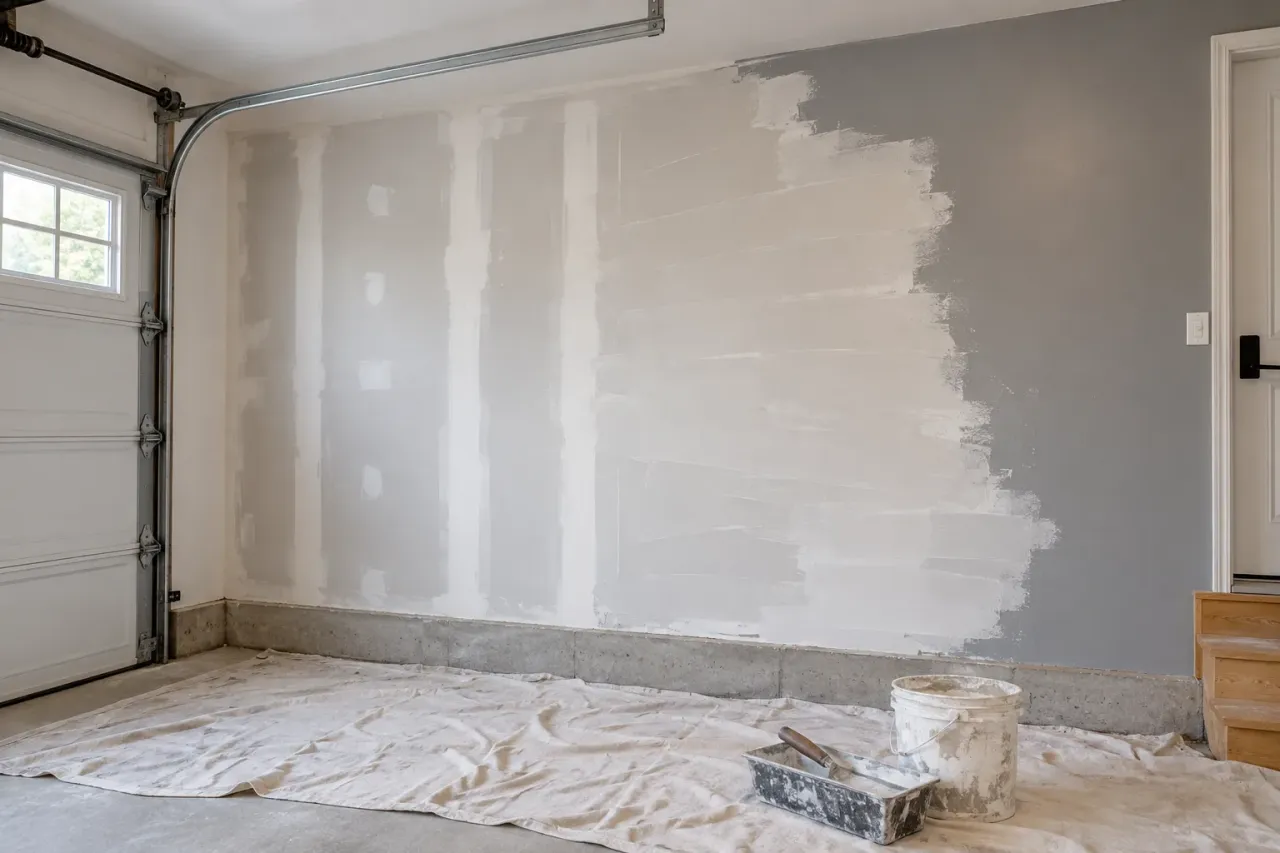
Drywall repair and skim coating solve different problems on garage walls. Repair addresses damaged or failed areas such as loose tape, holes or unsuitable board. Skim coating changes a broader surface on a suitable base. A garage may need both, but a thin coat over the whole wall does not automatically correct what has failed underneath it.
EPF's garage drywall repair and refinishing service can separate essential corrections from optional surface improvement. This guide helps you decide what questions to ask before choosing local repairs, selected-wall smoothing or a wider garage finish. The best scope follows condition and the intended decoration, rather than the assumption that one treatment suits every rough wall.
Start with the condition you can see
Use these observations to prepare the assessment, not to diagnose concealed construction. Pair each detail photograph with a wider view so the repair area, adjoining surfaces and access are clear.
Failed joint
Repair reinforcement and base as required.
Stable uneven texture
Assess broad surface preparation and smoothing.
Mixed defects
Price necessary repairs before optional skimming.
Start by naming the problem
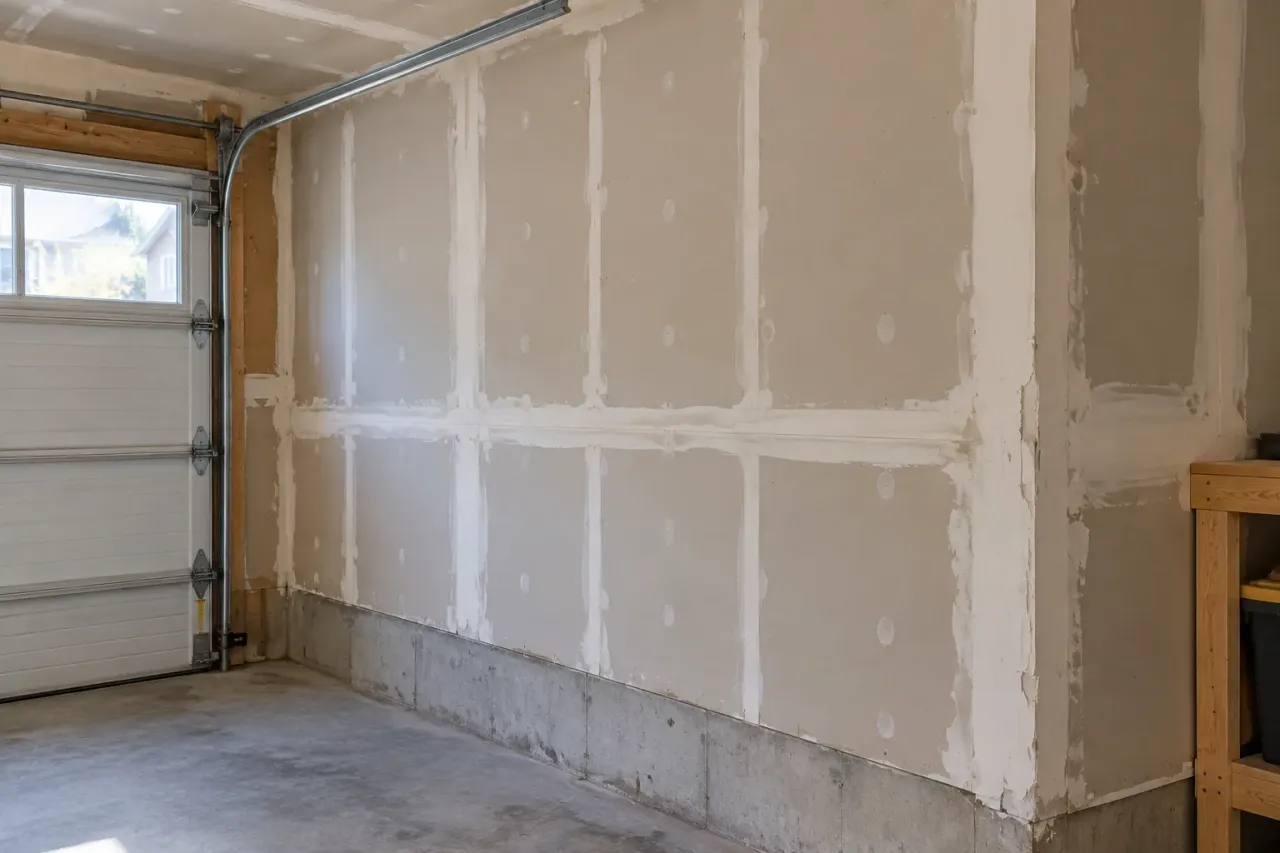
A rough wall can contain several different conditions. One seam may have detached tape, another may be secure but raised, and a third area may show roller texture from old paint. Those observations do not call for identical preparation. Describe what you see before asking for a particular product or number of coats.
Take a broad photo of each wall and closer views of the affected areas. Note where the concern is a visible profile, where material is loose and where the wall has previous repair history. A short labelled list helps a contractor distinguish essential work from the appearance issues you may choose to improve later.
Do not assume every visible compound stripe is a defect. Some garage surfaces were finished for utility use. The homeowner may now want a smoother painted space, which is a change in appearance target. The existing work should be assessed for suitability rather than condemned or covered simply because its finish is basic.
What localized drywall repair addresses
A local repair may involve an impact patch, rebuilding a failed joint or correcting a damaged board section. The scope should identify the affected area and a boundary that connects to suitable retained material. It should also account for the finishing needed to blend the repair into the surrounding wall.
If tape is loose, the failed material may need removal and new reinforcement after preparation. If the board is compromised, appropriate board work comes first. Those operations change the base on which the finish depends. They are not interchangeable with applying a thin coat over the face of the wall.
A repair can be small in extent yet still need protection, several stages and drying intervals. The visible hole or loose strip does not establish the entire labour scope. Ask what the contractor will retain, what will be corrected and what surface condition will be provided before the next decorating stage.
What skim coating is intended to change
Skim coating applies a thin finishing treatment across a broader surface using suitable material and preparation. It may be considered to improve consistency where the retained wall is sound but its surface needs a more uniform finish. The proposal should explain what condition the skim is intended to address and where it will stop.
A skim does not make loose tape bond again, stabilize a moving panel or repair an active moisture problem. It also does not turn badly aligned supporting construction into a flat wall. Those limits matter when a homeowner is comparing a broad smoothing price with a proposal that includes specific joint and board corrections.
The term skim can be used loosely in conversation. Ask whether the quote describes an entire-wall treatment, wider blending around joints or another defined preparation. A clear area and outcome are more useful than a label that different contractors may use for different amounts of work.
Why repair normally comes before broad smoothing
A broad finish relies on the layers beneath it. If an old patch or taped joint is detached, adding material over it leaves the repair dependent on that failed layer. Necessary correction should establish a suitable base before optional appearance work covers the evidence.
That sequence does not mean the whole garage must be stripped. Sound work may remain. The contractor should assess the actual defects and describe the repair boundary rather than automatically remove all tape or apply the same treatment to every panel. The goal is a suitable retained surface with specific failures addressed.
The rough garage finishing guide explains how to distinguish utility finishing, surface ridges and failed material. It is useful when the walls look inconsistent but you do not yet know whether the main need is local correction or a larger appearance upgrade.
Three practical scope combinations
The first option is repair only: correct the named failed areas and leave the surrounding sound finish largely as it is. That may suit a garage where function matters more than a uniform decorated appearance. The finishing and painting boundaries still need to be clear so a local repair is not mistaken for a whole-wall renovation.
The second option is repair plus selected-surface improvement. A homeowner may want the visible workshop wall smoothed while other suitable areas remain at a utility finish. The selected plane needs a practical boundary and an appearance target that reflects its lighting and coating.
The third option is necessary repairs followed by broader garage refinishing. This can be considered when numerous sound surface irregularities would otherwise leave a patchwork result. It is a larger appearance scope, not proof that all existing board has failed. Compare these alternatives by their complete outcome rather than by a single surface-treatment price.
Painted walls need a compatibility review
A garage wall may carry old paint, dust, flaking coating or earlier patch compounds. The proposed finishing material needs a suitable retained surface. Ask how the contractor will assess and prepare it, and provide any known coating information without assuming that a familiar product name proves compatibility.
A wall can look clean from a distance while having local areas that require different preparation. Loose coating should not simply be buried. Unknown older materials may also need appropriate advice before disturbance. The assessment should identify those conditions before sanding or broad application begins.
Do not buy primer or compound solely to make the estimate easier. The selected system should follow the actual surface and product instructions. If you have leftover supplies, ask whether they can be used. Providing a bucket does not replace the labour or establish that the wall is ready to receive it.
The finish level is a separate specification
A repair-plus-skim discussion should also define the intended decoration. Level 4 and Level 5 describe finishing treatments; Level 5 includes whole-surface skim treatment after the required joint work. A casually described skim job is not automatically a complete Level 5 specification unless the whole required scope is included.
The garage drywall finish levels guide explains how to discuss the choice. Paint sheen, colour and light direction matter to the appearance. A selected upgrade can be useful, but it does not remove the need to correct loose board, failed joints or an unsuitable coating.
Construction requirements remain separate from appearance. An attached-garage wall or ceiling may need a particular assembly repair detail. A cosmetic finish label does not certify that construction. Where replacement or alteration affects those requirements, confirm the appropriate approach before the surface is closed or refinished.
Light changes what a broad wall reveals
A long wall under side light can show gradual surface differences that are less apparent from directly in front. Share the planned permanent lighting and windows in the estimate photos. A contractor can then discuss the finishing target using the conditions under which the garage will actually be seen.
Do not judge the whole project only from a dramatic flashlight view taken inches from the surface. Equally, do not ignore strong light that will be part of normal use. The relevant inspection conditions should be agreed before the final coat, so both homeowner and contractor know what appearance is being evaluated.
For a demanding finish, a representative sample can help. It should use the planned coating and include enough surface to show a joint or transition. Record the accepted setup. If the decorating plan changes afterward, revisit the expectation before proceeding across all of the selected wall area.
Choose boundaries that can be finished sensibly
A local joint repair can blend outward into retained material. A broad skim is often easier to describe by a complete wall plane, but the right boundary depends on the garage. Corners, openings and changes of plane may provide useful stopping points. An arbitrary line behind movable storage may become visible if the layout changes.
If only one wall is being improved, state how its corners and ceiling junction will be treated. The adjoining plane may need limited work to create a clean transition. A quote that names only the central wall area can leave those details uncertain even when everyone thinks the scope is straightforward.
Mark excluded surfaces explicitly in the project notes. This is especially helpful when the garage has storage alcoves, a work area and a main parking bay. Room names alone do not show whether the same continuous ceiling or wall crosses several zones that need a coordinated finish.
Measurement depends on the chosen operation
Repair quantities can involve affected seam lengths, damaged board areas, corners and individual patches. Broad smoothing is more naturally described by the actual surface being treated. Neither is captured fully by garage floor area. Ask the contractor which measurement method supports each part of the estimate.
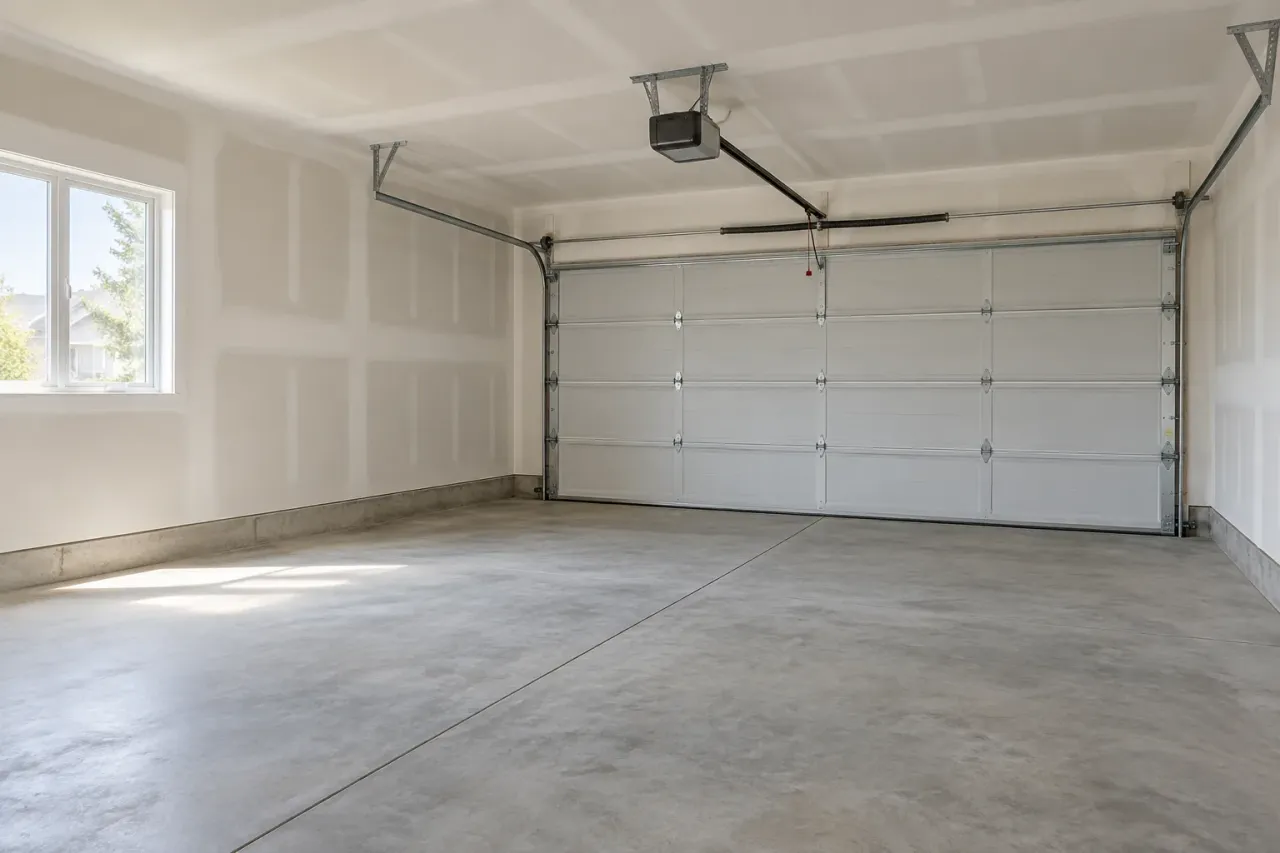
For a hypothetical wall measuring 20 feet by 8 feet, the gross surface is 160 square feet before openings and details. That calculation does not price the repair or establish the labour. Preparation, access, existing coating and transitions can still change the amount of work required on that surface.
A useful proposal can show local repairs as one scope and the selected broad treatment as another. The homeowner can then compare essential correction with the optional appearance upgrade. It avoids applying a new-drywall finishing rate to a wall whose main cost lies in removing unsuitable earlier work.
Access and protection can affect both choices
A local repair may appear smaller on paper, but several scattered patches behind shelves can require repeated setup. A broad wall treatment may need the entire plane cleared at once. Show the current garage layout so the quote accounts for the practical workspace rather than assumes an empty room.
Agree which items move and which remain protected. Vehicles and household traffic should stay out of active areas as required. Where tracks, fixtures or other systems restrict the work, coordinate the appropriate trade instead of altering hardware yourself. The drywall scope should identify those dependencies before the start date.
EPF uses dust-controlled sanding with HEPA support where appropriate, together with containment and cleanup. Neither local repair nor skimming is automatically dust-free. Discuss the cleanup boundary and the route into the house so the work plan reflects the garage's use, not just the appearance of its walls.
Drying and sanding are not optional finishing details
Every operation needs suitable conditions and product readiness. A broad thin treatment and a thick local correction may dry differently on the same wall. The contractor should plan the sequence around actual readiness rather than assume that finishing a small area always means a one-visit job.
Tell the estimator how the garage is heated or used and whether other wet work is occurring nearby. Setting time and drying time are different. A material's label does not establish when all repaired surfaces can be sanded, primed and painted in your particular garage.
Sanding refines the shape that has been built. If the wall is hollow in one area, more sanding will not fill it. If tape is exposed, coating should not proceed as though the surface is finished. A planned review before primer helps catch those issues while the responsible finishing trade is still part of the sequence.
Compare the primer and paint stages too
A skimmed or repaired wall still needs the appropriate decorating preparation. Confirm whether dust removal, primer, primer-stage corrections and finish paint are included. A proposal that stops at sanding cannot be compared directly with one that leaves a completed painted wall.
If another painter takes over, assign the inspection and correction responsibilities. Primer can reveal small marks that were less obvious on raw compound. The repair before garage painting guide explains why that review belongs in the handoff rather than being treated as an unexpected dispute between trades.
Retained paint can complicate a local touch-up. A broad repaint may be needed to produce the appearance you want even when the physical repair is limited. Identify the decorating boundary before choosing between local repair and a larger finish package, since the final painted area can influence the practical comparison.
Prepare a repair-versus-skim estimate brief
Send your city, full wall photos, close-ups of loose or rough areas and approximate dimensions. Mark which surfaces you want improved and which can remain. Include previous repair history, known coatings, access restrictions and the planned paint and lighting.
Ask EPF to identify necessary corrections first, then describe the optional wider treatment. Where the condition is uncertain, agree on the assessment needed before broad finishing begins. The quote should explain what the selected operation changes and what it does not promise to correct.
Use the quote form with your project description and a photo link if available. A clear scope can combine repair and skimming where both are useful, preserve suitable existing work and leave a defined surface for decoration. The decision becomes easier when the base repair and the appearance upgrade are treated as connected but separate parts of the job.
Planning this repair in Burlington
Send the Burlington address or nearest intersection along with views of shelving, the garage door track and the affected joints. If the garage must remain partly in use, describe that before the quote so protection, access and possible work stages can be discussed.
EPF serves all Burlington neighbourhoods. Review Burlington garage repair coverage and neighbourhoods, then include your location with the repair details when requesting an estimate.
FAQ
Will skim coating secure loose garage tape?
No. Failed reinforcement needs assessment and appropriate repair before broad surface treatment.
Can a garage need both repair and skimming?
Yes. Necessary repairs can establish the base, followed by optional smoothing on suitable selected surfaces.
Is any skim coat automatically Level 5?
No. A complete Level 5 specification includes the required joint work and whole-surface treatment. Clarify what a loosely described skim quote actually covers.
Why measure the wall instead of garage floor area?
Broad treatment covers actual drywall surfaces. Floor area omits walls, corners, preparation and repair conditions.
Field Photos
What the Work Can Look Like
Article Review
AuthorEPF Pro Services
Reviewed byEPF Pro Services
UpdatedSeptember 11, 2026
Plan your drywall scope
Get a drywall quote today
Share photos, room sizes, and timing. We reply the same day with GTA drywall availability and a clearer written scope.
Quick next step