
Before You Rent Popcorn Ceiling Removal Tools: What to Know First
Updated June 3, 2026
A practical guide for homeowners considering rental tools for popcorn ceiling removal, including painted texture, dust control, finish expectations, and hidden costs.
- Trusted since 2005
- Fully insured
- Dust-controlled sanding
- Paint-ready finishing
- 3-year workmanship warranty
Quick Answer
Before renting popcorn ceiling removal tools, homeowners should check whether the ceiling is painted, whether asbestos testing is needed for older homes, how the room will be protected, what dust control is realistic, and whether the final goal is texture removal or a smooth ceiling finish. Rental tools may help with scraping, but they do not solve skim coating, drywall repair, sanding, primer, paint, or cleanup.
Renting popcorn ceiling removal tools can feel like a practical way to save money. The tools are easy to find, videos make the process look simple, and the ceiling texture seems like the only thing standing between the room and a modern flat finish. The reality is that rental tools solve only part of the project.
If you are comparing DIY tool rental with professional popcorn ceiling removal, the most important question is not only whether the texture can be scraped. It is what the ceiling will look like after scraping, repair, skim coat, sanding, primer, and paint.
This guide explains what to know before you rent tools, what questions to answer first, and where DIY projects usually become more expensive than expected.
Start With the Age and Safety Question
Older ceiling textures may need asbestos testing before disturbance. Homeowners should not scrape, sand, or disturb suspect material until they understand the risk. If the home is older or the ceiling history is unknown, arrange proper testing and follow local requirements before starting work.
This is especially important because popcorn removal is not a contained tiny repair. It can disturb texture across an entire room or floor. If testing is needed, it should happen before renting tools, buying supplies, booking time off work, or moving furniture.
Check Whether the Popcorn Is Painted
Painted popcorn is one of the biggest DIY surprises. Paint seals the texture, so water may not soften it. Instead of releasing cleanly, the texture can tear, chip, or stay bonded. The ceiling may need encapsulation or skim coating instead of simple scraping.
Our painted popcorn ceiling removal guide explains why painted texture usually costs more and takes longer.
Before renting tools, test a small area carefully. Do not gouge the drywall to force a result. If the texture does not release cleanly, tool rental may not be the right plan. A scrape-only approach can create torn drywall paper and wider repairs.
Understand What Rental Tools Do and Do Not Do
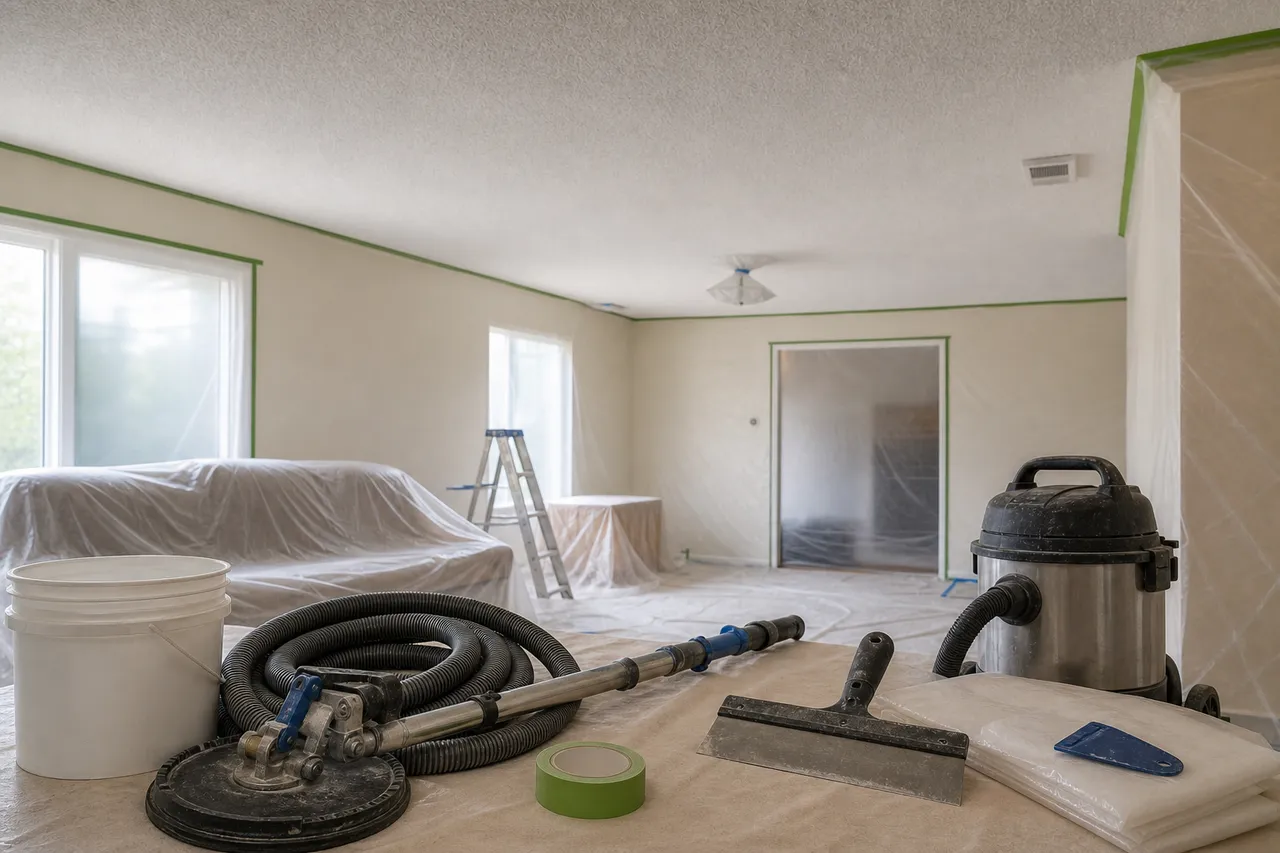
A scraper removes texture. A sprayer wets texture. A sander helps smooth compound. A shop vacuum collects some debris. None of these tools automatically produce a smooth ceiling. They also do not quote the project, identify hidden damage, repair seams, skim coat properly, seal torn paper, prime the ceiling, paint the ceiling, or protect the rest of the home.
This does not mean tools are useless. It means tools are not a complete finish system. A homeowner can rent equipment and still need compound, tape, primer, ceiling paint, plastic, drop sheets, blades, sanding discs, masks, disposal bags, extension poles, lighting, ladders, and time.
Plan the Protection Before You Touch the Ceiling
Popcorn removal is messy. Wet texture falls. Dry particles travel. Sanding dust settles everywhere if it is not controlled. Protecting the room should include floors, walls where needed, furniture, vents, door openings, closets, trim, and fixtures. In open concept areas, dust control becomes more difficult because there are fewer natural boundaries.
Condo projects add logistics. Elevator booking, hallway protection, parking, disposal, working hours, and cleanup expectations can matter as much as the scraping itself. If a DIY project runs longer than expected, condo rules can become a real problem.
Budget for the Finish, Not Just the Rental
The rental counter price is not the project price. The final cost includes supplies, safety equipment, repair materials, primer, paint, disposal, extra rental days, and possible rework. If scraping damages the drywall, the repair scope grows. If the ceiling needs a skim coat, the project changes from removal to drywall finishing.
For realistic pricing context, compare your plan with our GTA popcorn ceiling removal cost guide. It explains how painted texture, ceiling height, repairs, and finish level affect price.
Know the Difference Between Removed and Finished
A ceiling can have the popcorn removed and still not be ready for paint. Scraping often exposes seams, fastener marks, old repairs, torn paper, ridges, and waves. If the goal is a modern smooth ceiling, the scope needs finishing steps after removal.
This is where many DIY projects stall. The room is protected, the texture is partly removed, and then the homeowner realizes the ceiling now needs drywall finishing skills. Skim coating overhead is physically demanding and unforgiving. Sanding compound overhead is messy. Painting a ceiling with visible defects makes those defects more obvious.
When Renting Tools Makes Sense
Tool rental may make sense for a small, unpainted, low-risk area where the homeowner is comfortable with mess, repair work, and painting. It may also make sense if the goal is not a high-end smooth finish and the homeowner accepts some imperfections.
It is less suitable for painted popcorn, older homes needing testing, high ceilings, stairwells, condos with strict rules, large open concept areas, ceilings with pot lights, or rooms where the final finish will be inspected under strong light.
Questions to Answer Before You Rent
Is the texture painted? How old is the ceiling? Has asbestos testing been considered where appropriate? How many square feet are involved? What is the ceiling height? Are there pot lights, skylights, stairs, or bulkheads? Is the ceiling already damaged? Do you want a flat smooth ceiling or just texture removed? How will dust be controlled? Where will debris go? How many days can the room be out of service?
If you are unsure, read common popcorn ceiling removal mistakes before committing to rental tools.
Hidden Costs Homeowners Forget to Include
The obvious costs are the rental tool, scraper blades, sprayer, plastic, tape, and drop sheets. The less obvious costs are the ones that usually change the project. Extra rental days add up when drying takes longer or the ceiling does not scrape cleanly. Primer and ceiling paint cost more when a larger area needs repainting than expected. Sanding discs, compound, corner tools, rollers, poles, garbage bags, and protective gear also add to the total.
There is also a time cost. A homeowner may spend one day protecting the room, one day testing and scraping, another day repairing damage, another day sanding, another day priming, and another day painting. If the first paint coat reveals defects, the cycle repeats. This is why a weekend project can stretch into a week of disrupted rooms.
The largest hidden cost is rework. If the drywall paper tears badly, if the seams show after paint, or if dust spreads through the home, saving money on the rental can be outweighed by repair and cleanup. A realistic DIY budget should include supplies and a contingency for mistakes, not just the rental price.
Tool Rental Does Not Replace Finish Experience
Ceiling finishing is different from owning the right tool. The scraper has to be held at the right angle. Water needs time to soften unpainted texture without soaking the drywall. Compound needs to be applied thinly and feathered. Sanding needs to flatten ridges without damaging the surface. Primer needs to seal the repair before finish paint.
The hardest part for many homeowners is judging what is good enough before paint. A ceiling can look acceptable while it is dusty, then look uneven after primer. It can look good from directly below, then show waves from the sofa at night when pot lights are on. Professional ceiling work is partly process and partly judgment.
Rental Tools in Condos vs Houses
In condos, tool rental can be limited by space, rules, disposal, and working hours. There may be less room to stage debris and supplies. Hallway protection and elevator booking may be required. Dust complaints can become a building issue. If the ceiling work expands from one day to several days, logistics can quickly become the hardest part of the project.
In houses, rental tools may be easier to stage, but the project area is often larger. Open concept main floors, stairwells, and connected hallways make containment more important. If the homeowner works one room at a time, transitions between finished and unfinished ceiling areas need planning so the final result does not look patched together.
When to Call Before Renting
It is worth asking for advice before renting if the ceiling is painted, higher than standard, located over stairs, older and untested, visibly stained, cracked, already repaired, or part of a room with heavy natural light. It is also worth asking if you are trying to prepare the home for sale, because listing photos and buyer walkthroughs are unforgiving with ceiling defects.
A quick photo review cannot replace an on-site quote in every case, but it can often identify whether the project is likely to be scrape-friendly or whether it needs a skim coat plan from the start.
What a Professional Scope Includes That a Tool Rental Does Not
A professional scope should explain how the room will be protected, how the texture will be tested, how painted popcorn will be handled, how drywall damage will be repaired, whether skim coating is included, how sanding dust will be controlled, and whether primer, paint, and cleanup are part of the price. Those details matter because they describe the finished ceiling, not just the equipment used.
Tool rental gives you access to equipment for a limited number of days. It does not provide a plan for what happens if the ceiling changes the plan. If the texture does not release, if the drywall tears, if the ceiling needs multiple skim coat passes, or if the first primer coat reveals defects, the homeowner has to solve those issues while the room is already covered and out of service.
How to Compare DIY Savings Against Finished Result
The fair comparison is not tool rental versus a professional quote. The fair comparison is DIY total cost and time versus the cost of a finished ceiling. Include rental fees, supplies, missed work time, disposal, extra rental days, primer, paint, cleanup, and the risk of rework. Then compare that number to a quote that includes the finish you actually want.
If the ceiling is small, unpainted, and low-visibility, DIY may still make sense. If the ceiling is painted, large, high, part of a condo, or expected to look smooth under strong light, the value of a complete professional scope becomes much clearer.
A good decision is based on risk, not pride. Some homeowners are comfortable with a messy weekend and a few imperfections. Others need the room back quickly, need condo rules handled properly, or want a ceiling that will look clean in photos and daily light. The right choice depends on the ceiling and the finish standard.
Final CTA
Send photos of the ceiling, room size, ceiling height, and whether the popcorn is painted. We can tell you what type of finish scope makes sense.
FAQ
Is renting popcorn ceiling removal tools worth it?
It can be worth it for small, unpainted, lower-risk ceilings if you are prepared for protection, mess, repairs, sanding, primer, paint, and cleanup. It is often less suitable for painted popcorn or high-finish smooth ceilings.
Do popcorn ceiling removal tools make the job dustless?
No. Some tools reduce debris and dust, but popcorn removal and drywall sanding still require containment, HEPA dust control, careful cleanup, and realistic expectations.
Can I rent tools for painted popcorn ceiling removal?
You can rent tools, but painted popcorn often does not scrape cleanly. A test area should determine whether scraping, encapsulation, or skim coating is the better approach.
Related local pages and guides
Keep Planning Your Project
Field Photos
What the Work Can Look Like
Article Review
AuthorEPF Pro Services
Reviewed byEPF Pro Services
UpdatedJune 3, 2026
Ready to plan your ceilings?
Get a popcorn ceiling quote today
Share photos, ceiling heights, and timing. We reply the same day with Mississauga, Oakville, and GTA availability.
Quick next step