
What Are Popcorn Ceilings? Pros, Cons, and When to Remove Them
2026-03-31
Learn what popcorn ceilings are, why builders used them, their pros and cons, and when removal makes sense for Ontario and GTA homeowners.
Quick Answer
Learn what popcorn ceilings are, why builders used them, their pros and cons, and when removal makes sense for Ontario and GTA homeowners.
If you have looked up at an older ceiling and seen a bumpy, cottage-cheese-style texture, you have probably seen a popcorn ceiling. Many homeowners across Ontario and the GTA still have them in bedrooms, hallways, living rooms, basements, and sometimes entire homes.
If you are trying to understand whether that texture is just an older style or something worth changing, this guide will help. We will cover what popcorn ceilings are, why homes have them, the real pros and cons, and when it makes sense to move ahead with professional popcorn ceiling removal.
What are popcorn ceilings?
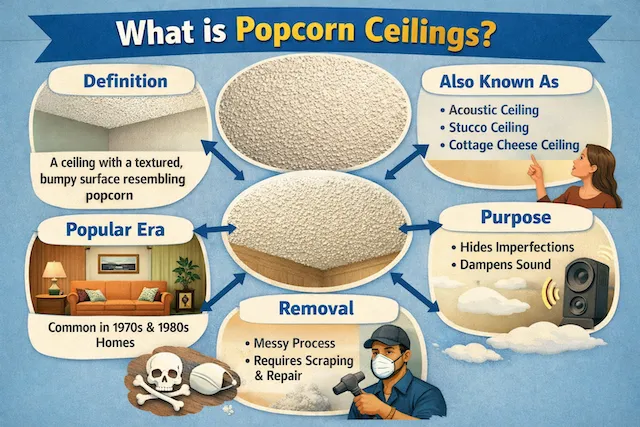
Popcorn ceilings are a textured ceiling finish made to create a rough, speckled surface overhead. Some people call them stucco ceilings, acoustic ceilings, stipple ceilings, or textured ceilings. The texture can be light and fine in one home and much heavier in another, depending on when it was applied and how it was sprayed or rolled on.
In practical terms, popcorn ceilings were often used to hide small imperfections in drywall finishing. Minor seams, uneven joints, and patchy surface work were less noticeable once a textured coating was added. That made the finish attractive to builders and painters working on larger volumes of homes.
Most homeowners asking "what are popcorn ceilings" are really asking a second question too: are they still worth keeping? The answer depends on the age of the home, the condition of the ceiling, the look you want, and whether the texture is causing problems with maintenance, repairs, or resale presentation.
Why do homes have popcorn ceilings?
There are a few reasons popcorn ceilings became common. First, they were fast to apply. Spraying or rolling texture onto a ceiling was often quicker than producing a perfectly flat, high-end drywall finish across every room.
Second, popcorn texture helped hide flaws. If framing was not perfectly straight, seams were slightly visible, or the drywall finish was not premium, the texture made those issues less obvious from floor level.
Third, some builders and homeowners liked the softer acoustic effect. The texture was often marketed as an acoustic finish because it could reduce some echo in a room, especially compared with a very flat, hard surface.
That said, the main reason most homes have popcorn ceilings is not performance. It was usually a speed-and-cost decision during original construction or a later cosmetic update.
Pros of popcorn ceilings
Popcorn ceilings are no longer the preferred look in most updated homes, but they did offer some practical advantages when they were first installed.
1. They can hide drywall imperfections
This is still the biggest practical advantage. Texture can disguise small waves, joints, patch marks, and inconsistencies that would stand out more on a smooth ceiling. In an older home with average finishing, that can make the room look more uniform from a distance.
2. They were cheaper and faster to install
For builders and contractors trying to finish a home quickly, popcorn ceilings saved labour. A textured finish is generally less demanding than producing a perfectly flat ceiling with a higher finish standard.
3. They can soften sound slightly
Some homeowners notice a small reduction in echo compared with a very flat ceiling. It is not a substitute for real soundproofing, but the rough texture can break up sound a bit in some rooms.
4. They may still be acceptable in some secondary spaces
Not every room needs the same level of finish. In some utility areas, older basements, or low-priority rooms, homeowners may decide the ceiling is not urgent if it is clean, stable, and not drawing attention.
Cons of popcorn ceilings
The reasons homeowners remove popcorn ceilings today are usually stronger than the reasons to keep them. Once the rest of a room starts to look updated, the ceiling often becomes the part that feels left behind.
1. They make a room look dated
This is the most common complaint. Popcorn ceilings are strongly associated with older interiors. Even after new flooring, trim, paint, and lighting, the ceiling can still make the room feel unfinished or stuck in another decade.
That visual mismatch is even more noticeable in open-concept spaces, homes with larger windows, and rooms with pot lights or cleaner modern finishes.
2. They collect dust and are harder to clean
Textured ceilings trap dust, cobwebs, and grime more easily than smooth ceilings. Kitchens, hallways, stairwells, and air-moving rooms tend to show this fastest. Cleaning them is awkward because scrubbing too aggressively can damage the surface or knock texture loose.
3. Repairs are difficult to blend cleanly
If you have a stain, crack, ceiling patch, plumbing cut, or old fixture repair, matching popcorn texture neatly is difficult. Small touch-ups often stay visible. That is one reason damaged popcorn ceilings often look progressively worse over time instead of better.
4. They can make lighting look harsher
Because the texture creates tiny shadows, the ceiling can look darker and less uniform than a smooth finish. Once natural light or pot lights hit the ceiling at an angle, the surface can read busy and uneven.
5. They can hurt resale presentation
A popcorn ceiling may not be a deal-breaker by itself, but it can make listing photos look older and reduce how updated the home feels in person. Buyers often notice the ceiling even when they do not mention it directly. In competitive markets, cleaner finishes matter.
6. Removal can be messy if done poorly
This is really a con of keeping the problem too long or choosing the wrong removal method. Textured ceiling removal can create dust, debris, and repair work if it is rushed. That is why containment, surface assessment, and proper finishing matter so much.
When should you remove a popcorn ceiling?
Not every popcorn ceiling needs immediate removal. The right time depends on the condition of the surface, the age of the home, and what else you are doing in the space.
Remove popcorn ceiling when the texture looks dated in an otherwise updated room
If you already changed flooring, painted walls, updated trim, or installed newer lighting, the old ceiling usually becomes more obvious. In that case, removal often gives the room the finished look the other upgrades were aiming for.
Remove it when there are stains, cracks, patches, or uneven repairs
Once a textured ceiling has water marks, patching, sagging areas, or older repair scars, the surface usually does not improve with small touch-ups. Full textured ceiling removal and refinishing often becomes the cleaner long-term solution.
Remove it before listing the home if presentation matters
If you are preparing to sell and want the home to photograph and show better, a smooth ceiling finish can help the space feel brighter and more current. It is not the only update that matters, but it can noticeably improve how complete the room feels.
For the full seller-side decision, read Should You Remove Popcorn Ceilings Before Selling Your Home?.
Remove it during larger renovations
If you are already repainting, adding pot lights, repairing drywall, or renovating the room, that is often the best time to deal with the ceiling. The home is already being staged for work, and it is more efficient to finish the ceiling before everything else is fully complete.
Be cautious in older homes until the ceiling is properly assessed
In older Ontario homes, it is smart to understand what is on the ceiling before disturbing it. If the home is older and the texture history is unclear, testing may be appropriate before removal starts. That is part of responsible project planning, not something to guess at mid-job.
Should you remove popcorn ceilings yourself?
Some homeowners do try to remove popcorn ceilings themselves, especially in one room or a basement. The issue is that the visible part of the work is only the start. Removal is one stage. The harder part is what comes after: repairing damaged areas, skim coating, sanding, sealing, priming, and getting the ceiling flat enough that it still looks good in daylight.
DIY attempts often run into three problems. First, dust control is harder than expected. Second, once the texture comes down, the drywall underneath may need more repair than the homeowner planned for. Third, even a small waviness in the finish can show up badly after paint.
If the goal is just to scrape texture and live with an imperfect result, DIY may be possible in some situations. If the goal is a clean, paint-ready smooth ceiling finish, most homeowners are better off using a professional crew.
What professional popcorn ceiling removal includes
A proper removal project is more than scraping a surface. Good results usually involve room protection, dust control, texture removal or surface preparation, drywall repairs where needed, skim coating, sanding, primer, and sometimes finish painting.
That full process is why homeowners comparing quotes should look beyond the cheapest number. A proper professional popcorn ceiling removal scope is built around the final result, not just the first step of taking texture down.
If your ceiling has stains, previous patching, rough seams, or damage from fixtures, the finishing stage is often what determines whether the room looks premium or patchy.
Popcorn ceilings vs smooth ceilings
Popcorn ceilings
- Older look in many homes
- Harder to clean
- Harder to repair neatly
- More shadowing under natural or angled light
- Can hide imperfections, but also hide problems until later
Smooth ceiling finish
- Cleaner and more current appearance
- Easier to maintain and repaint
- Better light reflection
- Better fit with modern trim, flooring, and lighting
- Cleaner long-term result after repairs or renovation work
Final thoughts
So, what are popcorn ceilings? They are a textured finish that became popular because they were quick to apply and forgiving over imperfect drywall work. In many Ontario homes, they still exist because they have simply never been updated.
The real decision for homeowners is not just what they are, but whether they still make sense in the room today. If the ceiling looks dated, collects dust, shows old repairs, or weakens the look of an otherwise updated home, removal and refinishing is often worth it.
If you are ready to move from an older textured ceiling to a cleaner flat finish, visit our popcorn ceiling removal service page to see how the process works and request a quote. If cost is your next question, our popcorn ceiling removal cost guide is a good follow-up.
Related local pages
Professional popcorn ceiling removal — Main service page for popcorn ceiling removal, skim coating, sanding, and paint-ready finishing across the GTA.
Popcorn ceiling removal cost guide — Helpful follow-up reading for homeowners comparing scope and pricing.
Should you remove popcorn ceilings before selling your home? — Seller-focused follow-up for homeowners deciding whether pre-listing ceiling work is worth doing.
FAQ
What are popcorn ceilings made of?
Popcorn ceilings are textured ceiling finishes applied to create a rough, bumpy surface. The exact material can vary depending on when the ceiling was installed and what product was used.
Why do homes have popcorn ceilings?
Most homes have popcorn ceilings because the finish was faster and cheaper to apply than a premium smooth ceiling, and it helped hide minor drywall imperfections.
Are popcorn ceilings still in style?
In most updated homes, no. Many homeowners now prefer a smooth ceiling finish because it looks cleaner, brighter, and more current.
When should I remove a popcorn ceiling?
Removal often makes sense when the ceiling looks dated, collects dust, has stains or repairs, or no longer fits the rest of the room after renovations.
Is professional popcorn ceiling removal worth it?
If you want a clean, flat, paint-ready finish, yes. The removal is only part of the job. Repairs, skim coating, sanding, and finishing are what determine the final result.
Field photos
Inspiration for your project
Popcorn ceiling terms this page covers
Useful terms to compare removal, skim coating, and finish scope before you book.
- what are popcorn ceilings
- popcorn ceilings
- popcorn ceiling removal
- remove popcorn ceiling
- professional popcorn ceiling removal
- why do homes have popcorn ceilings
- benefits of removing popcorn ceilings
- smooth ceiling finish
- textured ceiling removal
Article Review
AuthorAlex - EPF Pro Services
Reviewed byEPF Pro Services
UpdatedMarch 31, 2026
Ready to plan your ceilings?
Get a popcorn ceiling quote today
Share photos, ceiling heights, and timing. We reply the same day with Mississauga, Oakville, and GTA availability.
• HEPA dust control and Level 5 skim finishing
• Pot-light coordination and interior painting add-ons
• Flexible scheduling for condos and single-family homes
Quick next step
Send photos and room sizes through the main quote page, or call for a same-day reply.
Keeping the form on the main quote page helps this article stay lighter and faster.