
Stucco vs Popcorn vs Stipple Ceiling in Oakville
Updated June 28, 2026
Homeowners use stucco, popcorn, and stipple to describe textured ceilings. This Oakville guide explains what the terms usually mean and how they affect removal.
- Trusted since 2005
- Fully insured
- Dust-controlled sanding
- Paint-ready finishing
- 3-year workmanship warranty
Quick Answer
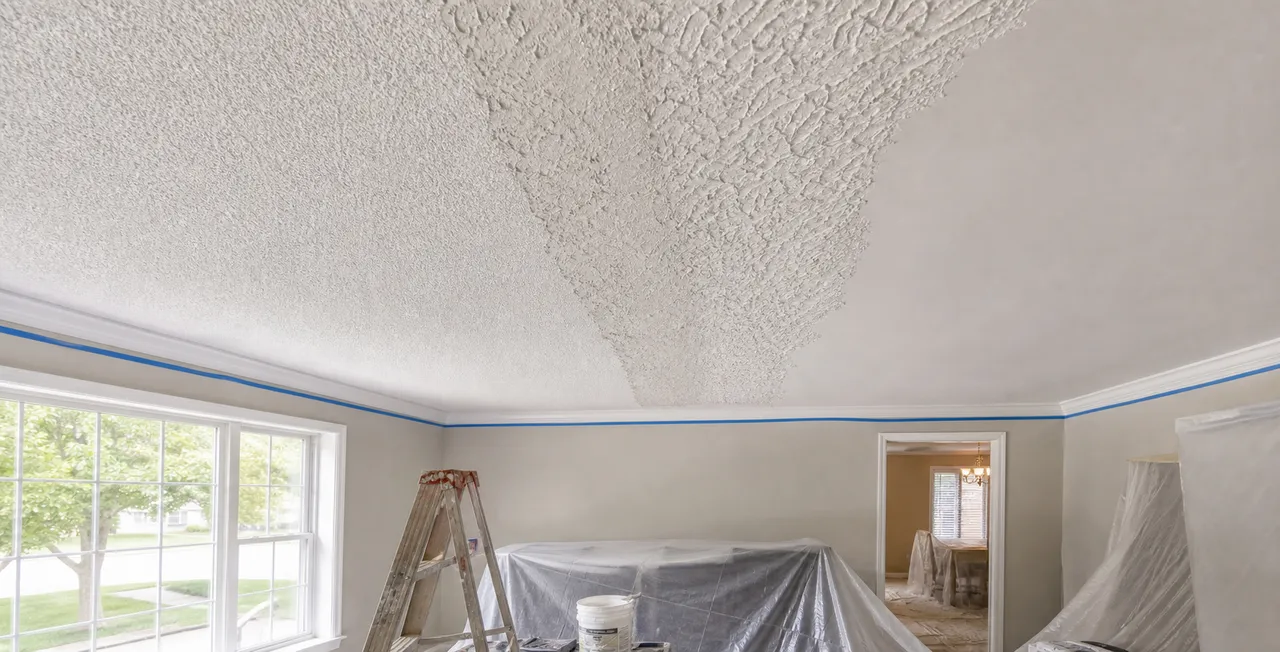
In Oakville homes, stucco ceiling, popcorn ceiling, and stipple ceiling are often homeowner terms for textured ceiling finishes. The exact texture matters less than how it behaves when tested: whether it is painted, bonded hard, loose, stained, cracked, or hiding old repairs. A proper quote should focus on the ceiling condition and the final smooth finish, not only the name used for the texture.
Oakville homeowners use different words for the same basic problem: an outdated textured ceiling. Some call it stucco, some call it popcorn, and others call it stipple. If you are comparing stucco and popcorn ceiling removal in Oakville, the important question is not only the label. It is how the texture is bonded, whether it has been painted, and what finish you want after removal.
Short answer: popcorn usually describes a raised sprayed texture, stipple often describes a smaller or patterned texture, and stucco is a common homeowner term for textured ceiling work. In quotes, those words are often used interchangeably. A contractor should test the ceiling and price the real work: protection, removal or preparation, repair, skim coating, sanding, primer, and paint.
How the terms are usually used
Popcorn ceiling usually means a bumpy sprayed texture. Stipple ceiling can mean a finer pattern or a texture made with a brush, roller, or spray. Stucco ceiling is often used broadly for textured ceilings, especially by homeowners who are not sure what product or method was used. None of these labels guarantees an easy or hard removal.
The same room can have mixed conditions. A ceiling may have original texture in one area, painted texture in another, old patching near a light fixture, and a skimmed repair near a leak. That is why photos and test areas matter more than the word used in the first phone call.
Texture name versus finished result
Homeowners often ask whether stucco is harder than popcorn or whether stipple is cheaper to remove. Sometimes it is, sometimes it is not. Texture thickness, paint layers, ceiling height, drywall condition, room access, furniture, and finish expectations decide the job. A thin texture that has been painted heavily can be harder than a thicker unpainted texture that releases cleanly.
If your ceiling is already painted, read the related guide on painted popcorn ceiling removal in Oakville.
What a complete Oakville quote should include
A complete quote for stucco, popcorn, or stipple ceiling removal in Oakville should explain the finished ceiling, not only the first removal step. Homeowners should know whether the scope includes floor and wall protection, texture testing, scraping or surface preparation, drywall repair, skim coating, sanding, primer, flat ceiling paint, cleanup, and clear exclusions. Those details matter because two prices can look similar while one stops at removal and the other carries the ceiling to a finished smooth result.
For Oakville, homes in Bronte, Glen Abbey, River Oaks, Old Oakville, Kerr Village, and West Oak Trails can have different ceiling textures depending on age, past painting, fixture changes, and previous repairs. That is why EPF asks for photos, room sizes, ceiling height, texture close-ups, and access notes before confirming the scope. A quote that reflects the actual home is more useful than a generic square-foot number that ignores furniture, lighting, repairs, condo rules, or the final finish standard.
Room-by-room planning
Not every room needs the same plan. A stippled bedroom ceiling may be straightforward while a painted stucco main floor can need a broader resurfacing plan. Main-floor living rooms, kitchens, dining areas, bright family rooms, and primary bedrooms usually need more careful finish work because daylight and pot lights make small defects easier to see. Secondary bedrooms, closets, and storage areas may still need proper repair and primer, but the finish expectations can be different.
Open-concept ceilings need special attention because there may not be a clean place to stop. If a living room, dining room, kitchen, and hallway share one ceiling plane, the quote should define whether the whole plane is included. Stopping at the wrong spot can leave a visible transition after primer and paint.
Painted texture, repairs, and finish quality
The removal method should be chosen after testing the actual ceiling, not after hearing one texture label. Painted popcorn or painted stucco often resists moisture, releases unevenly, or pulls drywall paper when forced. Older patches, water stains, tape seams, nail pops, and fixture changes may also appear once the texture is removed or prepared. That is why the refinishing stage should be priced clearly instead of treated as a small add-on.
The smooth look comes from the full sequence: repair weak areas, skim coat where needed, sand with dust control, prime, inspect, touch up, and paint with the right flat ceiling finish. If the quote skips primer or only includes light patching, the ceiling may still show flashing, texture shadows, sanding scratches, or patch edges after paint.
Small room versus full main-floor projects
A small bedroom does not always price neatly by square foot because setup time still exists. The crew still has to protect the room, set up tools, test the texture, prepare the ceiling, repair, skim, sand, prime, clean up, and return if dry time requires another visit. That setup time is why a small room can feel more expensive per square foot than adding another similar room while the crew is already on site.
Full main-floor projects have different efficiencies and different risks. More square footage can make the setup more efficient, but larger scopes need stronger sequencing. The crew has to keep traffic paths usable, protect finished areas, manage dust, plan drying time, and decide which rooms can be completed together. In occupied homes, phasing may be more important than speed because families still need bedrooms, kitchens, bathrooms, and work areas during the project.
Dust control and occupied-home logistics
Popcorn ceiling work is messy by nature. The practical goal is dust-controlled work, not a promise that no dust exists. Floors, walls, vents, fixtures, furniture, cabinets, and traffic paths should be protected before work begins. HEPA-connected sanding, sealed work areas where practical, and daily cleanup make the project more manageable in occupied homes.
Occupied Oakville homes need more planning than empty rooms. Large furniture, electronics, pets, work-from-home routines, children, and finished flooring all affect the schedule. Condo units may also need elevator booking, hallway protection, parking instructions, building work hours, and tighter staging. These details should be discussed before the project date.
Timing with painting, flooring, and lighting
Ceiling work should usually happen before final wall paint, trim touch-ups, deep cleaning, and staging. If the ceiling is done after walls are freshly painted, the crew has to spend more time protecting those walls and there is a higher chance of touch-ups. If flooring has just been installed, protection becomes more important. If pot lights are being added, electrical rough-in should usually happen before final skim coat and paint.
Drying time also matters. Skim coats, repairs, primer, and paint cannot always be compressed into one visit. Humid weather, basements, closed condo units, thick repair areas, and painted texture can all slow drying. A realistic schedule leaves room for primer inspection and final corrections instead of booking every trade back to back.
How to compare contractor claims
Oakville homeowners will see a lot of similar language online: fast, clean, dustless, mess-free, smooth, professional, and affordable. Those words are not enough by themselves. Ask what the contractor actually does before work starts, during sanding, after primer, and at cleanup. A clean ceiling project is built from steps, not adjectives.
For dust claims, ask how floors, vents, doorways, furniture, and traffic paths are protected. For smooth-finish claims, ask whether full skim coating is included or whether the quote only allows for spot repair. For quick-turnaround claims, ask how drying time and primer inspection are handled. For low-price claims, ask what is excluded: paint, primer, repairs, disposal, furniture movement, high ceilings, or painted texture.
The strongest quote is usually the one that explains the method in plain language. It should say what rooms are included, how the texture will be tested, what happens if the texture is painted, what finish level is expected, and how the ceiling will be checked before final paint. If the quote is vague, the homeowner has no way to know whether they are buying a removal service or a finished smooth ceiling.
How finished ceilings should be inspected
Do not judge a ceiling only while the compound is raw. Raw compound can hide small defects that appear after primer. A better inspection sequence is: repair and skim, sand, check under light, prime, check again, touch up, then paint. Primer is useful because it seals the surface and reveals flashing, low spots, sanding scratches, and patch edges before the final coat.
Look from the doorway, from across the room, and under the room's normal lighting. Pot lights, daylight from large windows, and side light from patio doors can reveal flaws that overhead work lights miss. A ceiling does not need to look like a showroom fantasy, but it should look intentionally smooth and calm under normal use. Raised patch edges, obvious texture shadows, torn-paper marks, and shiny flashing should be addressed before final paint when the scope includes a finished ceiling.
What changes when the home is a condo or townhouse
Condos and townhouses can be smaller than detached homes, but they are not automatically simpler. Access, elevator booking, parking, shared hallways, waste handling, work-hour rules, and tight staging can all affect the project. A condo quote should mention building logistics before the crew arrives. A townhouse may have stairs, narrow entries, and limited staging space that change furniture movement and protection.
Noise and dust expectations also matter more in attached homes. The contractor should explain which rooms are closed off, where materials are staged, how daily cleanup works, and what the homeowner should expect during sanding. If neighbours, building staff, or property managers are involved, those rules should be known before the start date.
How to decide what is worth doing now
Not every ceiling project has to be the whole house at once. If budget or timing is limited, prioritize rooms where texture is most visible or where future work would be expensive to repeat. Main floors, kitchens, family rooms, hallways, and primary bedrooms often come first because they affect daily living, resale photos, and first impressions. Secondary bedrooms or storage areas can sometimes wait.
However, splitting the work can create extra setup cost later. If several rooms share the same floor, same furniture movement, and same paint schedule, doing them together may be more efficient. The best answer depends on the homeowner's budget, timeline, and tolerance for disruption. A good quote can separate must-do rooms from optional rooms so the homeowner can choose clearly.
What homeowners should avoid before the crew arrives
Do not start scraping test patches, sanding random areas, or cutting around fixtures before the scope is clear. Small exploratory damage can create extra repair work, especially if the texture is painted or the drywall paper tears. Do not paint over stained or loose texture right before asking for removal pricing, because that can hide useful clues and make removal harder.
Avoid booking final cleaners, painters, flooring installers, photographers, or staging immediately after the first ceiling workday. Ceiling refinishing has stages, and the room may need time for compound to dry, primer to reveal small defects, and paint to cure enough for normal use. A cleaner schedule is usually worth more than forcing every trade into the shortest possible calendar.
Also avoid assuming all rooms behave the same. One ceiling may scrape cleanly while another needs bonding and skim coating. One room may have hidden repair patches around old lights. Another may have stronger daylight that demands more careful sanding and primer checks. Treat each room as part of one plan, but let the actual ceiling condition guide the details.
If you are unsure what matters, send more context rather than less. A short note about the room use, renovation schedule, furniture limits, previous leaks, old paint, and desired stopping point can prevent a vague estimate. The best quote is usually built from ordinary details gathered before the crew arrives.
DIY limits and safety cautions
DIY can look cheaper for a small, unpainted secondary room, but the risk changes quickly when the ceiling is painted, older, high, stained, cracked, or part of a main living area. The most common DIY problem is stopping at the rough stage: texture is gone, but the ceiling still needs paper repair, skim coating, sanding, primer, and paint before it looks smooth.
If the ceiling may be from an asbestos-risk era, testing should happen before disturbance. Do not scrape, sand, drill, or cut suspect material based on appearance. If there is active water damage, mould concern, sagging drywall, or electrical work around pot lights and fixtures, those issues need the right inspection or trade before normal ceiling finishing continues.
What photos to send before asking for a price
For stucco, popcorn, or stipple ceiling removal in Oakville, send one wide photo from two corners of each room, close photos of the texture, and photos around lights, vents, crown moulding, skylights, ceiling fans, stains, cracks, bulkheads, and old patches. Add rough room dimensions, ceiling height, whether the home is occupied, and whether furniture can move out.
Also include the word you use for the texture, whether you know it has been painted, and whether the goal is paint-ready or fully painted. The better the starting information, the easier it is to separate a simple ceiling from one that needs extra protection, painted-texture planning, Level 5 skim coating, stain-block primer, or a site visit.
Questions to ask before booking
Ask what method is assumed, what happens if the texture is painted, whether full skim coating or only spot repair is included, how sanding dust is controlled, whether primer is included, whether ceiling paint is included, what work is excluded, how long rooms will be unavailable, and what information the contractor needs before day one.
Those questions protect the homeowner from comparing incomplete work to complete work. They also help the contractor plan the home properly, especially when the ceiling work is connected to painting, flooring, pot lights, listing photos, or a move-in deadline.
Local next step
EPF Pro Services handles stucco and popcorn ceiling removal in Oakville with sealed protection, dust-controlled sanding, drywall repair, skim coating, primer, optional ceiling paint, and clean photo-based quote planning. When you are ready, send photos through the Oakville ceiling quote form.
FAQ
Are stucco, popcorn, and stipple ceilings the same thing?
They are different terms homeowners use for textured ceilings. The exact label matters less than whether the texture is painted, bonded, damaged, or hiding repairs.
Is stucco ceiling removal harder than popcorn ceiling removal?
Not always. Difficulty depends on paint layers, texture thickness, drywall condition, ceiling height, repairs, and the finished smooth ceiling standard.
Can stipple ceilings be made smooth?
Yes. The ceiling may be scraped, prepared, skim coated, sanded, primed, and painted depending on how the texture responds.
What photos should I send for a textured ceiling quote?
Send wide room photos, close texture photos, ceiling height, fixture photos, and any stains, cracks, patches, crown moulding, or skylight details.
Related local pages and guides
Keep Planning Your Project
popcorn ceiling removal in Oakville
Main Oakville service page for dust-controlled removal, skim coating, primer, and optional ceiling paint.
Oakville popcorn ceiling removal cost guide
Cost factors for texture condition, access, repairs, skim coating, primer, and paint.
request an Oakville ceiling quote
Send photos, room sizes, ceiling height, and timing for a clearer written scope.
painted popcorn ceiling removal in Oakville
Companion guide for painted texture and skim-coat decisions.
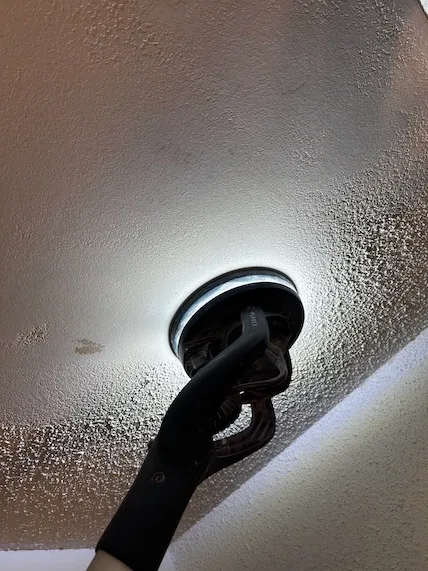
Field Photos
What the Work Can Look Like
Article Review
AuthorEPF Pro Services
Reviewed byEPF Pro Services
UpdatedJune 28, 2026
Ready to plan your ceilings?
Get a popcorn ceiling quote today
Share photos, ceiling heights, and timing. We reply the same day with Oakville availability.
Quick next step