
Popcorn Ceiling Removal Quote Checklist: Photos, Access, Repairs, and Finish Scope
2026-05-10
A practical homeowner checklist for getting a clearer popcorn ceiling removal quote, including photos, room access, painted texture, repairs, skim coat, primer, and paint.
Quick Answer
A practical homeowner checklist for getting a clearer popcorn ceiling removal quote, including photos, room access, painted texture, repairs, skim coat, primer, and paint.
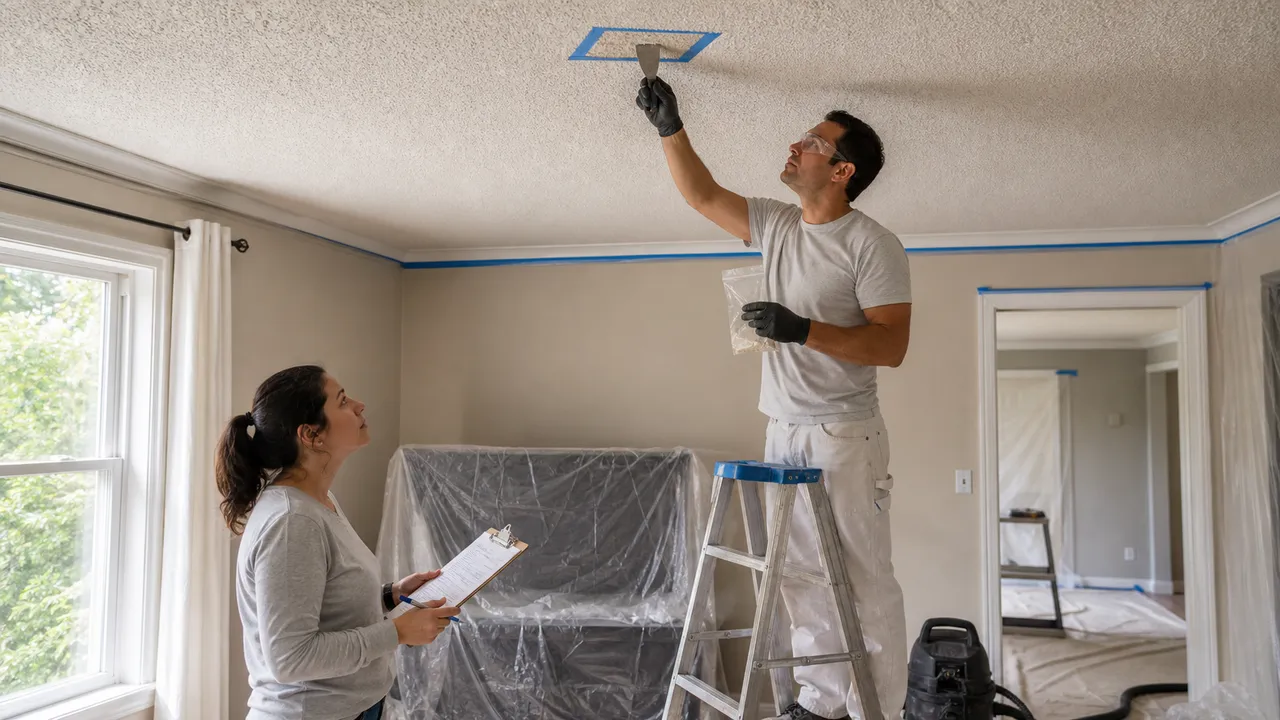
A better popcorn ceiling removal quote starts before anyone talks about a square-foot price. Homeowners often ask for a fast number, but the final cost depends on more than room size. Painted texture, ceiling height, furniture, access, cracks, water stains, pot lights, skim coating, primer, and flat ceiling paint can all change the work. A good quote checklist helps the contractor understand the room before the job starts and helps the homeowner compare scopes properly.
This guide is built for homeowners in Ontario who want a clearer estimate without turning the first conversation into guesswork. The goal is simple: send the right photos, describe the right room conditions, and ask the right scope questions before booking. That does not make every quote final from photos alone, but it gives the contractor enough information to flag obvious cost factors and avoid a vague low number that grows once the room is protected.
If you are ready to compare the full service scope, start with our popcorn ceiling removal service. Use this checklist before you request a quote so the estimate reflects the real ceiling, not just a rough room size.
Why a checklist matters before a ceiling quote
A checklist matters because popcorn ceiling removal is not one single task. The finished result usually includes protection, texture removal or resurfacing, drywall repairs, skim coating, sanding, primer, and sometimes ceiling paint. If a quote includes only scraping, it may look cheaper than a quote that includes a full smooth-ceiling finish. Those are not equal offers. The checklist helps separate removal-only pricing from a complete finish scope.
It also helps prevent mid-project surprises. If the ceiling is painted, if there are stains, if the room has tall ceilings, or if furniture cannot be moved, the contractor needs to know early. Otherwise the quote may be based on a best-case room that does not match your home. A strong estimate is not just a number. It is a written understanding of what has to happen from setup to final paint.
Photos to send before requesting a quote
Send one wide photo of each room so the contractor can see the layout, furniture, ceiling shape, windows, and access. Send a close photo of the texture so the contractor can see whether it looks heavy, light, painted, damaged, or uneven. Send photos around pot lights, vents, ceiling fans, crown moulding, bulkheads, skylights, and old patch areas. These details tell the contractor where labour may increase.
If there are stains, cracks, tape lines, nail pops, or previous repairs, photograph them directly and from a few feet back. A close stain photo shows the defect, but a wider photo shows where that defect sits in the room. Repairs in the middle of a bright living room ceiling are different from repairs in a small closet. Location matters because light and visibility affect the finish standard.
Photos should be taken in normal daylight if possible. Turn on room lights as well if pot lights or fixtures create shadows. Do not worry about taking perfect photos. The goal is to show the ceiling honestly. Clear phone photos are usually enough for a first conversation, especially when paired with room dimensions and notes about access.
Room measurements and ceiling height
Measure the length and width of each room, then note whether the ceiling is standard height, high, vaulted, sloped, or broken up by bulkheads. Exact architectural measurements are not required for a first estimate, but rough dimensions are much better than guessing. A 10 by 12 bedroom and a 16 by 28 open-concept living area are completely different projects.
Ceiling height affects setup, sanding, protection, and worker movement. A standard bedroom may be straightforward. A vaulted living room, stairwell, or open foyer may require different equipment and more labour. Room shape also matters. Angled walls, beams, crown moulding, tray ceilings, and bulkheads increase detail work because the crew has more edges to protect and blend.
Tell the contractor if the texture has been painted
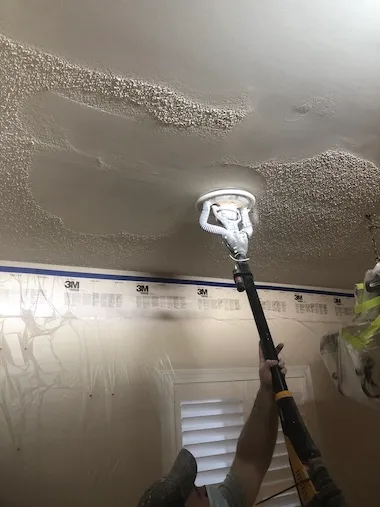
Painted popcorn ceiling texture usually changes the quote because it often takes longer. Paint seals the texture, so water does not soften it the same way. That can make scraping slower, increase the chance of drywall paper damage, and push more of the project into skim coating and sanding. If you know the ceiling has been painted, say so before the contractor prices the job.
If you are not sure, look for shine, roller marks, hard texture, or spots where the texture looks sealed. Many ceilings have been painted once or twice without the homeowner realizing it. A contractor may still need to confirm on site, but your observation helps them avoid assuming a quick scrape. Painted texture is one of the biggest differences between a low planning number and a realistic smooth-ceiling quote.
For a deeper look at that condition, see Painted Popcorn Ceiling Removal: Scrape or Skim Coat?.
List visible repairs, stains, and cracks
A popcorn ceiling quote should account for the drywall underneath. Texture can hide seams, tape problems, old water stains, nail pops, and fixture patches. Once the texture comes off, those issues become part of the finished ceiling. If you already see cracks, stains, or sagging areas through the texture, tell the contractor before they quote.
Water stains are especially important. A stain may need stain-blocking primer, drywall repair, or confirmation that the leak source is fixed. Cracks may need taping and feathering. Old pot-light patches may need wider blending so they do not show after paint. A quote that ignores repairs may not deliver the smooth finish you actually want.
Furniture, access, and room protection
Tell the contractor whether furniture can be removed from the room. Empty rooms are easier to protect and work in. If furniture must stay, it needs to be moved, covered, and worked around. That adds time and can affect dust control. Large sectionals, wall units, built-ins, pianos, and heavy beds should be mentioned before the crew arrives.
Access matters too. Condos may require elevator booking, parking instructions, hallway protection, and approved work hours. Detached homes may have easier access but more rooms or higher ceilings. Townhomes may have tight stairs or limited staging space. The quote should reflect how the crew will get tools, vacuums, ladders, compound, and protection materials into the work area.
Ask what finish level is included
A smooth ceiling quote should say what finish level is included. Some quotes include basic scraping and patching. Others include a full skim coat or Level 5-style finish. The difference matters most in rooms with pot lights, large windows, open sightlines, and flat ceiling paint. If you want a modern smooth ceiling, make sure the quote includes the finish work needed to get there.
Primer and paint should also be clear. Some homeowners want the ceiling left paint-ready for their own painter. Others want primer and flat ceiling paint included. Both approaches can work, but they should not be confused. If the quote includes paint, ask whether it includes stain-blocking primer where needed and how many finish coats are planned.
For pricing context, read our popcorn ceiling removal cost guide.
Dust control should be part of the quote
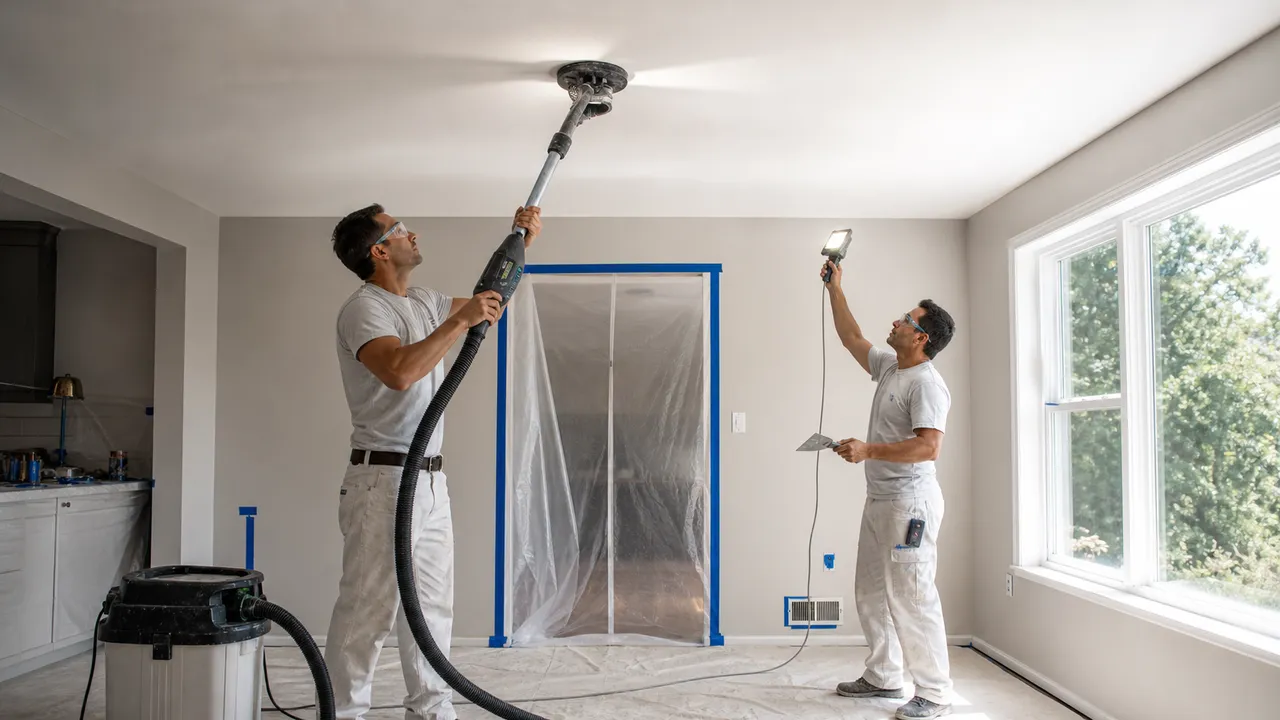
Dust control should not be a vague promise. Ask how the crew protects floors, vents, doorways, furniture, traffic paths, and adjacent rooms. Ask whether sanding is connected to HEPA vacuum equipment. Ask what daily cleanup includes and what happens before primer. Ceiling work creates overhead debris and fine dust, so the dust plan is part of the value of the quote.
This is especially important if the home is occupied during the project. Families, pets, work-from-home schedules, kitchens, bathrooms, and bedrooms all affect staging. A contractor who explains the dust-control sequence will usually produce a better experience than one who simply says the work will be clean.
Timeline questions to ask
Ask how many working days the room may be unavailable. Removal is only one part of the schedule. Compound needs dry time. Skim coats may need multiple passes. Sanding, primer, touch-ups, and paint all add steps. Painted texture, ceiling repairs, humidity, and room size can extend the timeline. A realistic schedule is better than a fast promise that creates pressure later.
If you are planning around listing photos, moving dates, flooring, cabinetry, or other trades, say so early. Ceiling work should usually happen before final painting, deep cleaning, and delicate finish work. If the project is part of a larger renovation, the contractor can help place it in the right sequence.
What the written scope should say
A written scope should list the rooms, approximate areas, preparation, removal or resurfacing method, repairs, skim coating, sanding, primer, paint, cleanup, and exclusions. If drywall repair is only included for minor imperfections, that should be stated. If major water damage or large patches are separate, that should be stated too. Clear exclusions are better than unclear promises.
The scope should also explain what happens if the ceiling behaves differently than expected. Painted texture may not scrape cleanly. Hidden stains may appear. Old tape may loosen. Drywall paper may tear. A professional quote should give a realistic process for those discoveries so the homeowner is not surprised by every change.
Why city and building type affect the plan
A detached home in Mississauga is different from a downtown Toronto condo or an older Hamilton house. Parking, elevator access, waste handling, work hours, ceiling height, and room access can all affect the schedule. Condos may require elevator booking and hallway protection. Older houses may have plaster transitions, uneven framing, or previous repairs hidden under texture. These details should be shared before the quote is finalized.
Homeowners should also mention whether the home is occupied, whether furniture can be moved out, whether there are pets, whether parking is easy, and whether the building has renovation rules. Ceiling work is smoother when the contractor is planning the real room, not an imaginary empty box.
How this checklist supports better internal planning
This checklist supports the main popcorn ceiling removal page without duplicating it. The service page explains the finished workflow. This article explains what information the homeowner should gather before asking for pricing. Together, they help people move from research to a clearer quote and help search engines understand the full topic around popcorn ceiling removal planning.
If you are collecting quotes, keep the photos, room measurements, access notes, and contractor comments together. That gives every trade the same starting point and reduces confusion when the project moves from estimate to removal, repair, priming, and painting. That simple project file is also useful later if you sell the home, renovate another room, or need to explain what was done to a future contractor.
Common quote gaps that create problems later
The most common quote gap is assuming that popcorn removal automatically includes a smooth finished ceiling. It may not. A contractor might price texture removal only, then leave skim coating, primer, and painting as separate items. Another contractor may include the full finish. The second quote may look higher, but it may actually be the more complete scope.
Another gap is repair allowance. A quote might include minor touch-ups but not larger drywall repairs, water damage, loose tape, fixture holes, or ceiling cracks. That is reasonable if it is written clearly. It becomes a problem when the homeowner expects every repair to be included and the contractor priced only normal surface prep.
Cleanup is another area to clarify. Daily cleanup, final vacuuming, disposal, and paint prep are different tasks. Ask what happens at the end of each workday and what the room should look like when the project is finished. If furniture needs to be moved back, if walls need repainting, or if trim needs touch-ups, ask whether those items are included.
How to compare two popcorn ceiling quotes
Put the quotes side by side and compare line items instead of only the total. Check room names, square footage, ceiling height, painted texture assumptions, protection, removal method, drywall repair, skim coat, sanding, primer, paint, cleanup, warranty, and schedule. If one quote is missing several of those items, it is not the same job.
Also compare communication. A contractor who explains the ceiling condition, finish level, dust plan, and exclusions is usually easier to work with than one who gives a fast number with little detail. Clear scope protects both sides. The homeowner knows what they are buying, and the contractor knows what standard they are expected to deliver.
If a quote is unclear, ask for clarification before booking. It is easier to adjust scope on paper than during sanding, primer, or final paint.
Final takeaway for a better popcorn ceiling quote
A better quote comes from better information. Send clear photos, rough room sizes, ceiling height, access notes, furniture details, and any visible repair issues. Ask whether the quote includes skim coating, sanding, primer, flat ceiling paint, dust control, and cleanup. Then compare scopes, not just prices.
The best popcorn ceiling project is not the fastest promise. It is the one that starts with the right room details and finishes with a ceiling that looks smooth under real light. If your ceiling is painted, patched, stained, high, furnished, or in an occupied home, say that before you compare removal prices.
Related local pages
popcorn ceiling removal — Main service page for removal, skim coating, sanding, primer, and painting.
drywall repair — Repair service for ceiling cracks, patches, leak damage, and paint-ready surfaces.
Mississauga popcorn ceiling removal — Local ceiling removal and smooth finishing page for Mississauga homeowners.
popcorn ceiling removal cost guide — Cost factors for painted texture, access, room size, repairs, primer, and paint.
taking off popcorn ceiling — Step-by-step guide to prep, removal, smoothing, primer, and paint.
FAQ
What photos should I send for a popcorn ceiling removal quote?
Send wide room photos, close texture photos, photos around lights and vents, and photos of cracks, stains, old patches, or painted texture.
Can I get a quote from photos only?
Photos can support a strong planning estimate, but some projects still need on-site confirmation before final pricing, especially if the ceiling is painted, high, damaged, or difficult to access.
What should be included in a smooth ceiling quote?
A clear quote should state preparation, removal or resurfacing method, repairs, skim coating, sanding, primer, paint, dust control, cleanup, and exclusions.
Field photos
Inspiration for your project
Drywall terms this page covers
Useful terms to compare scopes, finish levels, and scheduling before you book.
- popcorn ceiling removal quote checklist
- popcorn ceiling estimate photos
- smooth ceiling quote scope
- popcorn removal room access
- ceiling repair quote checklist
Article Review
AuthorEPF Pro Services
Reviewed byEPF Pro Services
UpdatedMay 10, 2026
Plan your drywall scope
Get a drywall quote today
Share photos, room sizes, and timing. We reply the same day with GTA drywall availability and a clearer written scope.
• Clear finish-level scope and drywall sequencing
• Basements, ceilings, condos, and commercial buildouts
• Flexible scheduling for occupied homes, condos, and active sites
Quick next step
Send photos and room sizes through the main quote page, or call for a same-day reply.
Keeping the form on the main quote page helps this article stay lighter and faster.