
Painted vs Unpainted Popcorn Ceiling Removal in Mississauga
Updated May 19, 2026
Mississauga guide to painted vs unpainted popcorn ceiling removal, including cost factors, removal method, skim coating, dust control, and quote scope.
- Trusted since 2005
- Fully insured
- Dust-controlled sanding
- Paint-ready finishing
- 3-year workmanship warranty
Quick Answer
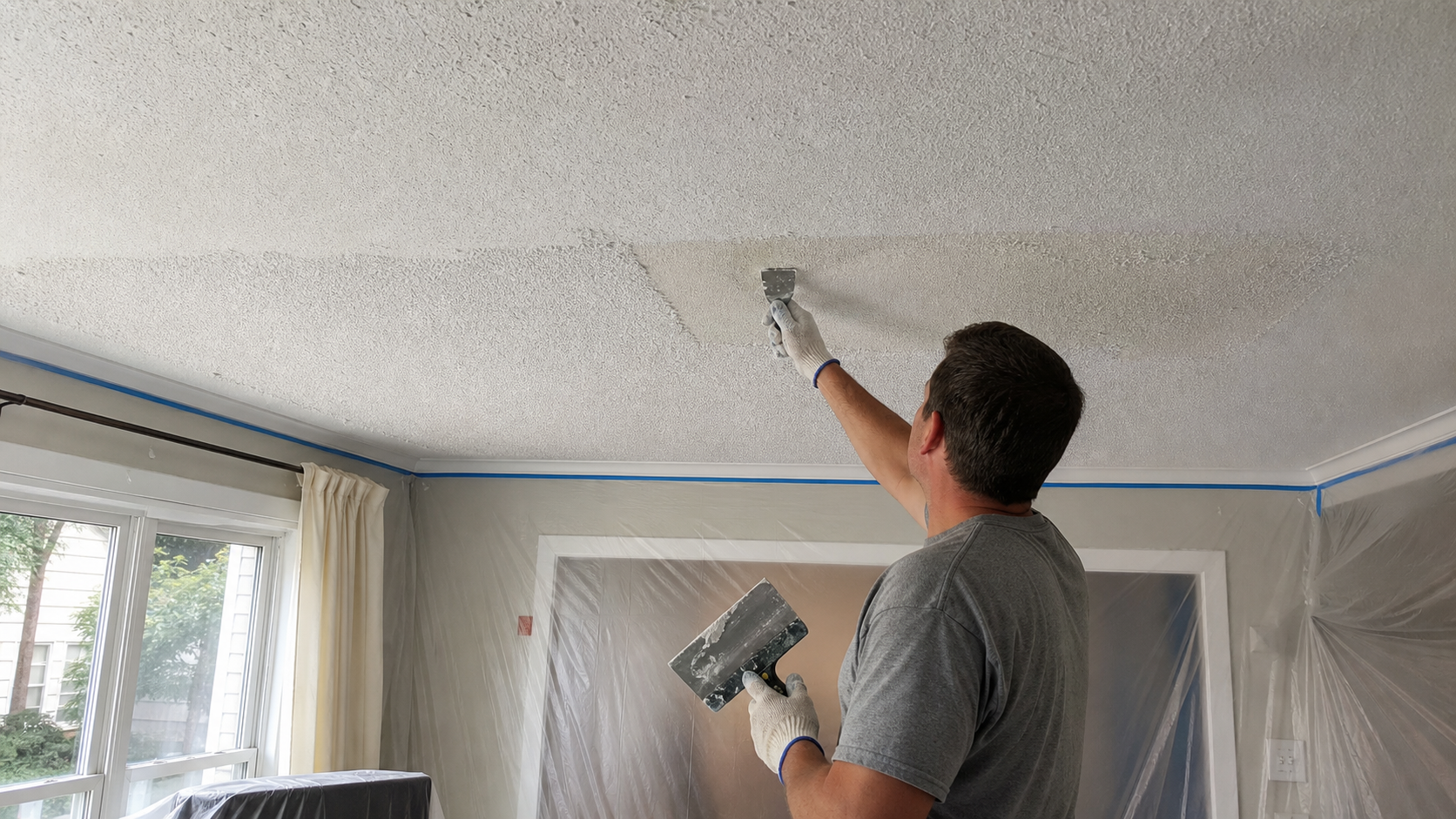
Painted popcorn ceiling removal in Mississauga usually takes longer and needs more finishing than unpainted texture. Paint seals the texture, so the ceiling often needs testing, controlled removal, repair, skim coating, sanding, primer, and flat ceiling paint instead of simple scraping only.
Short answer: painted popcorn ceiling removal in Mississauga usually takes longer and needs more finishing than unpainted texture. Unpainted popcorn may soften and scrape more predictably after testing. Painted popcorn is sealed by paint, so water often cannot soften it evenly, scraping can tear drywall paper, and the ceiling may need broader skim coating before primer and flat ceiling paint.
If you want the full service workflow, start with professional popcorn ceiling removal and the local popcorn ceiling removal in Mississauga page. This guide focuses on the painted-versus-unpainted quote decision.
Quick answer for Mississauga homeowners
Painted vs unpainted popcorn ceiling removal in Mississauga is mainly a question of release, damage risk, and finish scope. If the texture is unpainted, a test area may soften and come down cleaner. If the texture is painted, the project may shift from a scrape-first job to a scrape-and-skim or skim-heavy job. That changes labour, timeline, dust control, and how the quote should be written.
| Situation | What it usually means | Quote item to confirm |
|---|---|---|
| Unpainted popcorn | Usually absorbs moisture better and may scrape more predictably after testing. | Confirm protection, scraping method, repairs, skim coat allowance, primer, and paint. |
| Painted popcorn | Paint seals the texture, making removal slower and increasing paper-tear risk. | Confirm test patch, repair plan, full skim coating, sanding, primer, and paint. |
| Multiple paint coats | Texture can behave like a hard shell and may not release cleanly. | Confirm whether resurfacing or encapsulation is safer than aggressive scraping. |
| Old repairs or stains | Texture may be hiding seams, patch edges, water marks, or weak drywall paper. | Confirm drywall repair, stain-blocking primer, and finish-level expectations. |
Why painted popcorn behaves differently
Paint changes the ceiling because it locks the texture together. Unpainted texture can sometimes be softened, scraped, and cleaned up with less fight. Painted texture resists moisture. When the crew scrapes it, the surface may come off in uneven pieces, or it may pull at the drywall face underneath. That does not mean the ceiling cannot be fixed. It means the quote should not be priced like a best-case unpainted bedroom.
In Mississauga homes, this often comes up when a ceiling was painted during a previous refresh. The room may look cleaner at first because the popcorn was coated white, but the paint makes later removal harder. Homeowners sometimes do not know the ceiling was painted because it happened before they owned the home. Clues include a harder surface, slight sheen, roller marks, sealed texture tips, or areas where paint bridged between texture peaks.
A test patch matters because two ceilings that look similar can behave very differently. One may release in a controlled way. Another may tear, smear, or expose old drywall paper damage. The contractor should use that test to choose the method instead of forcing the same approach on every ceiling.
When unpainted popcorn is still not simple
Unpainted popcorn is usually more predictable, but it is not automatically a quick scrape-and-paint job. The drywall underneath may still have seams, nail pops, old repairs, low spots, or stains. Popcorn texture was often used because it hid imperfections. Once it is removed, the ceiling may need patching and smoothing before primer.
Room conditions can also make unpainted texture more involved. High ceilings, open-concept spaces, stairwells, skylights, crown moulding, bulkheads, and heavy furniture all add protection and staging time. A small empty bedroom with unpainted texture is different from a furnished main-floor living room with large windows and pot lights.
Why skim coating is common after painted texture
Skim coating is often the stage that makes painted popcorn removal successful. When texture does not scrape cleanly, the ceiling needs a controlled surface correction instead of more aggressive scraping. Thin coats of compound help flatten torn areas, patch transitions, old seams, and texture shadows so the final ceiling reads as one smooth plane.
The more light a room has, the more important this becomes. Pot lights, large Mississauga condo windows, main-floor living rooms, kitchens, and long hallways can reveal tiny ridges after paint. A ceiling that looks acceptable during removal can still show flaws after primer. That is why the finish level should be part of the quote, not something decided after the room is already dusty.
For the broader method comparison, read Painted Popcorn Ceiling Removal: Scrape or Skim Coat?.
Timeline differences
Unpainted texture in a simple room can often move faster because the removal stage is more predictable. Painted texture tends to take longer because testing, controlled removal, repair, skim coating, drying, sanding, primer, and touch-ups become more important. The project timeline is not only labour time; it is also drying time between compound, primer, and paint.
For a Mississauga homeowner planning around flooring, painting, listing photos, or moving dates, the safe move is to build in enough time for finishing. A rushed painted ceiling often fails at the end, not the beginning. It may be scraped quickly, but if the skim coat, sanding, primer, and paint are rushed, the final surface can flash, shadow, or show patch lines.
What a complete Mississauga quote should include
For painted vs unpainted popcorn ceiling removal in Mississauga, compare the written scope before you compare the total price. A useful quote should say which rooms are included, whether the ceiling is painted or unpainted, what protection is included, how repairs will be handled, whether full skim coating is included, whether sanding is connected to dust control, and whether primer and flat ceiling paint are part of the work.
This matters because popcorn ceiling removal is often sold too narrowly. A removal-only number may not include the finishing stage that makes the ceiling look smooth. A full-scope number may look higher at first, but it may include protection, texture removal or surface prep, drywall repair, skim coating, sanding, primer, paint, cleanup, and return visits for touch-ups after primer reveals small flaws.
Mississauga projects can also change depending on building type. A detached home may need more square footage priced across several rooms. A condo may need elevator booking, parking notes, hallway protection, and stricter work hours. A townhome may have tight stairs, limited staging space, and ceilings broken up by bulkheads. Those details belong in the estimate because they affect how the crew protects the home and moves through the work.
Furniture is another quote factor. Empty rooms are easier to protect and finish. Furnished rooms can still be handled, but large sectionals, beds, dining sets, electronics, and built-ins need more protection and slower sequencing. If furniture cannot leave the room, say so before pricing. It is better to build that into the plan than to discover on the first morning that half the work area is blocked.
How the work usually flows
A clean project starts with room protection. Floors, walls, vents, fixtures, doorways, cabinets, counters, and traffic paths are protected before the ceiling is disturbed. Then the crew tests the texture and confirms whether scraping, controlled removal, skim coating, or a mix of methods is the right approach for that ceiling.
After the texture stage, the ceiling is inspected. This is where old seams, nail pops, paper tears, stains, fixture patches, and uneven drywall start to matter. Those defects have to be repaired before the ceiling is smoothed. Skipping this stage may save time during removal, but it usually costs the homeowner in the final look.
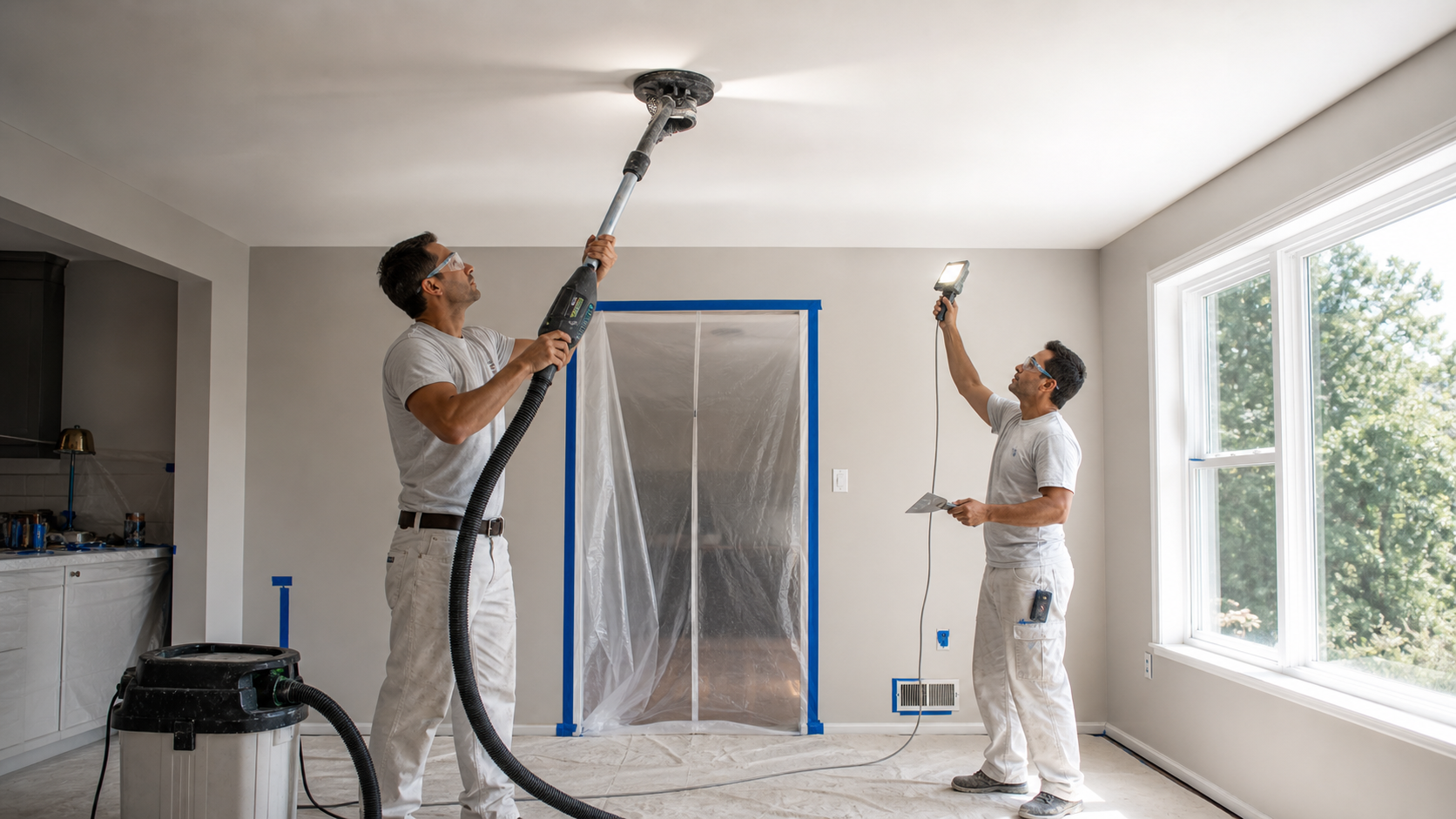
The finishing stage is where the ceiling becomes modern. Joint compound is applied in controlled passes, allowed to dry, sanded with dust control, and checked under real light. Primer then seals the surface and reveals small flaws that may need touch-up. Flat ceiling paint is usually the final step when the homeowner wants the room fully finished rather than only paint-ready.
Common mistakes to avoid
The first mistake is assuming the lowest price includes the same work. Ask what is included and what is excluded. If one quote includes only scraping and another includes skim coat, sanding, primer, paint, protection, and cleanup, those are different jobs.
The second mistake is planning other trades in the wrong order. Ceiling work should usually happen before final wall paint, trim touch-ups, flooring protection removal, deep cleaning, and staging. If pot lights, electrical changes, cabinet work, or full interior painting are part of the renovation, sequence those items before final ceiling paint whenever possible.
The third mistake is judging the ceiling too early. Raw compound can look acceptable before primer, then show sanding marks or low spots once sealed. A good crew expects to inspect after sanding and again after primer. That is not rework from failure; it is part of getting a smooth ceiling to read properly under daylight and pot lights.
What photos to send before asking for a price
Send one wide photo of every room, one close photo of the texture, and photos around lights, vents, cracks, stains, old patches, crown moulding, bulkheads, skylights, and ceiling fans. Add rough room dimensions, ceiling height, whether the home is occupied, and whether furniture can be moved out.
If you are in a condo, include building access notes, parking instructions, elevator booking requirements, and work-hour limits if you know them. If you are not sure whether the popcorn has been painted, say that too. A contractor can often flag likely painted texture from photos, but a test area is still the better confirmation.
How EPF Pro Services approaches the scope
EPF Pro Services focuses on the finished ceiling, not only the scrape. That means protection first, realistic testing, repair before finishing, dust-controlled sanding, skim coating where the ceiling needs it, primer, and flat ceiling paint when included in the scope. The goal is a ceiling that looks calm after the room is back together, not a ceiling that only looked acceptable before the final coat.
For a proper quote, send photos, room sizes, ceiling height, the building type, and any timing constraints. We can review whether the project looks straightforward, whether the ceiling is likely painted, whether condo logistics matter, whether pot lights or asbestos testing need to be addressed first, and what should be included so the quote is not comparing incomplete work to complete work.
How to compare cheap and complete quotes
A cheaper quote is not automatically wrong, but it has to be compared against the same finish target. Ask whether the number includes only texture removal or whether it includes the full path to a smooth ceiling. The difference is important because the homeowner does not live with the removal stage. They live with the ceiling after primer, paint, daylight, and pot lights show what was left behind.
A complete quote should make exclusions clear. Major water damage, active leaks, asbestos testing or abatement, electrical work, fixture supply, full wall painting, trim repair, and furniture moving may need separate lines depending on the project. Clear exclusions are not a problem. Unclear exclusions are a problem because they make two quotes look similar when they are not.
When a quote is much lower, check the finish language. Words like scrape, remove, repair, skim, sand, prime, and paint all mean different steps. If the quote says scrape only, ask what happens after scraping. If it says skim coat, ask whether that means spot skim or full ceiling skim. If it says paint-ready, ask whether primer is included or whether the ceiling is being left for another painter.
Room-by-room planning in Mississauga homes
Not every room deserves the same finish budget. Main-floor living rooms, kitchens, dining rooms, hallways, condo great rooms, and primary bedrooms usually show ceiling flaws first because they have stronger light and longer sightlines. Secondary bedrooms, closets, storage rooms, and basement utility areas may be more forgiving. A good scope can prioritize the rooms that matter most instead of treating every ceiling as identical.
If the project is part of a resale preparation, the priority is usually first-impression rooms and listing-photo rooms. If the project is part of a long-term renovation, the priority may be durability, lighting quality, and avoiding future rework. Those are different goals, and the quote should reflect which goal matters more to the homeowner.
For occupied homes, phasing can help. Some homeowners prefer one larger project so the mess is handled once. Others prefer room-by-room scheduling so they can keep bedrooms, kitchens, or work areas available. The right answer depends on family routine, condo rules, pets, furniture, and whether the home is being prepared for sale or daily living.
What affects timeline after the ceiling is opened up
The timeline can change once the texture is removed or the surface is tested. Hidden tape seams, loose drywall paper, stains, old fixture repairs, settlement cracks, or uneven board joints can add repair and drying time. That does not mean the project was poorly planned. It means the old texture was hiding conditions that could not be fully judged until the surface was exposed.
Drying time is one of the biggest schedule controls. Skim coats and repairs need time to dry before sanding and primer. Primer then gives the crew a clearer read on the surface before final paint. Trying to compress those steps can lead to shrink-back, flashing, visible patch edges, or sanding marks that only appear after the final coat.
Weather and ventilation can matter too. Humid days, poorly ventilated rooms, basements, bathrooms, and closed condo units can slow compound drying. A realistic schedule should allow for the material to cure properly instead of forcing paint onto a surface that is not ready.
Questions to ask before booking
Before booking, ask: What method are you assuming? What happens if the ceiling is painted? Is full skim coating included or only spot repair? How will you protect floors, walls, vents, fixtures, and furniture? Is sanding connected to dust control? Is primer included? Is flat ceiling paint included? What work is excluded? How many days will the room be unavailable?
Also ask what information the contractor needs from you. Good contractors usually want photos, dimensions, access notes, ceiling height, building rules, furniture limitations, and any known history such as leaks, previous patches, asbestos tests, or electrical plans. The more accurate the starting information, the cleaner the scope and schedule can be.
Bottom line
Unpainted popcorn is usually easier to remove, but painted popcorn is still fixable when the quote is honest about testing, repairs, skim coating, sanding, primer, and paint. The important part is not whether the texture is painted or unpainted in isolation. The important part is whether the contractor prices the real ceiling condition and the finished smooth result you want.
FAQ
Is painted popcorn ceiling harder to remove than unpainted popcorn?
Yes. Paint seals the texture, so it usually does not soften as easily. That can make removal slower and increase the need for repair and skim coating.
Can painted popcorn ceilings still be removed in Mississauga homes?
Yes. The method may involve testing, controlled scraping, repair, skim coating, sanding, primer, and flat ceiling paint rather than simple scraping only.
How do I know if my popcorn ceiling has been painted?
Look for a harder sealed surface, slight sheen, roller marks, or texture that does not absorb moisture. A contractor should confirm with a small test area.
Does unpainted popcorn always need skim coating after removal?
Not always, but many ceilings still need at least some smoothing because old texture can hide seams, patches, and surface defects.
Drywall service pages and guides
Plan the Right Drywall Service Next
popcorn ceiling removal
Main service page for removal, skim coating, sanding, primer, and painting.
drywall repair
Repair service for ceiling cracks, patches, leak damage, and paint-ready surfaces.
Mississauga popcorn ceiling removal
Local ceiling removal and smooth finishing page for Mississauga homeowners.
popcorn ceiling removal cost guide
Cost factors for painted texture, access, room size, repairs, primer, and paint.
Painted popcorn: scrape or skim coat
Broader guide to removal method decisions when texture has been painted.
Taking off popcorn ceiling
Step-by-step guide to protection, testing, removal, repair, smoothing, primer, and paint.
Level 4 vs Level 5 finish after popcorn removal
Finish-level comparison for smooth ceilings under daylight and pot lights.
request a popcorn ceiling removal quote
Send photos, room sizes, ceiling height, and timing for a clearer written scope.
Field Photos
What the Work Can Look Like

Article Review
AuthorEPF Pro Services
Reviewed byEPF Pro Services
UpdatedMay 19, 2026
Plan your drywall scope
Get a drywall quote today
Share photos, room sizes, and timing. We reply the same day with Mississauga drywall availability and a clearer written scope.
Quick next step