
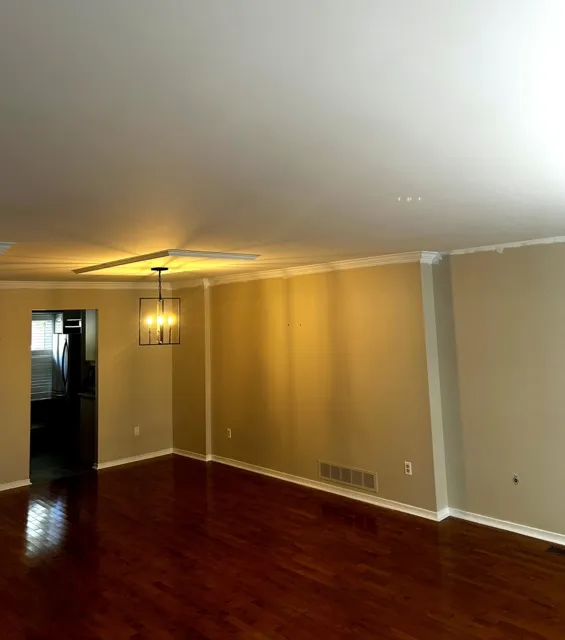
Project examples at a glance
The repository does not contain one complete Oakville project record that ties these photographs to a verified neighbourhood, property, room count, ceiling area, height, texture coating, repair list and duration. To protect accuracy and client privacy, no missing facts have been inferred.
| Evidence used | Real EPF field photographs from multiple ceiling projects |
|---|---|
| Oakville location | Not verified for the photographs |
| Visible stages | Texture, protection, sanding, surface inspection and finished smooth ceilings |
| Method explained | Scrape where suitable; bond-and-skim or encapsulate where the surface requires it |
| Finish goal | A uniform smooth ceiling suitable for the agreed primer or paint handoff |
| Duration | Not stated; no single verified timeline is available |
What the ceiling looks like before work
Before work begins, the important condition is not only the stipple or stucco pattern. We look at whether the texture is sound, painted, stained or loose; whether old drywall joints telegraph through it; and whether fixture changes, cracks or patches have interrupted the field. Texture can disguise shallow waves and repair edges. Once it comes off, those defects become easier to see.
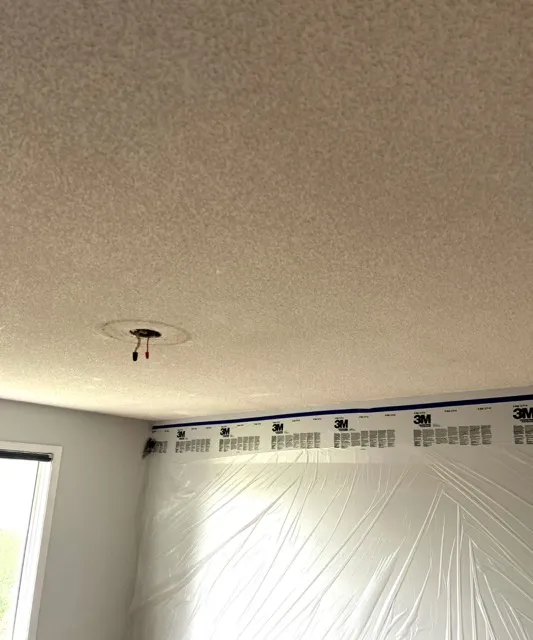
Potentially older textured ceiling material should be assessed before it is disturbed. Ontario provides an overview of asbestos requirements and responsibilities, while the Canadian Centre for Occupational Health and Safety explains asbestos concerns in homes. This is a reason to arrange appropriate assessment or testing when relevant, not a DIY removal instruction.
Why the surface determines the method
Unpainted texture that softens and releases cleanly can often be scraped. Painted popcorn behaves differently because the paint can prevent moisture from reaching the texture and can lock the aggregate together. Aggressive scraping may tear drywall face paper or gouge the board. In that condition, a controlled test area helps determine whether partial removal followed by bonding and skim coating is more reliable.
Encapsulation is another option when the existing material is stable and disturbing it is unsuitable, but the build-up, transitions, fixture openings and final plane still need to be planned. The right decision comes from the surface, not from a one-method promise. Our complete popcorn ceiling removal process explains how protection, removal and refinishing fit together.
Protection and dust-control setup
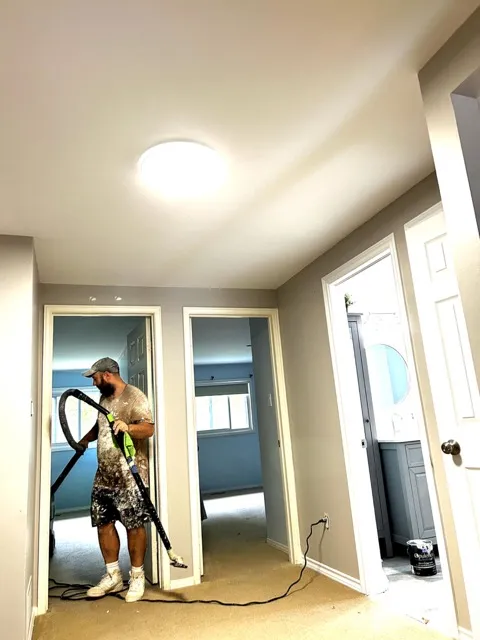
Ceiling work happens over everything in the room, so protection starts below the work. Floors need suitable covering, wall edges and built-ins need masking, and furniture is removed or fully isolated according to the scope. Doorways and traffic paths are planned so debris does not migrate through the home. Supply and return openings are protected as appropriate, and fixtures are made safe before work begins.
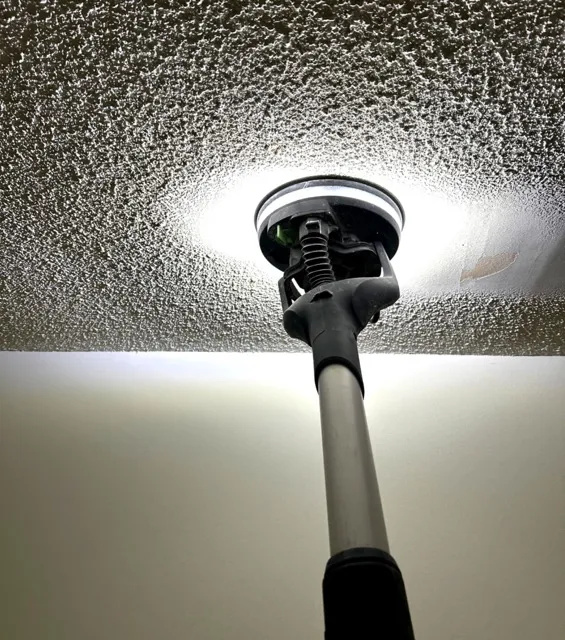
Sanding is managed with vacuum-connected equipment and containment. That makes the work dust-controlled, not dust-free. The distinction matters: careful setup reduces spread, but no responsible contractor should promise that renovation dust can be eliminated completely. See how EPF approaches dust-controlled popcorn ceiling removal when comparing scopes.
Removal and repairs after the texture is open
Removal is a diagnostic stage as much as a demolition stage. With the texture gone, old tape edges, fastener movement, torn paper, shallow gouges, stains and fixture changes can become visible. Loose material is removed, damaged paper is sealed where required, and joints or isolated defects are corrected before the full-field finish begins. Any active leak must be resolved before cosmetic ceiling work proceeds.
Repair scope varies, so it should be identified rather than assumed. Where the ceiling work exposes repair needs beyond normal refinishing, the related Oakville drywall repair scope should describe what will be fixed before primer.
Level 5 skim coating and sanding
A scraped ceiling can still show every joint, patch and paper change. A full-field skim helps equalize texture and porosity while correcting small variations across the plane. Coats are kept controlled and are allowed to dry before the next correction. Heavy compound is not a substitute for flat work; building too much material at once can shrink, crack or create more sanding.
After sanding, the ceiling is checked from more than one position. Raking or critical light—daylight from large windows, temporary side lighting or rows of pot lights—can expose ridges and depressions that flat overhead light hides. The target is a uniform surface suited to the room’s lighting. For bright, open rooms, Level 5 drywall finishing in Oakville explains why final inspection matters.
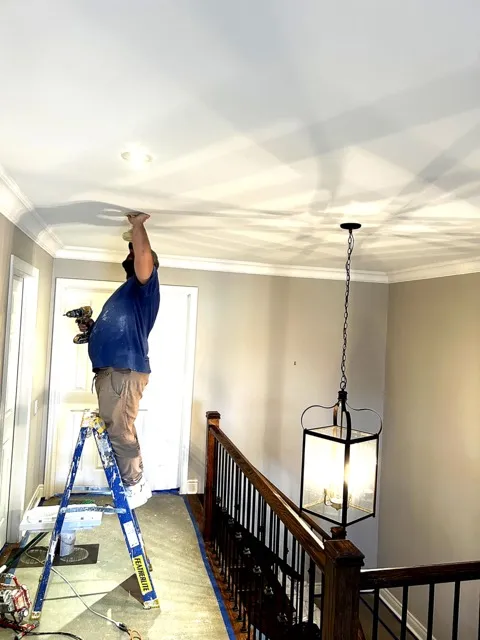
Primer and final finish
Primer is a checkpoint, not a way to hide unfinished drywall. It seals the repaired field and makes scratches, pinholes and uneven areas easier to identify before the finish coat. If the agreed handoff is primer-ready, the quote should say so. If painting is included, it should state the primer and finish-paint scope rather than leaving homeowners to assume that “smooth” means fully painted.
Flat ceiling paint is normally chosen because added sheen can emphasize minor surface variation. Fixture openings and ceiling-to-wall lines also deserve a final check; a smooth centre field does not compensate for ragged edges around lights, vents or crown moulding.
How the project sequence affects the timeline
Without a verified single-project log, a day-by-day claim would be misleading. The dependable sequence is assessment and testing where appropriate, room protection, a removal or bonding test, the selected removal or encapsulation work, repairs, skim-coat stages, drying, dust-controlled sanding, critical-light inspection, primer and any specified painting. Room size, painted texture, ceiling height, occupancy, hidden defects and drying conditions all affect the schedule.
For planning and price comparisons, use the Oakville popcorn ceiling removal cost guide and ask every contractor to separate removal, repairs, skim coating, sanding, primer, paint, protection and cleanup. A short timeline can simply mean that fewer stages are included.
Before-and-after gallery: finished ceiling checks
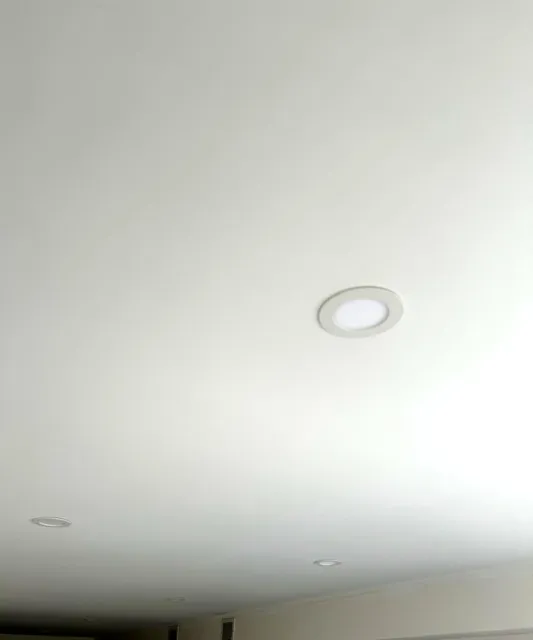
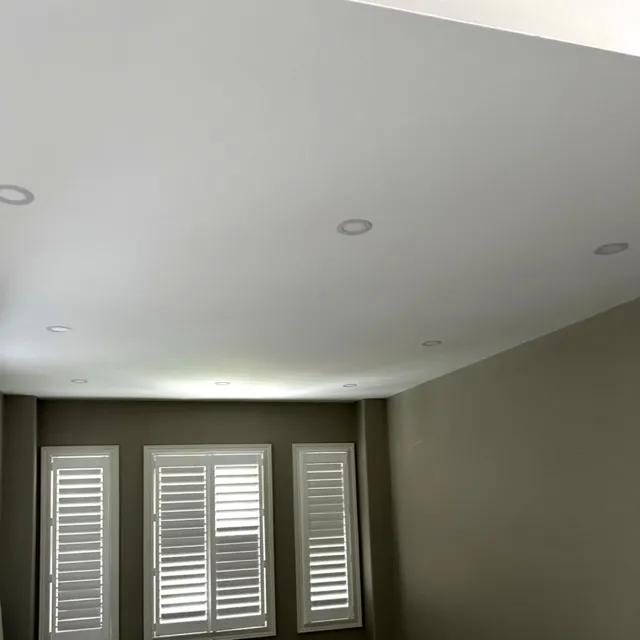
These final EPF project examples show the change homeowners are looking for: a continuous ceiling plane without the heavy shadow pattern of popcorn texture. Recessed-light edges, wall transitions and the field between fixtures remain part of the inspection. Because these photographs are not tied to a verified Oakville project record, they are examples of EPF workmanship rather than evidence of one Oakville address.
Field note from Alex
“The texture coming off is the obvious change, but the finish is decided afterward. I check the whole ceiling plane, the repaired joints and the fixture edges under light that will reveal defects before primer or paint makes them harder to correct.”
What Oakville homeowners should include in a quote request
Useful information reduces guessing and makes it easier to compare the same scope. Send wide room photos for access and protection planning, close photos of the texture and any problem areas, rough room dimensions, ceiling height, and whether the popcorn appears painted or unpainted. Point out pot lights, vents, stains, cracks, old patches, stairwells, vaulted sections and other high areas.
Also explain whether the home is occupied, what furniture can be moved and the timing you are considering. Photos cannot answer every technical question, but they help identify whether an on-site review or test area is needed before a written scope is finalized.
Frequently asked questions
Why does scraping alone not produce a finished smooth ceiling?
Texture can hide seams, patches, torn paper and shallow waves. Scraping exposes the substrate; repairs, skim coating, sanding and inspection create the uniform surface needed before primer.
How does painted texture change the method?
Paint can seal the popcorn so it will not soften or release evenly. A test area may show that controlled removal plus bonding and skim coating is safer than aggressive scraping.
How is the ceiling checked before primer or paint?
The surface is inspected from several angles under daylight, fixture light or temporary raking light. Joints, repair edges, scratches, pinholes and openings are corrected before the specified primer or paint stage.
Get an Oakville Popcorn Ceiling Removal Quote
Send room photos, rough dimensions, ceiling height and your preferred timing. Include close-ups of the texture and note any paint, cracks, stains, pot lights, vents or high areas so EPF can review the actual ceiling scope.