
How to Prepare Your Home for Popcorn Ceiling Removal in Burlington
2026-04-06
Burlington homeowner guide to popcorn ceiling removal prep, including furnished vs vacant rooms, painted ceiling checks, dust control, logistics, and what happens after removal.
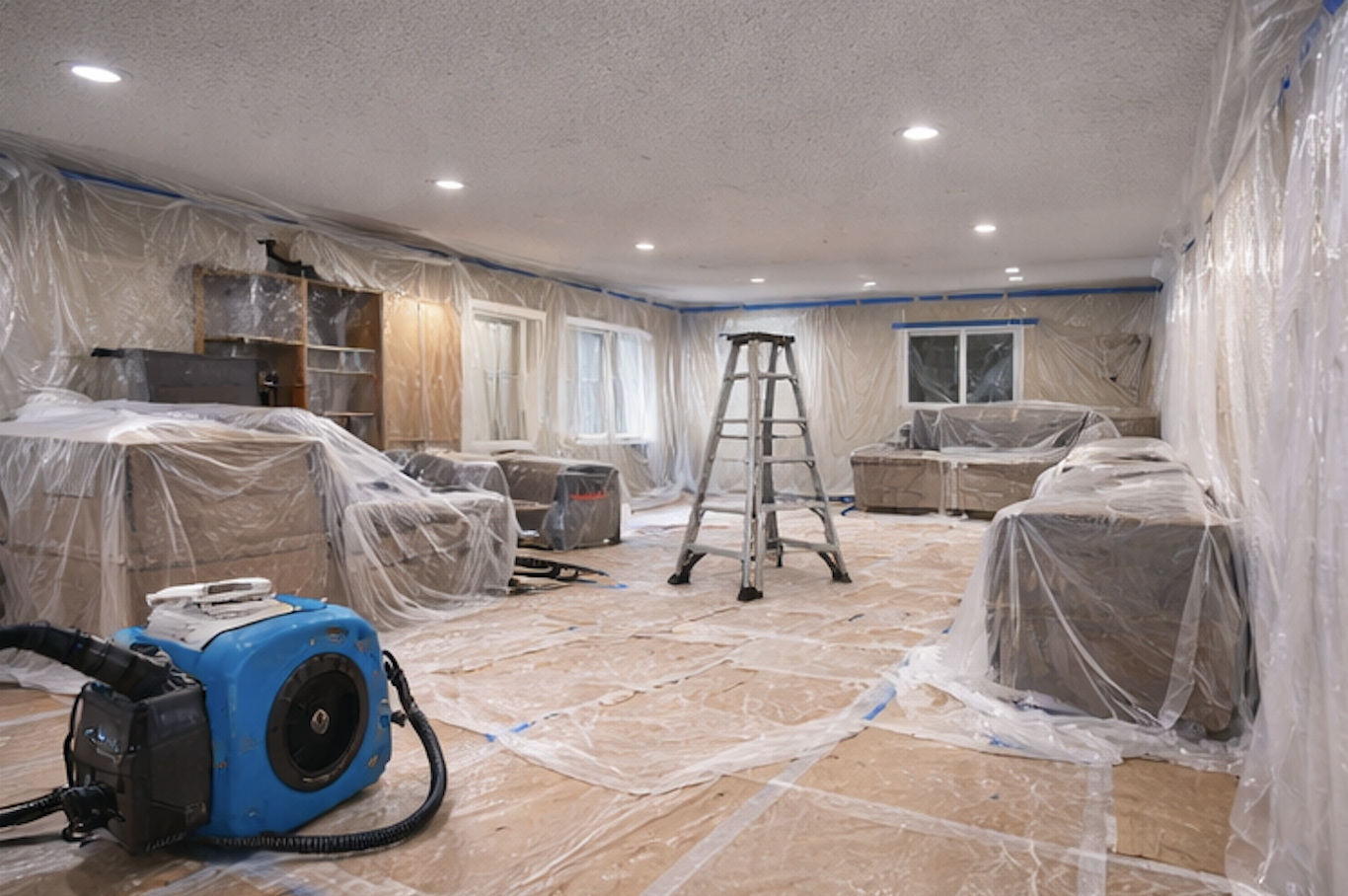
Popcorn ceiling removal is one of those projects that sounds straightforward until the room actually gets prepared for work. The texture has to be disturbed overhead, ladders and tools need to move safely through the space, and the ceiling almost always needs follow-up repairs before it looks clean under paint again.
That is why preparation matters so much. In Burlington homes and condos, the final result is affected just as much by room setup and dust control as it is by the actual scraping or skim-coat stage. A ceiling project runs more cleanly when the room is open, the surfaces are protected properly, and the homeowner has already thought through how the space will be used during and after the work.
If you are planning the job now, start with our Burlington popcorn ceiling removal page. It gives you the local service process, typical project types, and a clearer picture of what a proper paint-ready ceiling scope actually includes.
This guide is built for real Burlington conditions, from waterfront condos and downtown apartments to family homes in Millcroft, Tyandaga, Roseland, Orchard, Palmer, Shoreacres, Headon Forest, and Aldershot. The point is not to hand you a generic checklist. The point is to help you prepare the room in a way that makes the job cleaner, faster, and less disruptive.
Why proper preparation matters before popcorn ceiling removal
Preparation affects more than the mess. It affects access, pace, finish quality, and whether the crew can move from protection to removal to repairs without losing time. When the room is tight, the project slows down. When furniture, electronics, and floor paths are already dealt with before arrival, the work sequence is easier to control and the finishing stage is usually smoother.
That is especially true in Burlington homes with open living spaces, brighter lake-facing rooms, and updated interiors where ceiling flaws are more visible once fresh paint goes on. Even small setup issues can create bigger problems later if containment is weak or the crew has to keep re-staging the room as the job progresses.
Good popcorn ceiling removal preparation usually leads to these practical advantages:
- Better containment and easier cleanup after removal, sanding, and skim work
- Safer movement for ladders and tools across the full ceiling area
- Fewer slowdowns caused by moving furniture during the project
- Better access for drywall repairs and flatter skim-coat work
- Lower risk of damage to floors, trim, built-ins, and room contents
Vacant rooms vs furnished rooms
Before anyone talks about timeline or finish quality, this is usually the first real planning decision. The preparation plan for an empty bedroom in Orchard is not the same as the prep plan for an occupied family room in Roseland or a furnished condo living room near downtown Burlington.
1. Vacant rooms
Vacant rooms are easier to protect and easier to finish. Floor protection can be laid properly, ladders can move wall-to-wall, and ceiling access stays open during repairs and sanding. If the room is genuinely empty, the crew can usually move through each stage more efficiently because the setup does not keep changing.
That said, truly vacant means workable, not just mostly empty. Stored boxes, renovation materials, old fixtures, and temporary furniture around the perimeter still block corners, closets, bulkheads, and vents. Ceiling work needs access to the edges just as much as it needs access to the middle of the room.
Open spaces should be judged the same way. If the ceiling runs through a connected dining and living area, clearing only part of the zone may not be enough. The work area still has to function as one continuous space if the ceiling does.
2. Furnished rooms
Furnished rooms can still be handled, but they require more discipline from the homeowner before the crew arrives. Loose decor, breakables, electronics, and personal items should come out fully. Larger furniture may stay only if it can be shifted, consolidated, and wrapped without ruining access to the ceiling.
In bedrooms, the bed often stays but side tables, mirrors, storage pieces, lamps, and chairs should usually go. In family rooms and living rooms, sectionals and media consoles are often the biggest obstacle because they eat up the exact floor area needed for ladders and working angles.
A simple rule helps here: if the item is fragile, valuable, awkwardly shaped, or something you would hate to clean dust off later, remove it instead of assuming a plastic cover is enough.
What homeowners should remove before the crew arrives
Homeowners often focus on the big pieces and forget the smaller items that actually slow setup down the most. The cleaner the room is before the first sheet goes down, the faster the crew can protect the space properly.
Remove or relocate these items before popcorn ceiling removal day where possible:
- Framed artwork, mirrors, clocks, shelving decor, and wall-mounted accessories
- Fragile objects, ceramics, glass, and sentimental pieces
- Televisions, gaming consoles, speakers, routers, printers, computers, and monitors
- Window treatments if they interfere with ceiling edges or corner access
- Small furniture such as stools, benches, toy storage, side tables, and desk chairs
- Valuables, medication, paperwork, and personal belongings you do not want left in the work zone
- Pet supplies such as food bowls, beds, litter boxes, cages, and toys
For larger items like hutches, oversized sectionals, beds, or built-ins, ask before the work starts. Some can stay if the room still functions. Some need to be moved because they turn a normal ceiling job into a cramped finishing problem.
How to protect floors, walls, fixtures, and vents
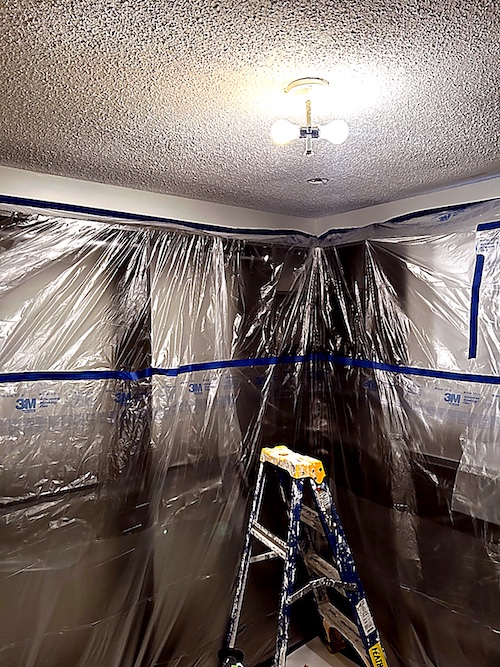
Good protection is layered. It should match the actual condition of the room and the process being used on the ceiling. Removal, sanding, and smoothing work each create their own handling issues.
Hardwood floors, common in many Burlington homes, typically need stable protection that will not shift under ladders or traffic. Tile floors are resilient but still need coverage to keep grout and joints from collecting residue. Carpet is often the trickiest surface because dust settles into it quickly and takes longer to clean if coverage is weak.
Walls and trim near the ceiling line may also need masking, especially where fresh wall paint, built-ins, wallpaper, crown moulding, or custom millwork run tight to the ceiling. That is often more important in updated Burlington interiors where ceiling and wall lines are expected to look clean once the job is complete.
Fixtures and openings deserve their own checklist:
- Ceiling lights should be removed or protected depending on how close they sit to the ceiling
- Pot lights should be discussed before work starts because cutouts and trim details affect repairs and skim work
- Smoke detectors may need handling or temporary protection depending on placement
- HVAC vents should be sealed so dust does not move through the system
- Ceiling fans should be removed or isolated if they limit access
- Adjacent openings should be considered if the room is connected to a hallway, stairwell, or open-concept living area
This matters especially in Burlington homes where kitchen, breakfast, and family-room ceilings often run together. Dust rarely stays polite if the containment plan ignores the connected parts of the house.
Check the ceiling condition before removal starts
The ceiling itself needs to be evaluated before the room is ever called ready. Preparation is not just about what is below the ceiling. It is also about knowing what may be hiding above your head once the texture is disturbed.
Look for stains, cracks, sagging areas, previous patch marks, nail pops, loose joints, exposed seams, and any sections that already look harder or shinier than the rest. Water-related stains near bathrooms, exterior walls, or upper-level plumbing routes matter because they often point to repairs that become visible only after the texture comes off.
It also helps to identify skylights, vaulted transitions, soffits, bulkheads, crown edges, or plaster tie-ins ahead of time. Those details change how much edge work and hand-finishing is needed, and they often add time even when the room itself is not especially large.
In Burlington homes that have been repainted several times, it is also common to find ceilings with old touch-ups and partial patch jobs hidden inside the texture. That can change the prep conversation right away because the finish scope becomes more repair-heavy.
Painted vs unpainted popcorn ceiling preparation
This distinction changes the plan more than most homeowners expect. Unpainted popcorn can sometimes be removed more predictably. Painted popcorn usually cannot. Once the texture has been sealed with paint, scraping becomes less cooperative, the drywall face is more likely to get disturbed, and the ceiling often needs more resurfacing afterward.
That means preparation is not only about moving furniture and laying floor protection. It is also about setting the right schedule and finish expectations. A painted ceiling may need more smoothing work, more drying time, and a more repair-focused workflow than an unpainted one.
If the texture has already been painted, read our painted popcorn ceiling removal guide next. It breaks down why painted ceilings often shift from a straightforward removal job into a broader resurfacing process.
This is where homeowners often underestimate the project. Taking texture down is only one stage. The ceiling still has to be made flat enough to look right again before paint goes on.
Older homes and asbestos considerations in Ontario
Older textured ceilings in Ontario should not be treated casually. If the home is older and the material history is uncertain, testing may be appropriate before disturbance. That question affects the method, the containment approach, and sometimes whether the planned schedule needs to change before the room is even set up.
The practical takeaway is simple: do not rely on appearance alone. A ceiling can look ordinary and still deserve more caution, especially in older Burlington homes where renovation history may be incomplete or layered over decades.
If asbestos is a possibility, the project may need to pause at the assessment stage before any real disturbance begins. That is a better outcome than moving everything out, setting expectations, and then discovering halfway through the prep that the scope is not what anyone thought.
Plan access, parking, and the work sequence
Ceiling projects slow down for logistical reasons all the time. The crew still needs a clean route in, somewhere to stage protective materials and tools, and a clear understanding of whether the room has to be usable again that evening. Condo buildings near Burlington’s waterfront may also have elevator, parking, and hallway-protection rules that need to be addressed ahead of time.
Think through the basics before the first day: where should the crew enter, where will materials sit, what areas need to stay protected, and what spaces cannot be blocked? These details matter more in busy households than many people expect.
Also decide how other trades fit into the sequence. If an electrician is adding pot lights or changing fixtures, that should be coordinated with the ceiling work. Some steps are cleaner before final skim passes, while others belong after priming and painting are complete.
What happens after the popcorn is removed
Removal is not the end of the project. It is the start of the finishing sequence. What happens after the texture comes off determines whether the ceiling actually looks smooth again or just looks scraped.
A common professional sequence looks like this:
- Remove or resurface the texture based on the actual ceiling condition
- Repair exposed damage such as torn paper, old patches, cracks, and visible joints
- Apply surface-smoothing work where needed to flatten the full ceiling field
- Sand and inspect the surface under both normal light and raking light
- Prime the surface so remaining flaws show up before finish paint
- Apply flat ceiling paint and complete the final cleanup walkthrough
That is why cleanup after popcorn ceiling removal is not only about debris. It also means containing dust during sanding, keeping nearby areas protected until the dusty stages are done, and making sure the room is actually ready to use again once the work wraps.
If you want the full service overview beyond this prep guide, see our popcorn ceiling removal page.
Common homeowner prep mistakes
The most common mistakes happen when people prepare only for the scraping day and not for the repair and finish stages that come after it.
Typical mistakes include:
- Leaving too much furniture in place and expecting wrapping alone to solve access problems
- Assuming removal is the whole job and not planning for repairs or smoothing work
- Forgetting to ask whether the texture appears painted
- Leaving vents open and overlooking dust travel into connected rooms
- Expecting every room to be fully finished the same day regardless of condition
- Underestimating how much stains, cracks, or hidden patches can change the scope
Homeowner checklist before popcorn ceiling removal day
Use this list the day before the crew arrives:
- Remove decor, breakables, electronics, and valuables from the room
- Create the widest possible floor path for access and protection
- Confirm whether the ceiling has stains, cracks, patches, or paint on it
- Decide what large furniture can stay and what should go
- Keep pets and pet items out of the work zone
- Confirm parking, building logistics, and entry access if relevant
- Review finish expectations for repairs, smoothing, final prep, and paint
Plan realistically for cleanup after popcorn ceiling removal
Cleanup after popcorn ceiling removal should be treated as part of the project scope, not as a final courtesy step that happens in the last few minutes. In Burlington homes, especially those with brighter finishes, large windows, and connected living spaces, the difference between basic cleanup and true post-removal cleanup is obvious.
Homeowners should ask themselves where dust is most likely to show up after the visible debris is gone: inside vent covers, along baseboards, on shelving, on darker hardwood floors, or in connected dining and kitchen areas. Thinking through those details before work starts helps the prep plan stay stronger topically because it connects furniture protection, containment, room sequencing, and the final handoff instead of treating cleanup as a separate afterthought.
Need a cleaner popcorn ceiling removal plan in Burlington?
A useful prep plan is always specific to the property. A downtown condo, a family home in Millcroft, and a main-floor living area in Aldershot all create different access and finish conditions.
If you want help scoping the room properly, start with our Burlington popcorn ceiling removal page, then send photos and room details through the quote form. EPF Pro Services can tell you what should be removed, what can stay, and whether the ceiling prep suggests a basic removal plan or a more repair-heavy finish sequence.
Related local pages
Burlington popcorn ceiling removal — Indexable local service page covering process, project types, and quote guidance.
Popcorn ceiling removal — Main service page covering removal, smoothing, cleanup, and paint-ready finishing.
Painted popcorn ceiling removal — Follow-up guide if the texture has already been painted.
FAQ
Do I need to empty the room fully before popcorn ceiling removal?
Not always, but more open space almost always makes the project cleaner and easier to finish. Vacant rooms are simpler, while furnished rooms need more staging and restricted access.
Can furniture stay in the room during popcorn ceiling removal?
Some large items can stay if they do not block access and can be protected properly, but electronics, fragile items, and small furniture should usually be removed.
How messy is popcorn ceiling removal in a Burlington home?
It is still a messy overhead project, but proper containment, floor protection, sealed vents, and controlled sanding make a major difference in keeping the home cleaner.
What if the popcorn ceiling was painted?
Painted popcorn usually requires a more careful and repair-heavy approach than unpainted texture. It often adds smoothing work, drying time, and finish work.
What happens after the texture is removed?
The ceiling typically still needs repairs, smoothing, sanding, final prep, and flat ceiling paint before it is truly ready to use under normal lighting.
Is prep different in older Burlington homes?
Yes. Older homes may have uncertain ceiling history, older repairs, multiple paint layers, or material questions that justify a more careful assessment before disturbance.
Field photos
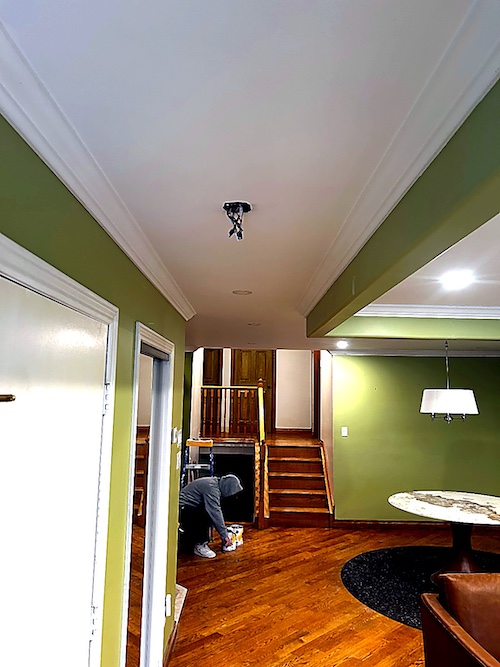
Inspiration for your project
Popcorn ceiling terms this page covers
Useful terms to compare removal, skim coating, and finish scope before you book.
- how to prepare for popcorn ceiling removal
- prepare home for popcorn ceiling removal
- popcorn ceiling removal preparation
- prepare room for popcorn ceiling removal
- protect furniture during popcorn ceiling removal
- painted popcorn ceiling prep
- cleanup after popcorn ceiling removal
- ceiling repairs after popcorn removal
- Burlington popcorn ceiling removal preparation
- vacant vs furnished room popcorn ceiling removal
- popcorn ceiling removal checklist
Ready to plan your ceilings?
Get a popcorn ceiling quote today
Share photos, ceiling heights, and timing. We reply the same day with Burlington availability.
• HEPA dust control and Level 5 skim finishing
• Pot-light coordination and interior painting add-ons
• Flexible scheduling for condos and single-family homes
Quick next step
Send photos and room sizes through the main quote page, or call for a same-day reply.
Keeping the form on the main quote page helps this article stay lighter and faster.