
How to Patch Drywall: Best Repair Methods for Small and Large Holes
2026-03-30
Homeowner guide to patching drywall properly, from small dents and screw holes to larger cut-outs that need stronger repair methods.
Quick Answer
Homeowner guide to patching drywall properly, from small dents and screw holes to larger cut-outs that need stronger repair methods.
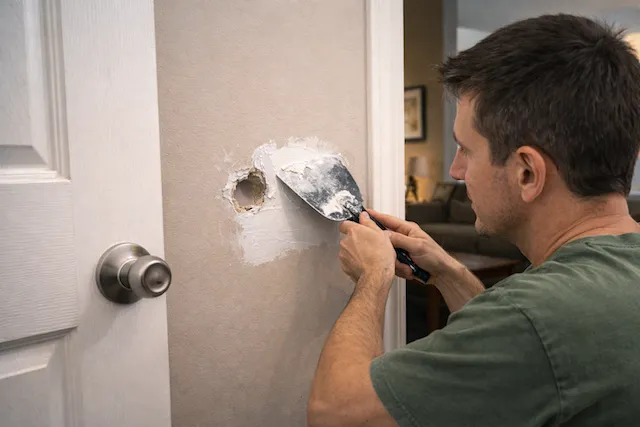
If you are looking at dents, nail pops, screw holes, or a larger opening left after plumbing or electrical work, the first question is usually simple: can this wall be patched cleanly, or does it need a bigger repair?
If the goal is a paint-ready wall instead of a patch that still shows after primer, start with drywall repair so you can compare a homeowner patch against a finish-focused repair scope.
What a drywall patch actually is
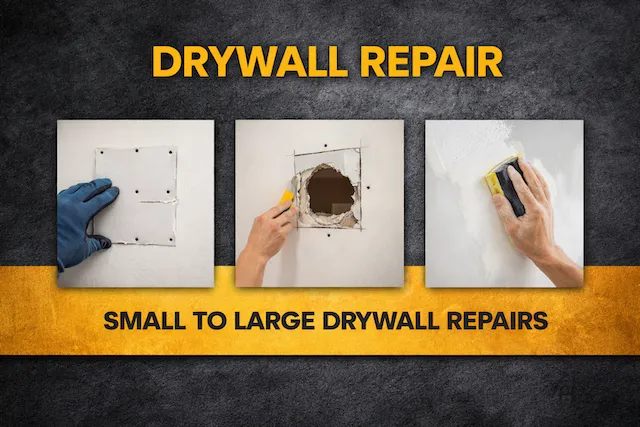
A drywall patch is a way of rebuilding a damaged spot so the wall can be smoothed, primed, and painted again. Sometimes that means filling and sanding a small area. Sometimes it means cutting out the weak drywall, adding backing, setting a new piece, taping the seams, and finishing the whole repair wide enough that it disappears.
That is why the real question is not only how to patch drywall. It is how to choose the right patch method for the size of the damage and for the kind of finish you expect afterward.
Patch method for small drywall holes
Small holes from screws, anchors, picture hooks, or minor wall bumps can usually be repaired with compound and light sanding. The surrounding board is still solid, so the job is mostly about filling the depression cleanly and keeping the patch flat enough that it does not flash after paint.
This kind of repair works best when the wall is otherwise in good shape, the damage is isolated, and the finish is not in a harsh light line that will show every ripple.
Patch method for medium holes
Once the opening gets larger, a simple fill is usually not enough. Medium holes often need patch material, backing support, or a stronger repair setup so the area does not crack later. This is where a lot of DIY repairs start looking bulky because too much compound gets stacked over too small an area.
A better result comes from keeping the repair flat, widening the finish area, and sanding patiently between coats instead of trying to fix the wall in one heavy pass.
How larger drywall holes are repaired properly
Larger holes usually need a different method altogether. When the edges are broken, the drywall is soft, or the opening is wide enough that the patch has no real support, the cleaner fix is often to cut the area back to sound drywall and install a new piece.
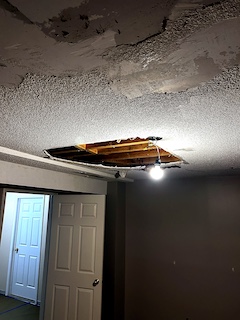
For visible walls, ceilings, trade cut-outs, and damaged sections that need to blend cleanly, professional drywall repair is usually the safer route than trying to hide a weak surface patch.
Drywall patch vs replacing drywall
A patch is usually enough when the damage is limited and the surrounding board is stable. Replacement starts making more sense when the opening is large, the drywall has become soft or broken around the edges, there is old water damage, or the repaired area sits in a room where smooth walls matter.
This is especially true for hallways, living rooms, stair walls, ceilings, and any place with side light or flat paint. Those are the spots where a rushed patch shows up fastest.
What makes a drywall patch look bad
- The patch area is not cut back to solid drywall
- Too much compound is piled on in one pass
- The repair is not feathered wide enough
- Sanding is rushed and leaves ridges
- Primer and paint are used to hide a shape problem that is still there
- The wrong repair method is used for the size of the hole
When a DIY drywall patch makes sense
DIY patching can be reasonable for tiny holes, low-visibility spots, and simple wall wear. If you are filling one or two screw holes before repainting a room, it usually does not make sense to overcomplicate it.
The risk goes up when the damage is larger, when the wall is already uneven, or when the room will be painted in a way that highlights every edge and sanding mark.
When it is worth calling a pro
A pro is usually worth it when the wall needs to look flat after paint, when there are several patches in the same area, when the opening came from plumbing or electrical work, or when the repair is on a ceiling or stair wall that is hard to finish cleanly.
If you are trying to patch drywall properly but want the repair to disappear once painted, review our repair larger drywall holes approach before deciding whether a quick patch is enough.
Final thoughts
The best drywall patch is the one that fits the damage. Small holes can often be filled and blended. Larger openings usually need stronger backing, new board, and wider finish work. What matters most is not the patch itself, but whether the wall still looks patched after primer and paint.
Related local pages
How to repair large drywall holes properly — A closer look at when cut-out replacement is better than a fast surface patch.
DIY drywall repair vs hiring a professional — Where homeowner repairs make sense and where a finish-focused crew usually saves time.
FAQ
Can small drywall holes be patched without cutting out the wall?
Yes. Small holes from screws, anchors, or minor dents are often repaired with compound, light sanding, primer, and paint if the surrounding drywall is still solid.
When is a drywall patch not enough?
A patch is usually not enough when the hole is large, the drywall edges are broken, the area is soft from damage, or the wall needs a cleaner finish than a quick surface repair can provide.
Do large drywall holes need new drywall?
Often, yes. Larger holes usually look and last better when the damaged section is cut out and replaced with supported new drywall before taping and finishing.
Why do some drywall patches show after paint?
Most visible patches come from weak feathering, heavy compound, poor sanding, or choosing a patch method that did not match the size of the damage.
Field photos
Inspiration for your project
Drywall terms this page covers
Useful terms to compare scopes, finish levels, and scheduling before you book.
- how to patch drywall
- patch drywall
- drywall patch repair
- how to repair drywall holes
- small drywall hole repair
- large drywall hole repair
- drywall patch vs replacing drywall
- drywall repair
Article Review
AuthorAlex - EPF Pro Services
Reviewed byEPF Pro Services
UpdatedMarch 30, 2026
Plan your drywall scope
Get a drywall quote today
Share photos, room sizes, and timing. We reply the same day with GTA drywall availability and a clearer written scope.
• Clear finish-level scope and drywall sequencing
• Basements, ceilings, condos, and commercial buildouts
• Flexible scheduling for occupied homes, condos, and active sites
Quick next step
Send photos and room sizes through the main quote page, or call for a same-day reply.
Keeping the form on the main quote page helps this article stay lighter and faster.