
How Long Does Popcorn Ceiling Removal Take? A Real Timeline for Homeowners
2026-04-07
A practical homeowner guide to popcorn ceiling removal timelines, including what affects the schedule, why some ceilings take longer, and what to expect after the texture comes down.

One of the first questions homeowners ask is how long popcorn ceiling removal takes. That sounds simple, but the honest answer depends on more than square footage. The schedule changes with ceiling condition, whether the texture has been painted, how much room protection is needed, how visible the final finish needs to be, and whether the room is one small bedroom or part of a larger main-floor project.
A lot of people picture popcorn ceiling removal as a one-step job. They imagine the texture comes down, the mess gets cleaned up, and the room goes back to normal. In real projects, the timeline usually includes setup, removal, repairs, smoothing, sanding, paint prep, paint, and final cleanup. The texture-removal stage is only one part of the overall schedule.
If you want the full process in one place, start with our popcorn ceiling removal page. It gives the full service overview before you try to map your own room to a timeline.
This guide focuses on the practical side of the schedule: what usually happens first, what commonly adds days, and what homeowners tend to underestimate when they ask how long the project will take.
Why there is no one-size-fits-all popcorn ceiling removal timeline
The biggest reason timelines vary is that ceilings do not all behave the same way. One room may have older unpainted texture that releases fairly cleanly. The next room may have a painted ceiling, prior patching, water marks, uneven seams, or rough areas that show up only after the texture is disturbed. Those differences matter because the work after removal often decides the real schedule.
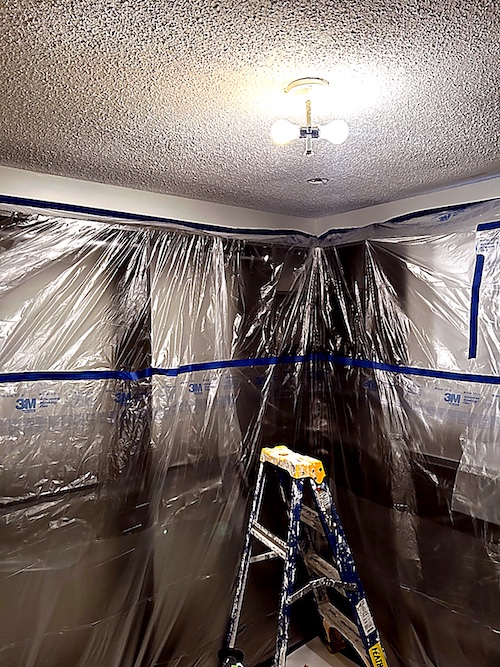
Room logistics matter too. A vacant bedroom is different from an occupied living room, and both are different again from an open-concept main floor where the ceiling runs across multiple spaces without easy stopping points. In occupied homes, protecting floors, furniture, nearby rooms, and access paths adds time because the job has to stay controlled while people are still living around it.
That is why timing questions should be framed around the full project, not only around scraping. When homeowners ask how long popcorn ceiling removal takes, they are usually also asking how long the room will be disrupted, how long dust protection stays in place, and when the ceiling will actually look finished again.
What affects the timeline most
Several factors usually decide whether the schedule stays short or stretches out.
- Room size and number of rooms involved
- Ceiling height and ease of access
- Painted versus unpainted texture
- Existing stains, cracks, or prior repairs
- Amount of protection needed in the room and nearby spaces
- How smooth the final ceiling needs to look
- Whether paint is included in the project scope
None of those factors work in isolation. A room can be small but still take longer if the ceiling has already been painted or if the texture hides repair issues underneath. A larger area can still move efficiently if the layout is open, the ceiling is cooperative, and the homeowner understands that the room may need a few stages before it is ready for normal use again.
A realistic timeline for a small room
A small bedroom, office, or simple spare room is where homeowners are most likely to imagine a same-day result. Sometimes the first visible stage can happen quickly, especially when the room is clear and the ceiling is not fighting back. But even in smaller rooms, the finish process often continues after the texture itself is down.
A realistic small-room plan usually looks more like this: first the room is protected and isolated, then the ceiling texture is removed or reduced, then the surface is checked for rough spots and hidden flaws, then repairs and smoothing work follow, and finally the room moves through sanding, paint prep, paint, and cleanup. In the easiest rooms, some of those stages can move quickly. In harder rooms, the later stages become the part that extends the schedule.
That is why a small room can feel fast at the start and still not be fully complete by the end of the first workday. Homeowners often measure only the removal stage, while contractors have to measure the room by the finished ceiling.
How the schedule changes for a main floor or multiple connected rooms
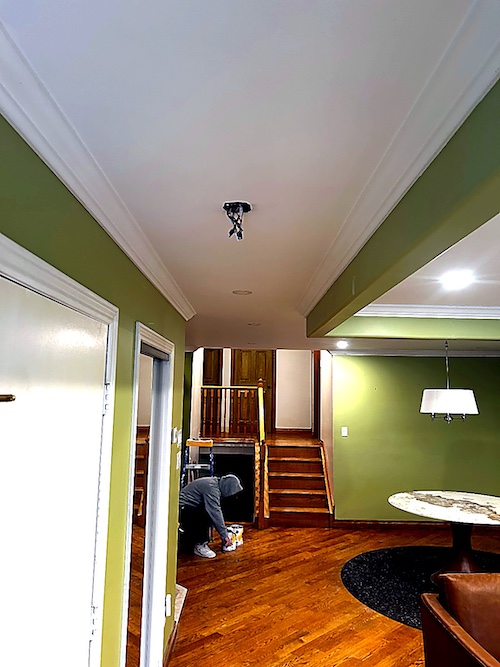
The timeline becomes more layered when the ceiling continues through living rooms, hallways, kitchens, dining spaces, and family rooms. In these layouts, the project is not only bigger. It is also more visible. Open ceilings make it harder to hide small finish differences, so the schedule often includes more checking and more broad surface work after the old texture is gone.
There is also more setup. Larger spaces need more floor protection, more edge protection, more staging space, and more movement planning so the project stays organized from one area to the next. If the home is occupied, the schedule may also be broken into phases so access to key rooms can be managed more reasonably.
For homeowners, the practical takeaway is simple: larger connected spaces do not scale perfectly by square foot. They often need more coordination than people expect, and the finishing portion becomes more important because the eye can see farther across the ceiling once the old texture is gone.
Whole-home timelines are about sequencing, not just speed
A whole-home popcorn ceiling removal project is not just one long day repeated room after room. It is a sequence. Protection, room order, ceiling condition, drying windows, inspections, and paint stages all have to be coordinated so the house stays workable and the finish stays consistent.
In some homes, bedrooms and secondary rooms are completed first while main living areas are staged afterward. In other homes, the work is planned around move-in dates, furniture delivery, listing deadlines, or a larger renovation. The exact order changes, but the point stays the same: bigger projects succeed by staging well, not by trying to rush everything at once.
That matters because homeowners sometimes compare whole-home schedules to one-room videos online and assume the only difference is more labour. In reality, whole-home timelines involve more planning, more transitions between stages, and more time spent making sure each area is actually ready before the next one begins.
Painted popcorn ceilings usually take longer
If the ceiling has already been painted, the timeline usually changes right away. Painted texture is less predictable and often creates a more repair-heavy finish path after the old texture is disturbed. That does not always mean the room becomes a major project, but it does mean the schedule should be treated more cautiously from the beginning.
This is one of the main reasons homeowners get frustrated by timing estimates. They assume the ceiling will behave like a simple unpainted scrape job, then discover that the surface needs more smoothing and more careful follow-up before it will look clean under paint.
If you already suspect the ceiling has paint on it, read our painted popcorn ceiling removal guide next. It explains why painted texture changes both the workflow and the timeline.
Repairs and finish expectations are what extend the timeline
Homeowners often think texture removal is the hard part and everything after that should be quick. Usually the opposite is true. Once the old texture comes down, the ceiling often reveals patch marks, small cracks, uneven seams, stains, torn areas, or rough spots that were hidden before. Those issues are normal. They are also the reason schedules expand beyond the first removal pass.
If the goal is only to strip texture, the visible removal stage may feel fast. If the goal is a clean flat ceiling that looks good in daylight and normal room lighting, the finish stages matter more. Smoothing work, sanding, paint prep, paint, and cleanup are what turn the job from "texture removed" into "room looks finished."
That is why timeline questions should always be connected to finish expectations. A faster schedule and a better-looking ceiling are not always the same thing.
Occupied homes usually need a more careful schedule
When homeowners are still living in the space, the schedule is shaped by comfort as well as production. Entry paths need to stay manageable. Dust control matters more. Furniture may need to move in stages. Some rooms may need to be returned to partial use between project phases. Pets, children, and work-from-home routines can also affect the order of work.
That does not mean occupied homes always take dramatically longer, but it usually means the timeline is built more carefully. A controlled project often feels slower day to day, yet it tends to create fewer headaches because the house stays more livable and the work stays organized.
Vacant homes and renovation-stage homes often move more directly
Vacant homes usually offer the simplest workflow. There is more open floor space, fewer items to protect, fewer daily-use restrictions, and less need to break the project into small lived-in stages. That often makes the schedule feel more direct even when the total square footage is fairly large.
The same is true when popcorn ceiling removal is happening as part of a broader renovation. If painters, flooring crews, lighting work, or drywall corrections are already planned, the timeline can be built around that sequence instead of around maintaining normal daily use in the room.
For homeowners, this is useful because timing is not only about how fast a crew can work. It is also about how much freedom the room gives them to work cleanly and in the right order.
What usually slows popcorn ceiling removal down
Certain issues show up again and again when projects take longer than expected.
- The room was not cleared enough before work started
- The ceiling had paint on it and this was not confirmed early
- Hidden repairs or water marks appeared after the texture came down
- The homeowner expected one day of work to mean a fully finished painted ceiling
- Open-concept areas needed more broad finish work than expected
- The room needed to stay partly usable between stages
These are not unusual surprises. They are common reasons the timeline needs to stay flexible. The better prepared the homeowner is for them, the less disruptive the schedule feels.
How to plan your schedule around the project
If you are trying to fit popcorn ceiling removal into a move, a sale, or a larger renovation, the best planning choice is to think in stages instead of one finish line. Ask when the room needs to be cleared, when you can expect the most visible mess, when the finish work usually happens, and when the room is realistically ready for furniture, touch-ups, or normal use again.
It also helps to avoid stacking too many trades into the same room at once. Ceiling work gets easier when the order is clear. Trying to overlap it too tightly with other interior work can create delays, even if each trade by itself is moving quickly.
If your next question is how to set the room up properly before work starts, read how to prepare for popcorn ceiling removal. Better prep often makes the schedule more predictable.
What homeowners usually misunderstand about timing
The most common misunderstanding is thinking the room is done when the texture is gone. That is only one milestone. The ceiling may still need visible correction before it is ready for paint. Another common misunderstanding is assuming the cleanest-looking online results come from removal alone. In reality, the best-looking ceilings usually come from the finishing sequence after removal.
Homeowners also tend to assume that the fastest possible schedule is automatically the best one. But when a ceiling is rushed, the room may need more rework later. A steadier schedule often produces a better final result because the crew has time to fix what the old texture was hiding instead of only racing to the next stage.
A simple way to judge your own timeline
If your room is small, clear, unpainted, and not especially demanding visually, the schedule is usually simpler. If the ceiling is painted, the room is occupied, the area is open-concept, or the final finish matters a lot, plan for more than the removal stage. That mindset alone helps homeowners avoid most timing surprises.
The better question is not just how long does popcorn ceiling removal take. The better question is how long does it take for this room to go from textured and dated to clean, smooth, and ready to use again. Once you ask it that way, the timeline makes more sense.
FAQ
Can popcorn ceiling removal be done in one day? Sometimes a small simple room can move quickly, but a finished result often still involves more work after the visible texture is removed.
Why do painted ceilings take longer? Because painted texture is usually less cooperative and often leads to more follow-up surface work after the old texture is disturbed.
Does a bigger room always take proportionally longer? Not always. Layout, access, room condition, and finish expectations matter as much as square footage.
Is the room ready to use once the popcorn is off? Usually not right away. The ceiling often still needs smoothing, sanding, paint prep, paint, and final cleanup.
Do occupied homes take longer than vacant ones? They often require a more careful schedule because access, dust control, and room use have to be managed more deliberately.
What part of the job usually takes the most time? Homeowners often underestimate the finish stages after removal, especially when the ceiling reveals repair issues.
Can I speed the project up by moving furniture out first? Yes. A clearer room usually means easier protection, better access, and a more efficient workflow.
Final thought
The cleanest popcorn ceiling schedules are built around the finished room, not just the first removal pass. If you plan for the full sequence, the project becomes easier to budget, easier to live through, and much less frustrating once the work begins.
EPF Pro Services helps homeowners plan popcorn ceiling removal around real room conditions, realistic timelines, and the finish quality they actually want at the end.
FAQ
Can popcorn ceiling removal be done in one day?
Sometimes a small simple room can move quickly, but a fully finished result often still includes more work after the visible texture is removed.
Why does painted popcorn ceiling removal take longer?
Painted texture is usually less predictable and often needs more surface correction after the old texture is disturbed.
Is the room ready to use once the popcorn is removed?
Usually not immediately. The ceiling often still needs smoothing, sanding, paint prep, paint, and cleanup before the room feels finished again.
Do vacant homes move faster than occupied homes?
They often do because there is less furniture to protect, fewer access restrictions, and fewer disruptions to work around.
What usually adds time to a popcorn ceiling removal project?
Painted texture, hidden repairs, open-concept layouts, occupied rooms, and higher finish expectations are common reasons the timeline grows.
Does better room prep help the schedule?
Yes. Better prep usually means easier protection, cleaner access, and fewer delays once the work begins.
Field photos
Inspiration for your project
Popcorn ceiling terms this page covers
Useful terms to compare removal, skim coating, and finish scope before you book.
- how long does popcorn ceiling removal take
- popcorn ceiling removal timeline
- how long popcorn ceiling removal takes
- popcorn ceiling removal schedule
- painted popcorn ceiling timeline
- cleanup after popcorn ceiling removal
- ceiling repairs after popcorn removal
- prepare for popcorn ceiling removal
Ready to plan your ceilings?
Get a popcorn ceiling quote today
Share photos, ceiling heights, and timing. We reply the same day with Mississauga, Oakville, and GTA availability.
• HEPA dust control and Level 5 skim finishing
• Pot-light coordination and interior painting add-ons
• Flexible scheduling for condos and single-family homes
Quick next step
Send photos and room sizes through the main quote page, or call for a same-day reply.
Keeping the form on the main quote page helps this article stay lighter and faster.