
How HEPA Sanding and Containment Keep Smooth Ceiling Projects Cleaner
2026-05-10
How containment, HEPA extraction, vacuum sanding, and cleanup reduce dust during popcorn removal, skim coating, and smooth-ceiling finishing.
Quick Answer
How containment, HEPA extraction, vacuum sanding, and cleanup reduce dust during popcorn removal, skim coating, and smooth-ceiling finishing.
Smooth ceiling projects are some of the dustiest interior renovations when they are handled casually. Popcorn removal, drywall repair, skim coating, sanding, primer prep, and final paint all happen overhead. Gravity pulls debris down, air movement carries fine dust sideways, and every doorway, vent, light fixture, and traffic path becomes part of the cleanup problem if protection is not planned before work starts.
Homeowners often search for dustless popcorn ceiling removal, but a better phrase is dust-controlled ceiling work. No real renovation is completely dust-free. The goal is to reduce dust at the source, contain the work area, protect the rest of the home, and clean in a way that matches the scope. HEPA sanding and containment are not marketing extras. They are practical steps that make the job more livable and help the finished ceiling look better.
If you are comparing contractors, start with the full service scope on our popcorn ceiling removal page. This guide focuses specifically on the dust-control side of the same project.
Why popcorn and skim-coat projects create so much dust
Popcorn ceiling removal creates two kinds of mess. The first is heavier debris from texture, wet material, old paint, and loose compound. The second is fine dust from sanding repairs and skim coats. The second type is usually the one homeowners remember because it settles on shelves, trim, window ledges, cabinets, and floors long after the obvious debris has been removed.
The finishing stage is where dust control matters most. Once the ceiling has been scraped or resurfaced, the crew often needs multiple compound passes. Each pass needs drying, sanding, inspection, and touch-ups. Without vacuum-assisted sanding, that fine drywall dust can move through the room quickly. If the HVAC is not protected, it can move farther. If doorways are not sealed, adjacent rooms can collect dust even when no work happens there.
What HEPA sanding actually does
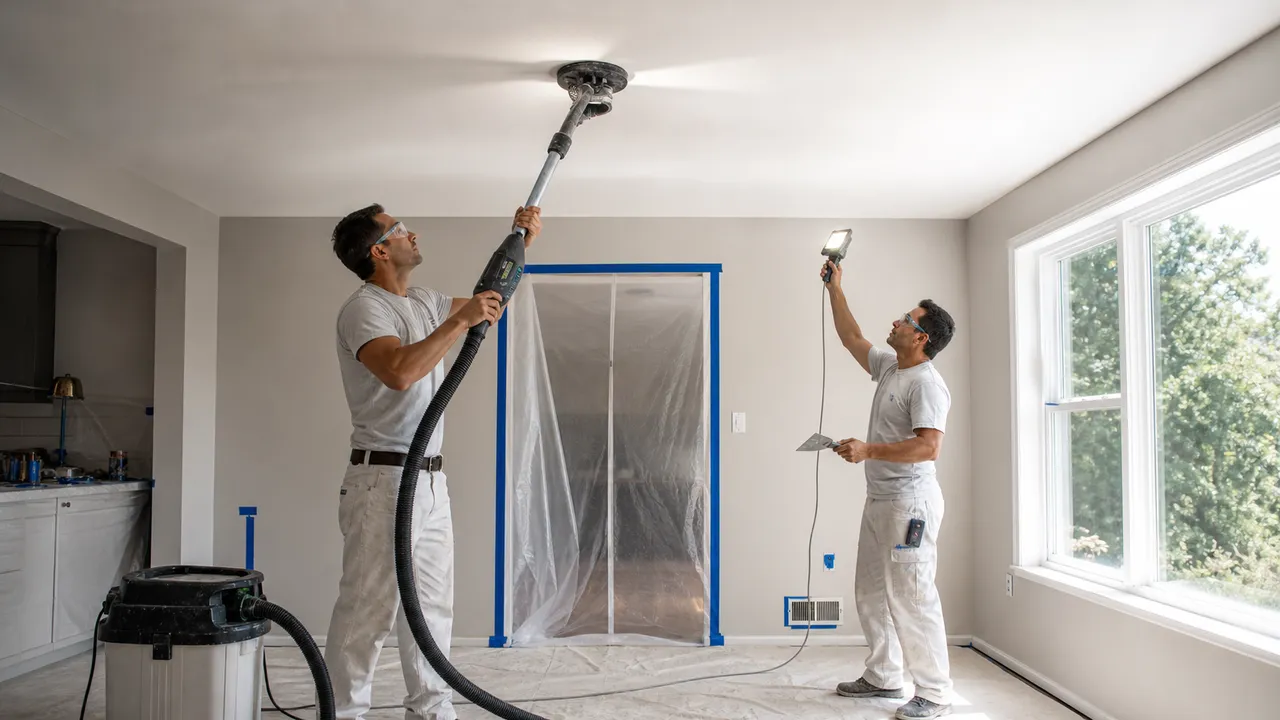
HEPA sanding means the sanding tool is connected to a vacuum system designed to capture fine particles as the sanding happens. A long-reach ceiling sander with vacuum extraction can pull dust from the sanding head instead of letting all of it fall into the room. The exact result depends on the tool, filter condition, hose connection, sanding technique, and how much dust the surface produces, but the difference from open sanding is significant.
HEPA sanding is not only about cleanliness. It also helps the crew see the ceiling more clearly. When dust is constantly hanging in the air or settling back onto the surface, it is harder to inspect ridges, scratches, lap marks, and low spots. A cleaner work area makes final touch-ups more accurate before primer. That matters because primer and flat ceiling paint do not hide poor sanding or uneven skim work.
Containment starts before the ceiling is touched
The cleanest projects start with setup. Floors should be protected with drop cloths or surface protection that matches the room. Furniture should be moved out when possible or wrapped properly when it must stay. Vents should be covered. Doorways may need plastic containment or zipper access. Walk paths should be planned so workers are not dragging dust through the rest of the home.
A good containment plan also considers daily life. In an occupied home, the homeowner may still need access to a kitchen, bathroom, bedroom, or stairwell. The contractor should explain which areas are off limits, how long plastic stays up, when the room can be entered, and what cleanup happens at the end of each workday. This is especially important in condos, townhomes, and homes with kids, pets, or shared HVAC zones.
Why vents and air movement matter
Fine drywall dust moves with air. That means HVAC vents, return air grilles, open windows, fans, and even repeated door opening can spread dust. During ceiling work, vents in the work area should be protected, and air movement should be controlled. The goal is not to seal the home like a laboratory. The goal is to prevent avoidable dust movement while still keeping the work area practical.
This is one reason a low quote can be misleading. A contractor who skips vent protection, containment, and cleanup may finish faster on paper, but the homeowner pays in dust cleanup later. Dust on floors is obvious. Dust inside cabinets, closets, returns, and textured trim is more frustrating. The best project is the one that accounts for cleanup before the first sanding pass.
How dust control changes the removal method
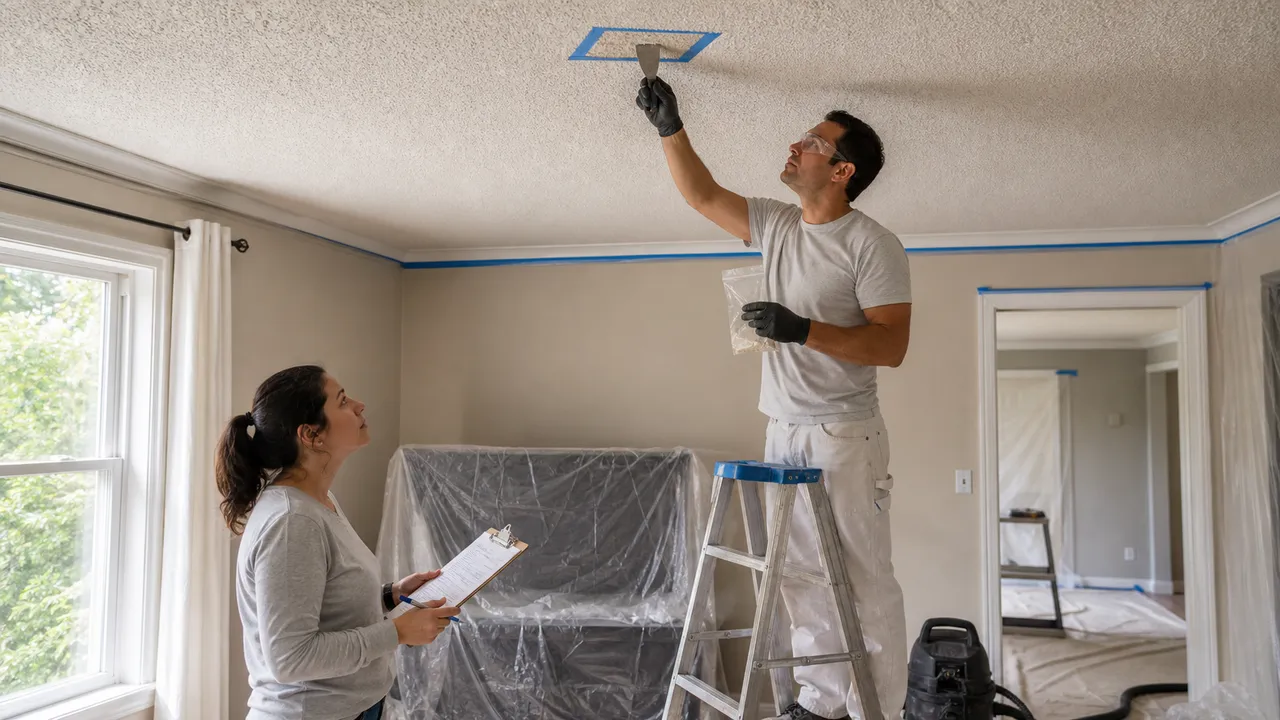
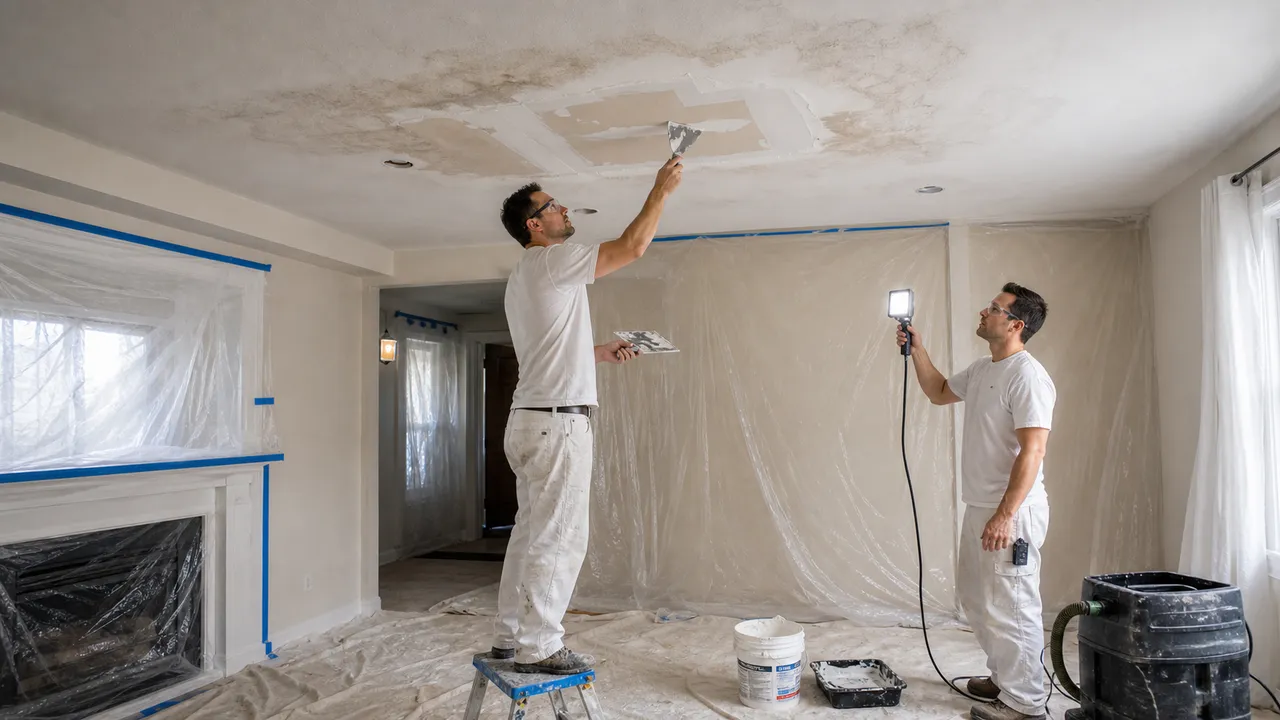
The ceiling method affects dust. Unpainted texture that releases cleanly may create more wet debris during scraping and less aggressive sanding afterward. Painted texture may not scrape easily, which can push the project toward more skim coating and sanding. Ceilings with repairs, torn drywall paper, old seams, or water stains may also need more compound work. More compound usually means more sanding, and more sanding makes HEPA extraction more important.
A contractor should not promise the same dust level for every ceiling. A small unpainted bedroom, a painted main floor, and a leak-damaged living room all behave differently. The dust-control plan should match the condition. If a ceiling needs broad skim coating, the setup should be stronger than a simple patch-and-prime job.
For painted texture decisions, review Painted Popcorn Ceiling Removal: Scrape or Skim Coat?.
What daily cleanup should include
Daily cleanup keeps the project manageable. It should include removing heavy debris, organizing tools, checking containment, vacuuming obvious dust, and keeping traffic paths safe. It does not mean the room is move-in ready every night, especially during active compound and sanding stages, but it should not look abandoned. A clean site also reduces mistakes because workers can see trip hazards, wet compound areas, and surfaces that still need attention.
Final cleanup is different from daily cleanup. After sanding is complete, the room may need a more detailed vacuum, wipe-down, and inspection before primer. Dust left on the ceiling or trim can contaminate primer and paint. Dust left on floors can get tracked through the home. If the project includes painting, the crew should prepare the room for paint quality, not just for basic debris removal.
How HEPA sanding supports a Level 5-style finish
A smooth ceiling shows flaws more than a textured ceiling. That is why many popcorn removal projects include a full skim coat or a Level 5-style surface treatment. Under pot lights or strong daylight, small ridges and sanding scratches can become visible. HEPA sanding supports better finishing because it keeps the surface and air cleaner during inspection.
The contractor still needs skill. A HEPA sander does not automatically create a flat ceiling. Compound application, feathering, drying time, sanding technique, primer checks, and touch-ups all matter. The tool helps control dust and improve visibility. It does not replace the judgment needed to decide when the ceiling is ready for primer.
Questions to ask a contractor about dust
Ask what type of sanding system they use. Ask whether the sander connects to a HEPA vacuum. Ask how vents are protected. Ask whether doorways are contained. Ask whether floors, cabinets, lights, and nearby rooms are protected. Ask what cleanup happens daily and what cleanup happens before primer. These questions make the quote clearer and prevent misunderstandings.
You should also ask what is not included. Some quotes include removal and skim coating but leave painting, final cleaning, or furniture moving separate. That is not automatically wrong, but it should be written clearly. Dust-control expectations become frustrating when the homeowner assumes complete protection and the contractor priced only basic floor covering.
Dust control in condos and occupied homes
Condos add another layer because access, elevators, shared hallways, parking, and building rules matter. Dust control is not only about the unit. It is also about keeping common areas clean and avoiding complaints. Materials need to be moved carefully, debris must be bagged properly, and the work area should be contained so the project does not affect neighbours.
Occupied homes need planning around daily routines. If the work is in a kitchen, hallway, or main living area, the family may need a temporary plan for meals, pets, and room access. A contractor who explains the sequence clearly will usually deliver a better experience than one who simply says the job will be quick.
Why primer prep is part of dust control
Dust control does not end when sanding stops. Before primer, the ceiling and surrounding surfaces need to be clean enough for coating. Fine dust left on a skim-coated ceiling can interfere with primer adhesion and make the finish feel gritty. Dust on trim, walls, and floors can also get pulled into wet paint. That is why vacuuming, wiping, and checking the surface before primer are part of the same dust-control system.
A good crew will also avoid rushing from sanding directly into paint. The surface needs inspection under light, and any touch-ups need time to dry. If touch-ups are sanded, the cleanup cycle repeats. This is normal. Smooth ceilings are built through controlled stages. The cleaner each stage is, the easier it is to see what still needs work.
What homeowners can do to help keep the project clean
Homeowners can help by clearing small items before the crew arrives. Lamps, curtains, framed photos, books, dishes, toys, and light furniture slow down setup and create more dust traps. If the contractor says a room should be empty, take that seriously. Every item left behind either needs protection or becomes something to clean later.
It also helps to avoid entering the contained area during active work. Opening plastic barriers repeatedly moves air and dust. If you need access to a room, coordinate it with the crew. The cleanest projects usually have clear rules: where workers enter, where tools stay, where debris goes, and when the homeowner can safely inspect progress.
How to compare dust-control quotes
When two ceiling quotes are far apart, dust control may be one reason. One quote may include containment, vent protection, HEPA-connected sanding, daily cleanup, and final prep before primer. Another may include only scraping and basic sanding. Both can be described as popcorn removal, but they are not the same homeowner experience.
Ask each contractor to describe the work area at the end of day one, during sanding, and before paint. That answer tells you more than a generic claim about being clean. A contractor who can explain the sequence usually has a real system. A contractor who gives only a quick promise may be relying on cleanup after the fact.
Where HEPA sanding fits in the full ceiling timeline
HEPA sanding usually appears after the rough removal and compound stages, but the dust-control mindset starts earlier. First the room is protected. Then the ceiling is tested and the method is chosen. Texture is removed or covered with the right bonding approach. Repairs are made. Skim coat is applied in controlled passes. Only then does sanding become the major focus. If the earlier stages are sloppy, HEPA sanding cannot fix the whole project by itself.
After sanding, the ceiling still needs a final inspection, spot touch-ups, primer, and paint. That means dust control remains active until the last coat is finished. Vacuum hoses, filters, plastic barriers, and drop cloths may stay in place longer than homeowners expect because the room is still vulnerable to dust and debris. Removing protection too early is how a clean project becomes messy right before the finish line.
Why cleaner work helps local SEO and user trust
Homeowners searching for popcorn ceiling removal often worry about mess more than anything else. A dedicated guide on containment and HEPA sanding answers that concern directly. It supports the main service page by explaining one important part of the process in more depth. It also gives city pages a useful internal resource to link to when homeowners in condos, townhomes, or occupied houses need reassurance about dust control.
From a practical business standpoint, this kind of article attracts better leads. People who read about containment, HEPA sanding, and finish prep understand that a clean smooth ceiling is not the cheapest possible scrape. They are more likely to compare scope instead of only price, which is better for homeowners and better for contractors who do the work properly.
The cleanest projects are usually the ones where the homeowner and contractor agree on expectations before the first day. If furniture moving, plastic containment, vent masking, sanding, final cleanup, primer, and paint are all clear in writing, there is less room for disappointment later.
That clarity also helps schedule the home properly, especially when ceiling work must happen before flooring, cabinetry, final cleaning, or move-in dates.
Final takeaway for cleaner smooth ceiling work
HEPA sanding and containment do not turn ceiling renovation into a no-mess project, but they make the work cleaner, more controlled, and easier to inspect. For popcorn ceiling removal, the dust plan should be part of the quote, not an afterthought. The right setup protects the home, supports the finish, and makes the project feel professional from start to finish.
If you are comparing contractors, do not ask only how much the ceiling costs. Ask how the crew will keep dust contained while removing texture, repairing drywall, sanding skim coat, priming, and painting. The answer tells you a lot about the quality of the project you are about to buy.
Related local pages
popcorn ceiling removal — Main service page for removal, skim coating, sanding, primer, and painting.
drywall repair — Repair service for ceiling cracks, patches, leak damage, and paint-ready surfaces.
Mississauga popcorn ceiling removal — Local ceiling removal and smooth finishing page for Mississauga homeowners.
popcorn ceiling removal cost guide — Cost factors for painted texture, access, room size, repairs, primer, and paint.
dust control renovation guide — Broader jobsite-cleanliness guide for interior renovation projects.
FAQ
Is dustless popcorn ceiling removal completely dust-free?
No renovation is completely dust-free. The goal is controlled dust using containment, HEPA extraction, vacuum sanding, and cleanup.
Does HEPA sanding matter after popcorn removal?
Yes. Most fine dust comes from sanding skim coat and repairs, so HEPA-connected sanding is important for smooth-ceiling work.
Does dust control add cost?
It can add setup and cleanup time, but it protects the home and usually leads to a better project experience.
Field photos
Inspiration for your project
Drywall terms this page covers
Useful terms to compare scopes, finish levels, and scheduling before you book.
- HEPA sanding smooth ceilings
- containment popcorn ceiling removal
- clean smooth ceiling project
- vacuum sanding ceiling skim coat
- dust control ceiling renovation
Article Review
AuthorEPF Pro Services
Reviewed byEPF Pro Services
UpdatedMay 10, 2026
Plan your drywall scope
Get a drywall quote today
Share photos, room sizes, and timing. We reply the same day with GTA drywall availability and a clearer written scope.
• Clear finish-level scope and drywall sequencing
• Basements, ceilings, condos, and commercial buildouts
• Flexible scheduling for occupied homes, condos, and active sites
Quick next step
Send photos and room sizes through the main quote page, or call for a same-day reply.
Keeping the form on the main quote page helps this article stay lighter and faster.