
Drywall Repair After Plumbing or Electrical Work
2026-06-10
What happens after plumbers or electricians leave drywall openings: patching, access panels, ceiling repairs, finish coats, sanding, primer, and painting.
Quick Answer
What happens after plumbers or electricians leave drywall openings: patching, access panels, ceiling repairs, finish coats, sanding, primer, and painting.
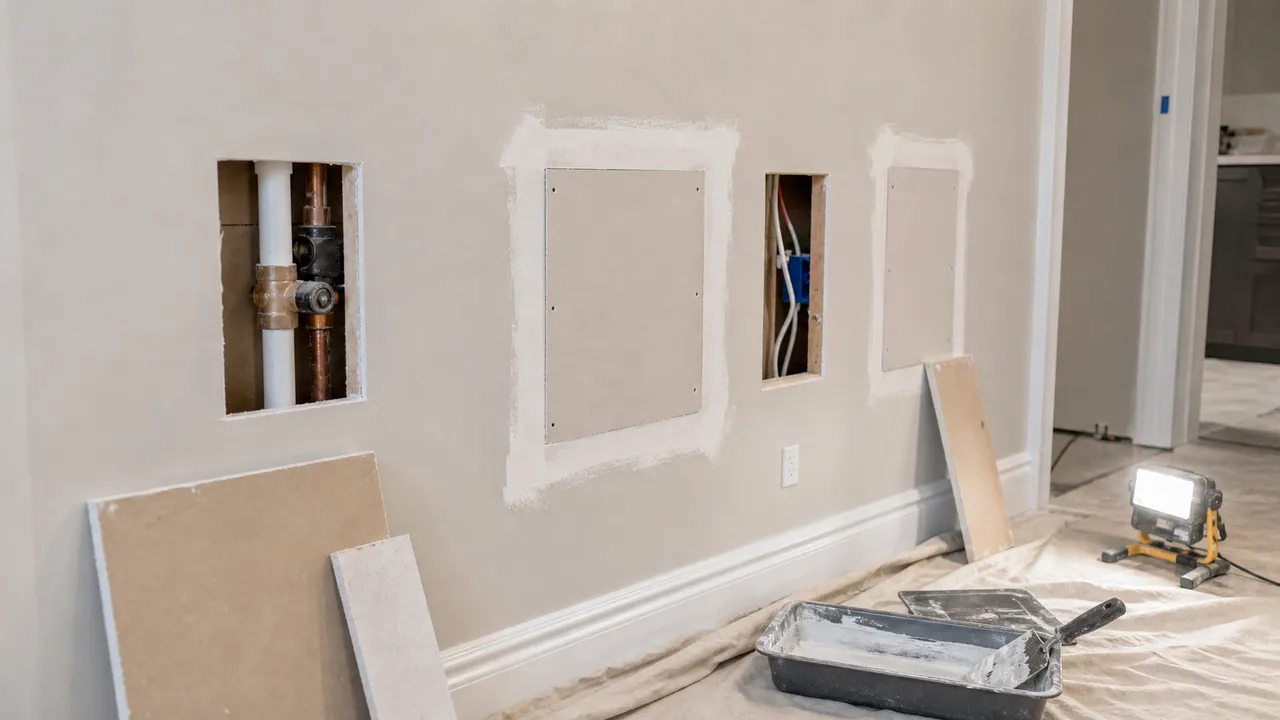
Drywall repair after plumbing or electrical work is usually the step homeowners need once the trade has finished the functional part of the job. Plumbers, electricians, HVAC technicians, and low-voltage installers often need to open walls or ceilings to reach pipes, valves, wiring, pot lights, vents, or fixtures. Their job is access and repair of the system. EPF's job is closing the opening cleanly so the wall or ceiling looks paint-ready again.
If you already have an opening, start with our drywall repair services page, or use the local pages for drywall repair Mississauga and drywall repair Burlington.
EPF also repairs trade cutouts through drywall repair Hamilton and drywall repair Milton when basement renovations, plumbing work, or electrical upgrades leave walls and ceilings open.
Quick answer
Most trade openings can be repaired by squaring the hole, adding backing, installing new drywall where needed, taping, applying multiple coats of compound, sanding, priming, and repainting the affected area. The main exceptions are openings that should stay accessible, wet areas that need drying first, and ceilings where texture or full-panel finishing may change the scope.
Why plumbers and electricians leave openings
Trades open drywall because the important parts of the house are hidden behind finished surfaces. A plumber may need access to a shower valve, drain line, ceiling leak, or shutoff. An electrician may need openings for pot lights, new wiring, switches, panel routes, or fixture relocation. The opening is usually practical, not finish-ready.
That means the drywall repair often starts by cleaning the shape. Ragged edges, broken paper, loose board, and unsupported sides make a patch weak. A clean repair needs solid edges and backing so the new piece sits flush instead of flexing.
Can the hole be patched or should it become an access panel?
Some holes should be closed permanently. Others should remain accessible. If the opening exposes a valve, cleanout, junction point, or equipment that may need future service, an access panel can save cutting the wall open again later. If the opening was only temporary and the system behind it is finished, a closed drywall patch usually looks better.
EPF can advise from photos. A simple wall opening below a finished plumbing repair may be patched. A basement ceiling opening under a valve or drain assembly may be better with a clean panel. The right answer depends on what is behind the drywall, not only the size of the hole.
Ceiling holes vs wall holes
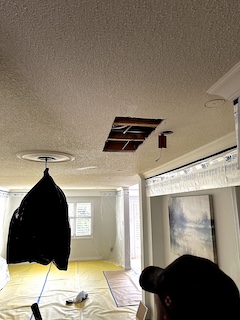
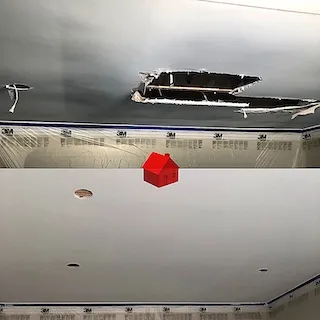
Ceiling holes usually need more finish care than wall holes. Gravity, overhead sanding, lighting, and flat ceiling paint make patch lines easier to see. A ceiling repair after a plumbing leak also needs a moisture check. If the drywall is stained but firm, stain-block primer may be enough after repair. If it is soft or sagging, the damaged section should be removed.
What the repair process looks like
A proper repair usually follows this order: protect floors and furniture, cut the opening to a clean shape, remove weak drywall, add backing or tie into framing, install new board, tape seams, apply two or more coats of compound, sand with dust control, prime the raw compound, and prepare for paint. Rushing the drying between coats is a common reason patches shrink or crack later.
For visible rooms, the finish often needs to extend beyond the original opening. A patch that only covers the square hole can leave a picture-frame edge after paint. Wider feathering helps the repair blend into the wall or ceiling.
How long it usually takes
Small wall patches can sometimes be completed quickly, but most clean repairs need drying time. One opening may take one to two visits depending on size, compound type, humidity, and whether painting is included. Larger ceiling holes, multiple trade cutouts, water damage, or texture matching can take longer.
Should painting be included?
Repair-only work can leave the surface primer-ready, but homeowners often prefer paint-ready or painted completion in visible rooms. Touch-up paint can work when the existing paint is recent and the repair is small. Older paint, darker colours, sheen differences, and bright light often need a larger repaint area or full wall repaint for the cleanest blend.
Send photos for a quote
Send one close photo, one wide room photo, the approximate hole size, whether it is on a wall or ceiling, what trade opened it, whether anything needs future access, and your timing. Use the drywall repair quote form and EPF can recommend patch, access panel, replacement, primer-ready, or paint-ready options.
Related guides: ceiling drywall repair in Burlington, drywall repair vs replacement, and large drywall hole repair.
Related local pages
drywall repair services — Main drywall repair service page for trade cutouts, holes, cracks, and water damage.
drywall repair Mississauga — Local service page for Mississauga homeowners after plumbing or electrical work.
drywall repair Burlington — Local service page for Burlington trade cutouts, ceiling repairs, and patches.
drywall repair Hamilton — Local service page for Hamilton plumbing, electrical, basement, and ceiling cutouts.
drywall repair Milton — Local service page for Milton new-build, basement, and trade opening repairs.
send photos for a drywall patch quote — Quote form for trade openings and drywall repair photos.
FAQ
Can a plumber's drywall hole be patched?
Yes, most plumber access holes can be patched once the plumbing work is complete and the surrounding drywall is dry and stable.
When should I use an access panel instead of drywall patching?
Use an access panel when the opening exposes a valve, cleanout, junction, or service point that may need future access.
How long does drywall repair after electrical work take?
Small openings may take one to two visits. Larger holes, multiple cutouts, ceiling repairs, or painting can add drying and finish time.
Should the drywall repair include painting?
Painting is often worth including in visible rooms because primer and wall-to-wall repainting can help the patch blend better than a small touch-up.
Field photos
Inspiration for your project
Drywall terms this page covers
Useful terms to compare scopes, finish levels, and scheduling before you book.
- drywall repair after plumbing
- drywall patch after plumber
- ceiling repair after plumbing leak
- drywall repair after electrical work
- access panel drywall repair
Article Review
AuthorAlex - EPF Pro Services
Reviewed byEPF Pro Services
UpdatedJune 10, 2026
Plan your drywall scope
Get a drywall quote today
Share photos, room sizes, and timing. We reply the same day with GTA drywall availability and a clearer written scope.
• Clear finish-level scope and drywall sequencing
• Basements, ceilings, condos, and commercial buildouts
• Flexible scheduling for occupied homes, condos, and active sites
Quick next step
Send photos and room sizes through the main quote page, or call for a same-day reply.
Keeping the form on the main quote page helps this article stay lighter and faster.