
Drywall Repair After Electrical or Plumbing Work: What Homeowners Should Expect
2026-04-02
Learn what to expect after electrical or plumbing work leaves holes in your walls or ceilings, and when to call for professional drywall repair in Mississauga.
Quick Answer
Learn what to expect after electrical or plumbing work leaves holes in your walls or ceilings, and when to call for professional drywall repair in Mississauga.
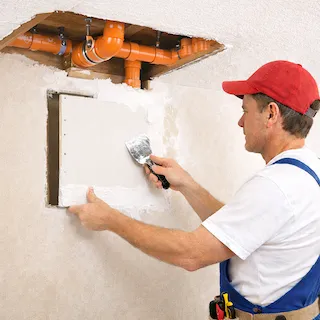
Drywall often gets opened during plumbing and electrical work because the trade needs access behind the finished surface. A leak inside a wall, a drain relocation, a pot-light installation, a panel upgrade, or new wiring route can all leave openings that still need proper drywall repair before the room looks finished again.
That is where many homeowners get surprised. The plumbing or electrical problem may be solved, but the wall or ceiling can still have square cut-outs, narrow channel cuts, broken edges, texture mismatch, or paint disruption that makes the room feel unfinished.
Why plumbers and electricians often need to cut into drywall
These trades work behind the wall, not on the painted surface itself. If a pipe, wire, junction, drain, shutoff, vent, or damaged section sits inside a finished wall or ceiling, drywall is usually the fastest and cleanest way to reach it.
Sometimes the cut is small and controlled. Other times it has to be widened so the repair can actually be completed safely. That is especially common with plumbing leaks, drain changes, shower valve work, recessed lighting, and older homes where access paths are less predictable.
What kinds of wall and ceiling openings are most common
- Small rectangular cuts for switches, outlets, and wiring access
- Larger wall openings around plumbing repairs or valve changes
- Ceiling holes below bathrooms or leak locations
- Long channel cuts where wire or pipe had to be rerouted
- Rough openings with broken drywall edges after urgent repair work
- Repeated cut-outs where a first opening was not enough
Ceiling openings are usually less forgiving than wall openings because the full surface reads at once under room light. Even a repair that feels acceptable up close can still show once the ceiling is painted.
Why drywall repair is usually not included in electrical or plumbing work
In most cases, the plumber or electrician is there to solve the service problem, not to rebuild the wall finish afterward. Some trades will make a neat cut and some will leave the area rough depending on urgency, but drywall repair is usually a separate finishing step.
That separation is normal. A working pipe or circuit does not automatically mean a paint-ready wall. The repair still needs backing if required, new board where needed, taping, compound, sanding, primer, and enough blending that the patch does not keep showing after paint.
What to do before patching starts
Before any drywall work begins, make sure the original trade issue is actually finished. If plumbing is still being tested, an electrician still needs access, or the wall may need to be reopened, patching too early usually creates rework.
For plumbing-related openings, drying time matters too. If the wall was opened because of a leak, the cavity and surrounding materials need to be dry before the repair is closed up. Otherwise the new patch can fail, stain back through, or trap moisture where it should not be.
If the trade work is done and the room now needs a clean finish, see our drywall repair Mississauga page to compare a rough opening against a proper paint-ready repair scope.
How drywall repair differs after plumbing work
Plumbing openings often involve more uncertainty because water may have travelled farther than the visible cut-out. The drywall might be soft, stained, swollen, or broken back farther than expected. In bathrooms, kitchens, laundry rooms, and ceilings below plumbing lines, the repair may need more than a simple surface patch.
That is why plumbing drywall repair is often partly a finish decision and partly a condition decision. The question is not only how to close the hole. It is whether the surrounding drywall is dry, stable, and still worth saving.
How drywall repair differs after electrical work
Electrical cut-outs are often cleaner than plumbing openings, but they can still leave visible finishing problems. Channel cuts, grouped pot-light changes, panel-related openings, and multiple switch or outlet changes can create a string of repairs that all need to blend into one finished wall or ceiling.
This is where wall patching after electrical work often goes wrong. Each opening gets filled, but the room still shows patch lines, texture differences, or touch-up paint circles because the finish was treated as a series of holes instead of one visible surface.
When patching is enough and when replacement is better
A small, clean opening in solid drywall can often be patched successfully. Once the edges are broken, the board has softened, the area is on a ceiling, or the cut-out has to disappear in a high-visibility room, replacement of a larger section often gives the cleaner result.
That is especially true after leak repair, repeated reopenings, or long access cuts from electrical and plumbing changes. A narrow patch may technically close the opening, but a wider rebuild usually gives a flatter, more durable, better-looking surface afterward.
Why paint matching and texture blending matter
A drywall repair can be structurally complete and still stand out after painting. Paint sheen, roller pattern, old paint fade, orange peel texture, knockdown texture, and ceiling light all change how obvious the repair looks once the room is back in use.
That is why many homeowners think the patch itself failed, when the real issue is finish blending. Spot painting, rough texture matching, or a repair that was feathered too narrowly can keep drawing the eye even though the original plumbing or electrical problem was solved correctly.
| Issue | What it means | Recommended next step |
|---|---|---|
| Small clean access hole | The surrounding drywall is likely still stable | Patch, finish, prime, and repaint properly |
| Opening after a leak | Moisture may still be present behind the wall | Confirm drying before closing the wall |
| Broken or crumbling drywall edges | A surface patch may not stay stable | Cut back to sound drywall and rebuild the section |
| Ceiling cut-out | The repair will be easier to see under light | Use wider finish work and stricter light checks |
| Several cuts in one room | Individual patches may leave the room visually busy | Plan the repairs as one finished surface |
| Patch still shows after paint | The finish or blend is still visible | Correct the surface and repaint more broadly |
When to call a professional drywall repair company in Mississauga
If the opening is overhead, came from a leak, involves several cuts in the same room, needs texture matching, or has to disappear cleanly before painting, this is usually where professional help makes more sense than a quick patch attempt.
The real value is not just closing the hole. It is restoring the room so the repair no longer announces where the plumber or electrician had to open the wall in the first place.
Conclusion
After electrical or plumbing work, drywall repair is usually the final step that makes the room feel finished again. The better the cut-out is assessed, dried when needed, rebuilt, blended, and painted, the less obvious the trade access will look afterward.
If you need drywall repair after plumbing access, electrical openings, leak repairs, or ceiling cut-outs, EPF Pro Services can help with paint-ready wall and ceiling repairs in Mississauga.
Related local pages
Drywall repair in Mississauga before painting — Best follow-up if the trade opening is fixed but the room still needs paint-ready wall and ceiling finishing.
Repairing water-damaged drywall — Most relevant when the opening came from a leak, wet cavity, or ceiling damage below plumbing lines.
Drywall repair mistakes homeowners make — Useful if you want to understand why patched access openings still show after primer and paint.
DIY drywall repair vs hiring a professional — Helpful if you are deciding whether a trade cut-out is still a DIY patch or already needs finish-focused repair work.
FAQ
Who repairs drywall after plumbing work?
Usually a drywall repair contractor or finishing company. Plumbing work often solves the pipe issue first, but patching, blending, priming, and getting the wall paint-ready is typically a separate step.
Do plumbers patch drywall after opening a wall?
Usually not as part of the full finish repair. Some plumbers may leave a neat access cut, but drywall rebuilding and paint-ready finishing are commonly separate from the plumbing scope.
Do electricians repair holes in drywall?
Usually they handle the electrical work, not the final drywall finish. After wiring changes, pot-light work, or access cuts, the wall or ceiling often still needs proper patching and blending.
Can drywall be patched right away after a plumbing leak?
Not always. If the opening was made because of a leak, the cavity and surrounding materials should be dry before the wall is closed again. Patching too early can lead to staining, odor, or repair failure later.
Why does a drywall patch still show after painting?
Visible patches usually come from weak feathering, poor texture matching, sheen differences, or trying to touch up too small an area instead of blending the finish more broadly.
Field photos
Inspiration for your project
Drywall terms this page covers
Useful terms to compare scopes, finish levels, and scheduling before you book.
- drywall repair after electrical work
- drywall repair after plumbing work
- holes in drywall after plumbing
- holes in drywall after electrician
- who repairs drywall after plumbing
- who repairs drywall after electrical work
- patch drywall after leak repair
- ceiling drywall repair after plumbing
- wall patching after electrical work
- drywall repair Mississauga
- professional drywall repair
Article Review
AuthorAlex - EPF Pro Services
Reviewed byEPF Pro Services
UpdatedApril 2, 2026
Plan your drywall scope
Get a drywall quote today
Share photos, room sizes, and timing. We reply the same day with GTA drywall availability and a clearer written scope.
• Clear finish-level scope and drywall sequencing
• Basements, ceilings, condos, and commercial buildouts
• Flexible scheduling for occupied homes, condos, and active sites
Quick next step
Send photos and room sizes through the main quote page, or call for a same-day reply.
Keeping the form on the main quote page helps this article stay lighter and faster.