
Before You Rent Popcorn Ceiling Removal Tools: What Homeowners Should Know
2026-04-07
Homeowner guide to popcorn ceiling removal tools, rental equipment, sanding systems, and why tool choice alone does not guarantee a clean smooth ceiling.
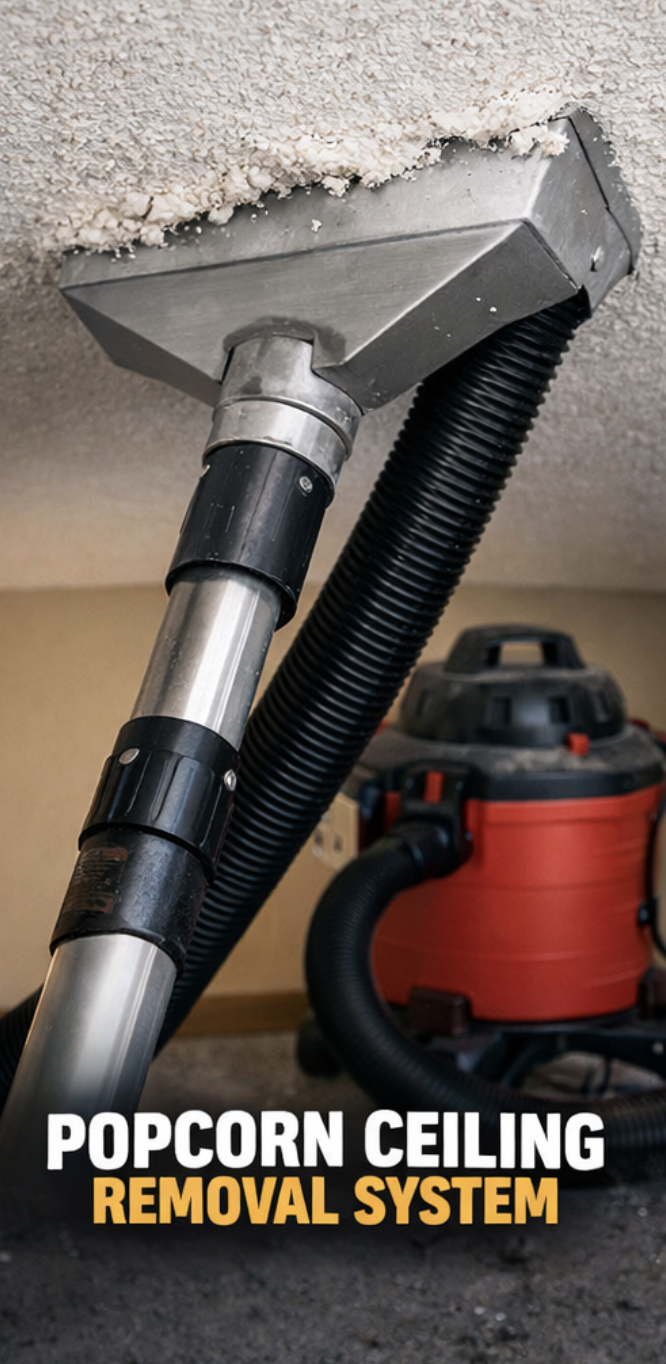
A lot of homeowners start their search for popcorn ceiling removal with the same question: what tools do I need? On the surface, that seems like the right place to begin. If the texture has to come down, then the project must be about finding the right scraper, the right ceiling sander, and the right rental counter. But that is usually where the first bad assumption starts.
Popcorn ceiling removal is rarely just a tools problem. It is a room-protection problem, a dust-control problem, a surface-condition problem, and a finish-quality problem. The tools matter, but they are only part of the decision. Homeowners usually get in trouble when they think the right equipment will turn a rough ceiling into a smooth one automatically.
If you want to see how the full process works before you commit to the DIY or rental route, start with our popcorn ceiling removal page. It covers what removal really involves from prep through the final smooth finish.
This guide is not a roundup of brand names or a list of contractor-only equipment. It is a homeowner decision page. The real question is not just which tools exist. The real question is which tools actually help, what they do not fix, and when renting them stops making sense.
Why popcorn ceiling removal is harder than it looks
Popcorn ceiling removal looks simple in short videos because the project is usually shown at its easiest moment: the texture is already softening, the scraper is already moving, and the room around it has been fully cleared. Real jobs are less tidy. You are working overhead, the ceiling may respond differently from one area to the next, and the room below still has to be protected while all of that is happening.
The first problem is fatigue. Overhead work slows people down much faster than wall work. The second problem is inconsistency. One section of ceiling may release easily while another tears, flakes, or shows older repairs underneath. The third problem is finish quality. Even if the texture comes off, the ceiling does not automatically look ready for paint. Many homeowners discover that removal is only the beginning of the project, not the end.
That is why tool searches are often really decision searches in disguise. People are not only asking which tools are used for removing popcorn ceiling. They are asking whether the tools will actually make the project manageable, clean, and worth doing themselves.
Main categories of tools used in popcorn ceiling removal
It helps to think about popcorn ceiling removal equipment in four groups: removal tools, dust-control tools, sanding tools, and finishing tools. Homeowners often focus too heavily on one category and underestimate the others.
1. Scraping and removal tools
This is the category most homeowners picture first. It includes wide blades, scrapers, hand tools, and simple spray equipment used to help unpainted texture loosen before it is removed. If the ceiling has never been painted, these tools may do much of the visible removal work. If the ceiling has been painted, however, scraping tools often become less effective and more risky.
The main job of removal tools is to get the texture off without gouging the surface underneath. That sounds basic, but it is where many DIY projects go off track. Aggressive scraping can leave the ceiling rougher than it started, which means more repair work later.
2. Dust-control tools and containment materials
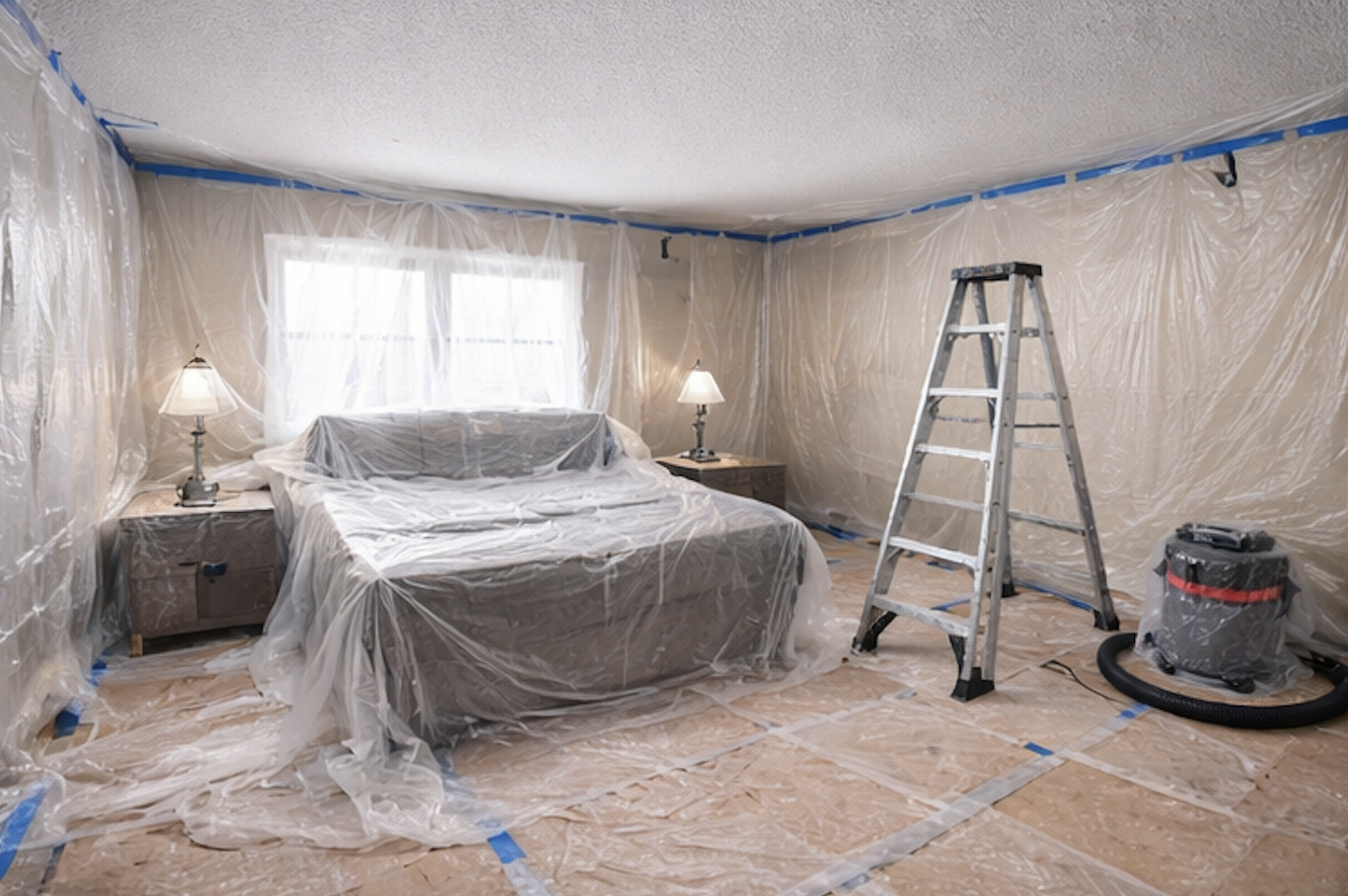
These are less exciting than scrapers, but they matter more than many homeowners realize. This category includes protective floor coverings, room barriers, plastic containment, vent covers, cleanup tools, and the equipment used to control where dust and debris actually travel.
When homeowners compare popcorn ceiling removal equipment, they often overlook this group because it does not feel like the "real" work. In practice, this is the category that decides whether the project spreads into the rest of the home or stays somewhat controlled. Renting a ceiling sander without planning the containment side first is one of the most common mistakes in the whole process.
3. Sanding tools
Sanding tools are where many searches become more specific. This is the part of the topic behind phrases like dustless sander popcorn ceiling, vacuum sander for ceilings, ceiling sanding tools, and drywall sander for popcorn ceiling. Homeowners tend to see the sander as the "magic" piece of the project, the tool that will solve the messy finish after scraping.
Sanding tools do matter, but only in context. They help refine the surface after texture has been disturbed and after repairs or smoothing work have been done. They do not automatically erase damage from rough scraping, poor repairs, or a painted ceiling that should never have been treated like a basic rental-tool job in the first place.
4. Finishing tools
This is the category homeowners underestimate most. Once the old texture is off, the ceiling may still need repair tools, smoothing tools, hand tools for broad surface correction, and painting tools. That is why many projects feel deceptively simple at the rental stage and surprisingly involved by the time the homeowner is trying to make the ceiling actually look smooth again.
If you only think about popcorn ceiling scrapers and sanding equipment, you are planning for removal. You are not yet planning for the final look of the ceiling.
Which tools matter most for the final finish
This is where the homeowner decision angle matters more than the equipment list. Many people assume the best tools for popcorn ceiling removal are the tools that make the mess feel easier to handle. In reality, the tools that matter most are the ones that help the ceiling look better after the texture is gone.
That usually means homeowners should stop asking only which tool removes popcorn fastest and start asking which stage controls the final surface. On many projects, it is not the scraper. It is the repair stage, the smoothing stage, and the sanding stage that decide whether the ceiling still looks patched, rough, or shadowed after paint.
This is especially true when the ceiling has old repairs, stains, movement cracks, prior patching, or paint on the texture. In those cases, no single tool solves the project. The ceiling has to be handled as a surface-restoration job, not just a texture-removal job.
Dustless sanding systems: strengths and limits
A lot of searches in this topic are really searches for dust reduction. Homeowners are not just looking for a drywall sander for popcorn ceiling removal because they want speed. They are usually trying to avoid covering the entire home in fine white dust. That is why dustless sanding has so much appeal.
The strength of these systems is easy to understand: they can make cleanup easier, reduce the amount of dust hanging in the air, and make the room more manageable than old-style open sanding. They are useful tools in the right stage of the job. If the surface has already been corrected and the room has been set up properly, they can help move the project toward a cleaner finish.
But dustless sanding has limits that homeowners should understand before they rent anything. It does not make the project mess-free. It does not correct scraping damage. It does not fix a painted ceiling that is peeling badly or tearing underneath. It does not replace careful room prep. And it does not eliminate the need for cleanup after the work is done.
This matters because some homeowners rent a ceiling sander believing the rental itself solves the problem. In reality, sanding equipment is only one part of a bigger process. If the ceiling still needs repairs or if the room was never set up properly, the sander does not save the project. It just becomes one more tool inside a project that was planned too narrowly.
Renting tools vs hiring a professional
This is the main decision most homeowners are actually trying to make. Tool rental sounds efficient because the costs feel visible and limited. You rent the equipment, bring it home, do the work over a day or two, return it, and move on. That version is appealing because it treats the project like a simple short-term task.
Sometimes rental can make sense. A small ceiling, an easy room to protect, a homeowner who expects a basic result, and a ceiling that appears unpainted may still be reasonable for a careful DIY attempt. Even then, the homeowner has to account for time, cleanup, room prep, supplies, and the possibility that the ceiling underneath still needs more work than expected.
Where rental usually becomes poor value is when the project turns out to be bigger than the tool list. If you spend time picking up equipment, learning how to use it overhead, protecting the room, buying extra supplies, cleaning up dust, correcting scraping damage, and trying to make the ceiling look smooth afterward, the savings can shrink quickly.
The hidden cost is not just money. It is time, fatigue, inconvenience, and finish risk. That is why the real comparison is not rent popcorn ceiling removal tools versus do nothing. It is rent tools versus hire a professional versus accept the chance that the ceiling may still need more work after the rental period is over.
Jobs that are bad candidates for rental tools
Some ceilings are poor candidates for a rental-first plan even if the room looks manageable on day one.
The biggest red flags are:
- Painted popcorn ceilings
- Ceilings with stains, cracks, or older patching
- High ceilings or stairwell areas
- Large open-concept ceilings where small flaws stay visible
- Occupied homes where dust control matters a lot
- Older homes with uncertain material history
- Rooms where the final smooth look matters more than just getting the texture down
In those situations, tools alone are rarely the real issue. The bigger problem is that the project usually requires more judgment, more room control, and more finish correction than a basic rental plan allows for.
What homeowners get wrong before renting a ceiling sander
There are a few assumptions that show up repeatedly in this topic.
The first is assuming the sander does the whole job. It does not. A ceiling sander helps with part of the surface-refining stage. It does not remove all the texture by itself, and it does not create a smooth ceiling if the surface underneath still needs repair.
The second is skipping the painted-ceiling question. If the texture has paint on it, the whole plan can change. Homeowners often realize this too late, after the room is already protected and the tools are already rented.
The third is underestimating overhead work. Even good tools feel different after a few hours on a ceiling. Fatigue changes pressure, angle, patience, and cleanup quality. That is one reason DIY ceiling work often starts controlled and ends rougher than planned.
The fourth is assuming a one-day or weekend rental equals a one-day or weekend project. In reality, the room may need to stay out of service longer because cleanup, repairs, smoothing, and paint preparation still remain after the visible removal work is done.
Painted popcorn ceilings and why tools alone may not solve the job
Painted popcorn is one of the clearest reasons a tools article should also be a decision article. When homeowners search painted popcorn ceiling removal tools, they are often hoping there is one better scraper or one better sander that solves the extra difficulty. Usually there is not.
Paint changes how the texture responds. It can make the ceiling less cooperative, more prone to tearing, and more dependent on follow-up surface work after the old texture is disturbed. That means the project becomes less about equipment and more about method, patience, and finish recovery.
If the ceiling has already been painted, our painted popcorn ceiling removal guide is the best follow-up. It explains why painted texture changes the project so much.
What happens after the texture is removed
This is the section many generic tool pages rush through, even though it is the part homeowners usually understand the least. Once the popcorn texture is off, the room is not necessarily done. In many cases, the ceiling still shows flaws that the texture was hiding.
A typical sequence after removal looks more like this:
- Remove the texture as cleanly as the ceiling allows
- Check for damage, rough spots, old patches, and visible seams
- Correct the surface so the ceiling reads flatter and cleaner
- Sand carefully to reduce roughness and blend the field
- Get the ceiling ready for paint
- Apply flat ceiling paint and complete cleanup
This is where the whole question of best tools for popcorn ceiling removal gets reframed. The best tools are not always the most powerful or the most expensive. They are the tools that fit the actual ceiling condition and the actual goal. If the goal is only to disturb the texture, one tool list might seem enough. If the goal is a clean smooth ceiling, the job becomes much broader than the rental counter usually suggests.
When hiring a professional makes more sense
Hiring a professional usually makes more sense when the homeowner cares about one or more of these things: keeping the home cleaner, reducing the chance of surface damage, dealing with painted texture, avoiding a long multi-day learning curve, or ending up with a ceiling that actually looks flat and finished afterward.
That does not mean every small ceiling needs to be handed off. It means homeowners should judge the project by the final standard, not only by the removal step. If the room is highly visible, occupied, difficult to protect, or already questionable before work begins, the rental approach often becomes less attractive once the real scope is understood.
FAQ
What is the best tool for removing popcorn ceiling? The answer depends on whether the ceiling is painted, how large the room is, and what the final finish needs to look like. A removal tool alone rarely decides the whole project.
Do I need a dustless drywall sander? Not always, but many homeowners look into them because they want less mess. They can help reduce dust during the sanding stage, but they do not solve every part of the project.
Can I rent popcorn ceiling removal tools? Yes, but rental makes the most sense on smaller simpler rooms where the ceiling condition is cooperative and the finish expectations are modest.
Is a rental ceiling sander enough for a smooth finish? Usually not by itself. The final look still depends on the condition of the ceiling after the old texture is removed.
What if the popcorn ceiling is painted? Painted popcorn often changes the project from a straightforward removal job into a more repair-heavy and finish-heavy job.
Do I need more than scraping tools? In many cases, yes. Room protection, cleanup, sanding, surface correction, and paint prep all matter after the texture is off.
Is popcorn ceiling removal too messy to do yourself? It can be. The real issue is not only the mess but whether the room can be protected well enough and whether the final ceiling still needs more work after the visible removal stage.
Should I rent tools or hire a pro? That depends on the room, the ceiling condition, and how finished you want the result to look. Many homeowners start by comparing rental options and then realize the final ceiling quality matters more than the tool list.
Need help deciding before you rent?
If you are still weighing the tool-rental route, the best next step is usually to compare the full project sequence against your room, not just against a rental list. Homeowners who want a cleaner process, a better final finish, and less guesswork usually benefit from looking at the whole ceiling plan before they commit to equipment.
If your next question is about room setup, read how to prepare for popcorn ceiling removal. If you are trying to judge whether a DIY route is already becoming a mistake, our common popcorn ceiling removal mistakes article is another useful follow-up.
EPF Pro Services helps homeowners remove popcorn ceilings with less mess, fewer surprises, and a cleaner final result. If the room matters and the finish matters, it usually makes sense to scope the full project before renting tools and hoping the ceiling cooperates.
FAQ
What is the best tool for removing popcorn ceiling?
There is no single best tool for every ceiling. The right tool depends on whether the texture is painted, how large the room is, and whether the goal is basic removal or a cleaner final finish.
Do I need a dustless drywall sander for popcorn ceiling removal?
Not always, but many homeowners look into one because they want less dust during the sanding stage. It can help reduce mess, but it does not solve every part of the project.
Can I rent popcorn ceiling removal tools instead of hiring a contractor?
Yes, but rental usually makes the most sense on smaller simpler rooms where the ceiling is cooperative and the finish expectations are modest.
Is a rental ceiling sander enough for a smooth ceiling?
Usually not by itself. The final result still depends on how the ceiling responds during removal and what the surface looks like afterward.
What if the popcorn ceiling has been painted?
Painted popcorn usually makes the project harder. The ceiling often needs more surface correction afterward, so tools alone may not solve the whole job.
Do I need more than scraping tools to remove popcorn ceiling?
In many cases, yes. Room protection, cleanup, sanding, surface correction, and paint preparation all matter after the visible texture is gone.
Is popcorn ceiling removal too messy to DIY?
It can be, especially in occupied homes or larger open rooms. The real issue is not only the dust but whether the room can be protected properly and whether the final ceiling still needs more work.
When does hiring a professional make more sense than renting tools?
It usually makes more sense when the ceiling is painted, the room is highly visible, the home is occupied, or the final smooth finish matters more than simply getting the texture down.
Field photos
Inspiration for your project
Popcorn ceiling terms this page covers
Useful terms to compare removal, skim coating, and finish scope before you book.
- popcorn ceiling removal tools
- tools for removing popcorn ceiling
- popcorn ceiling removal equipment
- best tools for popcorn ceiling removal
- rent popcorn ceiling removal tools
- dustless sander popcorn ceiling
- drywall sander for popcorn ceiling
- popcorn ceiling scraper
- DIY popcorn ceiling removal tools
- ceiling sanding tools
- vacuum sander for ceilings
- painted popcorn ceiling removal tools
- smooth ceiling finishing tools
- hire pro vs rent popcorn ceiling tools
Ready to plan your ceilings?
Get a popcorn ceiling quote today
Share photos, ceiling heights, and timing. We reply the same day with Mississauga, Oakville, and GTA availability.
• HEPA dust control and Level 5 skim finishing
• Pot-light coordination and interior painting add-ons
• Flexible scheduling for condos and single-family homes
Quick next step
Send photos and room sizes through the main quote page, or call for a same-day reply.
Keeping the form on the main quote page helps this article stay lighter and faster.