
Why Walls and Ceilings Start Cracking or Bubbling in Oakville Homes
2026-04-05
Oakville homeowner guide to winter cracks, damp summer rooms, and why wall or ceiling problems keep coming back.
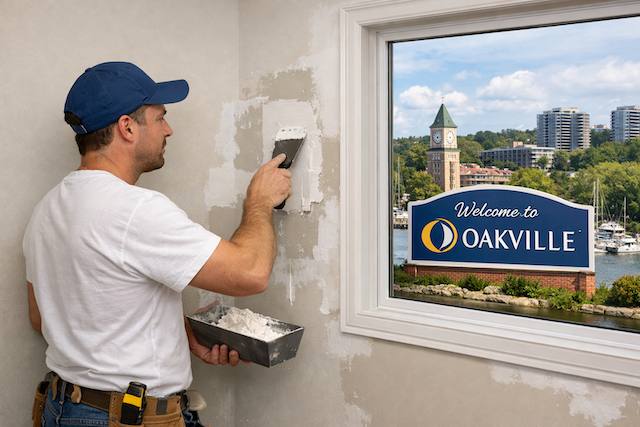
Drywall in Oakville homes often tells you more about indoor conditions than homeowners expect. A wall that looks perfectly fine through one part of the year can start showing hairline cracks, tape movement, paint bubbling, or soft spots once winter heating dries the house out or summer humidity settles into lake-adjacent rooms, basements, and bathrooms. Those changes are not random. They usually reflect how drywall, framing, paint, and indoor airflow respond to the seasons together.
Oakville adds another layer to that pattern because its housing stock is varied. Waterfront and near-water homes deal with different humidity behavior than interior subdivisions. Heritage properties in Old Oakville and Bronte Village often have older wall systems, mixed materials, or previous repair layers under newer paint. Executive homes in Glen Abbey, Joshua Creek, and River Oaks may have stronger finish expectations, more pot lights, larger wall runs, and critical daylight that expose minor defects quickly. Uptown condos add heating, cooling, and ventilation variables that detached homeowners do not always face.
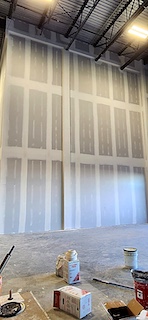
1. Intro: why drywall reacts to seasonal indoor conditions
Drywall responds to indoor conditions, not just outdoor weather. The paper face, joint compound, paint film, and even the framing behind the wall all react to shifts in humidity and temperature. When the house gets drier in winter, joints and existing weak repairs can tighten up enough to show. When the air gets heavier in summer, soft spots, bubbling paint, or seam movement can become more obvious. During spring and fall transitions, repeated expansion and contraction can make an old crack reappear right where you thought it had been solved.
This is why a homeowner may feel like a wall is fine for months and then suddenly starts misbehaving. In reality, the weakness was often already there. The season simply changed the way the surface is reading. That might mean a taped joint that was never bonded well, a previous repair over unstable drywall, or a room with moisture imbalance that only becomes visible when the indoor environment swings far enough.
2. Winter dryness and drywall shrinkage
Winter is one of the most common times for drywall cracks to show because heated indoor air becomes much drier than many homes are designed around. As humidity drops, framing and finishing materials can contract slightly. That small movement is often enough to reveal weak corner work, old settlement lines, screw pops, and stress points above openings.
In Oakville, this often shows up in stairwells, second-floor hallway ceilings, long living-room walls, upper corners near exterior walls, and around larger window openings that bring in more temperature contrast. Homes with large glazed areas, premium trim details, and open main-floor layouts tend to be less forgiving because the wall surface is exposed to stronger light and longer sightlines.
Older homes in Old Oakville, Falgarwood, and Bronte Village can be even more sensitive because previous renovations may have created plaster-to-drywall transitions or layered repairs that do not move uniformly. A winter hairline near a ceiling crown or over a doorway may not mean the house is suddenly failing. It may mean the finish has reached the point where seasonal shrinkage can no longer hide the weak spot.
Drywall cracks in winter also become more common where rooms are heated unevenly. Bonus rooms over garages, exterior-wall bedrooms, converted basements, and additions can all behave differently from the rest of the house. The drywall surface ends up absorbing that imbalance even if the issue looks like only a cosmetic line at first.
3. Summer humidity and swelling, bubbling, or mold risk
Summer creates the opposite problem. Instead of dryness, the issue becomes humidity, slower drying, condensation risk, and moisture retention in the rooms that already had weak finishing or ventilation. In Oakville, that matters in lake-adjacent homes, top-floor bathrooms, finished basements, laundry spaces, and any area where humid air lingers longer than homeowners realize.
Humidity affects drywall because the paper face, paint, and compound all respond differently to moisture. When dampness persists, paint can start to bubble, old patch lines can swell slightly, and taped seams that were never especially strong can begin to show through the finish. The symptoms are often subtle at first. A little blistering near a bathroom ceiling. A soft-looking seam on a basement wall. A stained area that seems more obvious after a humid stretch.
The mold question usually enters the picture when there has been repeated moisture rather than just high humidity alone. A bathroom with poor fan performance, a window corner with regular condensation, or a basement wall that never fully dries after a small event can all create conditions where drywall is no longer just reacting cosmetically. It may be slowly losing stability.
4. Seasonal transitions and movement cracks
Spring and fall are when many homeowners get confused, because the damage seems inconsistent. The wall looked worse in February, better in April, then weak again after the air conditioning ran hard in July. That usually means the surface is reacting to repeated movement cycles rather than one isolated event.
Seasonal drywall cracks are common above doors, at window corners, along ceiling transitions, and where long walls meet bulkheads or stair geometry. These areas already deal with stress concentration. Add repeated humidity change, temperature swings, and small building movement, and the same crack or seam can reappear every year.
This is one of the strongest signs that a quick touch-up is not solving the real issue. If the same line keeps returning through different seasons, the wall likely needs a stronger repair, wider finishing, partial rebuilding, or moisture investigation instead of one more cosmetic touch-up.
Mid-article CTA
If you are dealing with recurring cracks, soft tape lines, or humidity-related surface changes, review our drywall repair Oakville page to compare your wall against a proper repair scope instead of another temporary touch-up.
5. Poor airflow, uneven heating and cooling, and condensation
Weather is only part of the story. Poor airflow and uneven heating and cooling often do as much damage to drywall as the season itself. Rooms that hold heat, stay cold, or fail to clear moisture efficiently create localized stress that can make one wall fail while the rest of the house seems fine.
In Oakville custom homes, this can show up in additions, bonus rooms, basements, and top-floor bathrooms where distribution is not as even as homeowners assume. In condos, it can appear around bathrooms, exterior walls, and corners where building systems do not dry the air the way residents expect. In lake-adjacent homes, air movement and moisture loads can vary more than inland homeowners are used to, especially if older windows, ventilation, or insulation details are still part of the house.
Condensation is particularly deceptive because it is not always visible as active water. A room can be just damp enough, often enough, that paint loses its grip or drywall slowly softens without ever producing a dramatic leak stain. By the time bubbling shows up, the underlying problem may have been building for months.
6. Why basements, bathrooms, and exterior walls show problems first
Certain areas of a home are simply less forgiving. Basements run cooler and can hold humidity longer. Bathrooms are exposed to repeated steam. Exterior walls feel greater seasonal temperature swings than interior partitions. Ceilings below attics, roof transitions, or plumbing lines can also reveal problems faster than standard wall areas.
In Oakville basements, especially in older homes or finished lower levels near the lake, drywall can show stress after a humid summer even if there was no major flood event. In bathrooms, paint bubbling or tape movement often points to weak ventilation rather than just bad luck. Exterior wall corners may reveal minor winter cracking first because they sit right where indoor and outdoor conditions push hardest against each other.
This is also why repairs in these areas need more caution. A hallway wall with one cosmetic line is different from a bathroom ceiling that bubbles every August or a basement wall that always smells slightly damp by late summer. The room location changes the repair decision.
7. How local housing conditions in Oakville affect drywall performance
Oakville is a city where local housing patterns genuinely change drywall behavior. Waterfront and near-water neighbourhoods such as Old Oakville, Eastlake, and Bronte can experience more humidity-sensitive conditions than inland subdivisions. Heritage homes often contain layered materials, older framing, or previous renovation transitions that make the wall system less predictable. Those homes can look solid at first glance while still carrying old weak points under the finish.
Luxury homes in Glen Abbey, River Oaks, Joshua Creek, and Iroquois Ridge often create a different problem. The materials may be newer and the houses may be structurally strong, but the finish expectations are much higher. Wide open walls, large windows, high ceilings, pot lights, and smooth paint make even small drywall issues more visible. What would pass in a utility room becomes unacceptable in a main living area where the eye can read the entire wall plane at once.
Condos in Uptown Core and along Lakeshore bring another pattern entirely. Shared building systems, quieter ventilation performance, concrete transitions, and tighter access logistics do not necessarily create more damage, but they do change how moisture-related drywall issues appear and how repairs need to be staged. A city-specific feeder page matters because these differences are real. Oakville drywall problems are not just Toronto-area weather with a different place name.
8. When damage is cosmetic vs when repair is needed
Not every seasonal line in drywall needs urgent work. Some hairline changes remain mostly cosmetic, especially if they appear during one season, stay narrow, and do not involve softness, bubbling, or staining. In a low-visibility area, monitoring may be reasonable at first.
Repair becomes the better call when the same line returns repeatedly, when paint bubbles or stops holding properly, when tape is separating, when drywall feels soft, or when the room is important enough that a visible defect keeps drawing attention. In Oakville, that often means acting earlier in premium living spaces because the finish standard is less forgiving and repeated repainting becomes expensive quickly.
The key question is whether the wall is stable. If the issue is only reading differently under seasonal light and dryness, a targeted repair may be enough. If the surface is actually moving, getting damp again, or starting to come apart, a wait-and-see approach often just delays a larger scope.
9. When installation choices make weather-related drywall problems worse
Some seasonal drywall problems are exaggerated by earlier installation choices. Weak seam layout, poor fastening, rushed compound drying, the wrong board in a moisture-prone room, thin corner work, or finishing over unstable material all make the wall less capable of tolerating normal seasonal change.
That is why two houses can live through the same winter or summer and perform very differently. One has minor cosmetic movement. The other shows seams, bubbles, recurring corner cracks, or persistent paint failure. The difference is often not the weather itself. It is how stable the drywall system was before the season started stressing it.
For homeowners, this matters because repeated seasonal damage can be a repair problem, an installation problem, or both. Some areas only need a stronger repair and refinishing. Others need damaged material removed, the surface underneath corrected, or better board choice if moisture was part of the original scope. Treating every recurring issue like a surface patch is how the cycle keeps repeating.
10. Table: condition / likely cause / recommended action
| Condition | Likely cause | Recommended action |
|---|---|---|
| Hairline crack that reappears during heating season | Dry indoor air exposing a weak joint or stress point | Watch the pattern, then repair and refinish it if it keeps coming back |
| Paint bubbling near a bathroom ceiling or basement wall | Humidity, condensation, or unresolved moisture behind the finish | Find the moisture source first, then repair or replace the affected drywall |
| Tape line showing more in summer | Humidity stressing an already weak seam | Remove the loose material and rebuild the joint properly |
| Recurring exterior corner crack | Temperature contrast, framing movement, or weak corner work | Check the movement pattern and use a stronger repair |
| Soft drywall after humid periods | Chronic dampness, past leak damage, or hidden condensation | Stop the moisture source, dry the area, and replace weak drywall |
| Minor screw pops after seasonal changes | Normal movement making weak fastening more visible | A small localized repair may be enough if the surrounding surface is stable |
11. Seasonal maintenance tips for homeowners in Oakville
Watch the same areas through the year instead of only reacting once a defect becomes obvious. In winter, check upper corners, second-floor hallways, stairwell walls, and larger window openings for recurring lines. In summer, pay more attention to bathrooms, basements, exterior corners, and lake-facing or moisture-sensitive rooms for bubbling paint, musty air, or softened finish lines.
It also helps to monitor how the room behaves, not just how the drywall looks. Does the bathroom mirror stay fogged too long? Does the basement feel damp even without an obvious water event? Does one bedroom near an exterior wall always feel colder or drier than the rest of the floor? Does the same paint bubble return every summer? Those patterns usually matter more than the visible crack itself.
Seasonal maintenance is not about panic. It is about pattern recognition. Drywall that misbehaves the same way each year is usually telling you that the wall, ventilation, or earlier repair approach needs closer attention.
12. When to call a professional drywall repair company in Oakville
Call a repair company when a crack keeps returning, when paint bubbles or peels, when drywall feels soft, when staining is returning, or when the area is visible enough that repeated cosmetic touch-ups are no longer acceptable. That is especially true in Oakville living rooms with strong natural light, premium kitchens, stairwells, condo main rooms, bathrooms, and finished basements where a weak repair is hard to ignore once the room is painted and furnished.
The value of a professional assessment is not just the finish quality. It is the diagnosis. Some issues need crack reinforcement. Some need moisture tracing first. Some need damaged drywall cut out and replaced. Some are tied to earlier installation decisions that keep making the same section fail season after season. The wall looks cleaner for longer when the cause is treated properly, not just covered again.
End CTA
If recurring cracks, bubbling paint, or humidity-related wall changes are starting to repeat in your home, book professional drywall repair before the next seasonal cycle makes the same area harder to stabilize and finish cleanly.
13. Conclusion
Drywall issues in Oakville homes are usually less about one dramatic weather event and more about repeated indoor cycles of dryness, humidity, airflow imbalance, and temperature change. Winter reveals shrinkage and weak joints. Summer exposes humidity-sensitive areas, bubbling paint, and soft seams. Seasonal transitions reopen stress points. And local housing conditions from heritage homes to lakefront properties to luxury condos shape how those problems show up.
The practical takeaway is simple: the same defect returning each season is not just bad luck. It usually means the drywall system is no longer staying stable through normal indoor changes. Once that pattern starts, the right repair plan saves time, repainting, and repeated frustration.
FAQ
Why does drywall crack more in winter?
Drywall often cracks more in winter because heated indoor air becomes drier and makes weak joints, corner stress points, and older repair lines more visible.
Can humidity make drywall swell?
Yes. High humidity can soften weak areas, affect how well paint holds, and contribute to swelling or bubbling, especially in basements, bathrooms, and lake-influenced rooms.
Why is paint bubbling on my drywall?
Paint bubbling usually points to moisture, condensation, trapped humidity, or an earlier water issue that was never fully corrected. The bubble is the symptom, not the cause.
Can heating or cooling problems damage drywall?
Yes. Uneven heating, cooling, and airflow can create condensation or room imbalance that makes drywall cracks, seam movement, and paint failure worse.
When should I repair drywall instead of waiting for the season to change?
Repair makes more sense when the same crack or bubble keeps returning, drywall feels soft, or moisture may be involved. Repeated seasonal change usually means the issue needs more than a cosmetic touch-up.
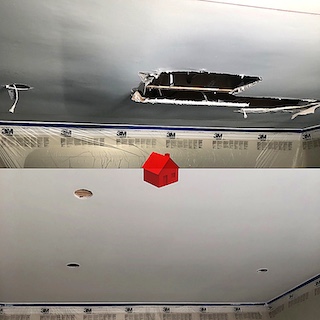
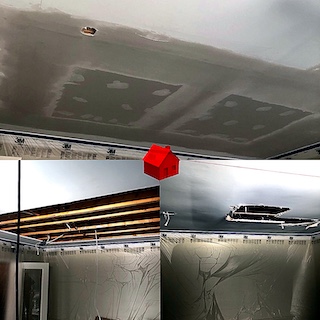
Field photos
Inspiration for your project
Drywall terms this page covers
Useful terms to compare scopes, finish levels, and scheduling before you book.
- drywall weather damage Oakville
- how humidity affects drywall
- drywall cracks in winter
- drywall swelling in summer
- seasonal drywall cracks
- bubbling paint on drywall
- indoor humidity drywall damage
- drywall repair Oakville
- drywall installation Oakville
Plan your drywall scope
Get a drywall quote today
Share photos, room sizes, and timing. We reply the same day with Oakville drywall availability and a clearer written scope.
• Clear finish-level scope and drywall sequencing
• Basements, ceilings, condos, and commercial buildouts
• Flexible scheduling for occupied homes, condos, and active sites
Quick next step
Send photos and room sizes through the main quote page, or call for a same-day reply.
Keeping the form on the main quote page helps this article stay lighter and faster.