
Why Drywall Cracks and Moisture Problems Keep Coming Back in Hamilton Homes
2026-04-05
Hamilton homeowner guide to winter cracks, damp basements, and why recurring wall and ceiling problems need proper repair.
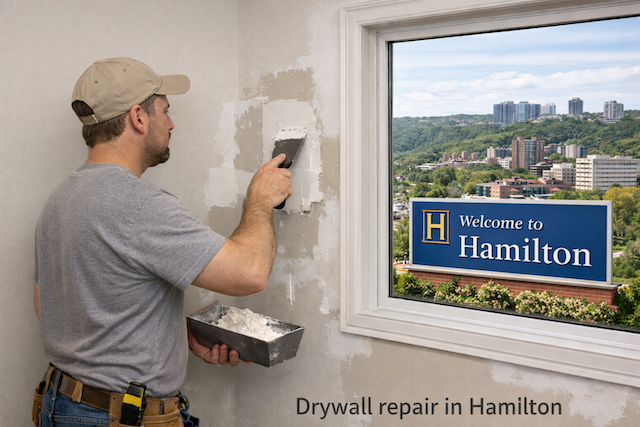
Drywall in Hamilton homes often reacts to the seasons in ways homeowners do not connect until the same defects keep returning. A crack appears near the end of winter. A basement wall starts to feel different in late summer. Paint bubbles near a bathroom ceiling after humid weather. A repaired seam in an older home looks acceptable for months, then suddenly reads through again when indoor conditions change. Those patterns are common because drywall responds to humidity, temperature swings, airflow, and moisture history more than most people expect.
Hamilton adds extra complexity because the housing stock is broad. The downtown core, Durand, Westdale, and Dundas include older homes and mixed-material assemblies where plaster, previous repairs, and modern drywall can all meet in the same wall. Hamilton Mountain and suburban areas deal with different drainage and basement conditions. Stoney Creek brings lake-influenced moisture patterns. Newer subdivisions such as Waterdown and Binbrook can still show seasonal movement through settlement lines and builder-grade finishing. That mix is exactly why a city-specific article matters.
1. Intro: why drywall reacts to seasonal indoor conditions
Drywall does not only respond to weather outside. It responds to the indoor environment your house creates in response to that weather. In winter, air inside the home often gets much drier once heating systems run continuously. In summer, humidity lingers longer in basements, bathrooms, and rooms with weaker ventilation. In spring and fall, the house cycles through changing conditions fast enough that old cracks and repair lines often begin to read differently again.
This is why so many drywall issues feel unpredictable. The wall may have had a weak seam, a poor older patch, or slight moisture sensitivity for months. Seasonal indoor changes simply push that weak point far enough that paint and light can no longer hide it.
2. Winter dryness and drywall shrinkage
Winter is one of the most common seasons for drywall cracks because heated indoor air becomes drier than the wall system is used to. As humidity drops, materials contract slightly. That small movement is often enough to expose hairlines at taped joints, upper corners, ceiling transitions, and older repair areas that looked stable during milder months.
In Hamilton, this often shows up in stairwells, second-floor hallway walls, upper landing corners, and long main-floor walls that catch daylight. Older homes in Durand, Westdale, Dundas, and parts of downtown are especially prone to this because the surface underneath the finish may not be as uniform as it looks. Past renovations, plaster-to-drywall transitions, or multiple repaint cycles can leave small weak points that winter dryness makes obvious.
Winter cracking is also more common where rooms heat unevenly. Spaces above garages, exterior-wall bedrooms, older additions, and upper floors with temperature imbalance can all stress drywall differently from the rest of the home. That does not necessarily mean the structure is failing. It means the finish is absorbing more seasonal tension than it can hide cleanly.
3. Summer humidity and swelling, bubbling, or mold risk
Summer creates a different kind of drywall problem. Instead of shrinkage, the issue becomes humidity, slower drying, condensation, and moisture retention in the areas that are already vulnerable. Basements, bathrooms, laundry spaces, and lower-level family rooms are usually first. In Hamilton, this matters even more in older homes, below-grade rooms, and properties where ventilation or drainage history has never been especially strong.
Humidity affects drywall because the board, paper face, joint compound, and paint layers all respond differently to moisture. When dampness lingers, weak seams soften, older patch lines can swell slightly, and paint may begin to bubble or lose its grip. A small bubble or soft-looking seam is rarely only a paint problem. It usually means the drywall underneath is responding to more moisture than it should.
Mold risk becomes a real concern when humidity overlaps with old leaks, chronic dampness, or recurring condensation. Not every bubbling bathroom ceiling has mold behind it, but repeated paint failure, musty smell, or softness should not be treated as routine cosmetic wear. The repair decision changes once the surface is no longer stable.
4. Seasonal transitions and movement cracks
Some drywall issues do not belong to winter or summer alone. They belong to the transitions between seasons. Spring and fall are when many homeowners notice that a crack seemed to improve, then returned, or that a repaired area suddenly started reading differently again. That usually means the same weak spot is reacting to repeated indoor cycles rather than one isolated event.
Seasonal drywall cracks often appear above doors, around window corners, at ceiling-to-wall transitions, and anywhere a long wall meets a bulkhead or stair geometry. Those are normal stress points. Once the house keeps cycling between dry heated air, milder humidity, and summer dampness, the same line can reopen year after year.
This is one reason repeated cosmetic touch-ups often disappoint homeowners. If the same line keeps returning through each seasonal cycle, the wall probably needs more than another skim coat. It may need a stronger repair, wider finishing, or partial rebuilding so the same movement does not keep printing through the finish.
Mid-article CTA
If the same cracks, bubbles, or seam lines keep returning, compare your situation against our drywall repair Hamilton page so you can judge whether the wall needs a cosmetic touch-up or a more stable repair scope.
5. Poor airflow, uneven heating and cooling, and condensation
Weather is only part of the story. Poor airflow and uneven heating and cooling often explain why one room fails while the rest of the home seems fine. Bathrooms that do not clear steam well, finished basements that feel cool and damp, upper floors that overheat in summer, and older rooms with uneven ventilation all create local conditions that drywall has to absorb.
In Hamilton, this can be especially relevant in older homes where heating, cooling, and ventilation have been updated in pieces over time. A modern bathroom fan may not fully compensate for the room layout. A basement may be finished beautifully but still hold moisture differently than the main floor. A loft conversion or renovation over older framing may behave differently from the original house. The drywall does not care whether the change is architectural or mechanical. It only reacts to the conditions it is exposed to.
Condensation is one of the most misleading causes because it often stays subtle. A wall may not show an active leak, but still experience repeated moisture around exterior corners, windows, upper bathroom ceilings, or cool basement sections. By the time paint begins bubbling, the wall has often been under stress much longer than the homeowner realized.
6. Why basements, bathrooms, and exterior walls show problems first
Certain locations in a house are simply more sensitive. Basements run cooler and often hold humidity longer. Bathrooms deal with repeated steam. Exterior walls feel the seasonal difference more than interior partitions. Ceilings below plumbing, roof transitions, or attic-related temperature shifts also reveal past moisture and movement faster than standard walls.
Hamilton basements deserve special attention because lower levels across the city vary widely. Some are dry and stable. Others deal with old foundation history, escarpment-related drainage patterns, or lingering humidity even when there is no obvious standing water. A basement wall that softens each summer or a ceiling that keeps showing faint lines may not be dramatic, but it is not random either.
Bathrooms and exterior corners are similarly unforgiving. A small weakness in a spare bedroom can stay hidden for a long time. The same weakness on a bathroom ceiling, a basement family-room wall, or an exterior upper corner usually becomes obvious much sooner.
7. How local housing conditions in Hamilton affect drywall performance
Hamilton is the kind of city where neighbourhood type genuinely changes drywall behavior. Downtown Hamilton, Durand, Westdale, Kirkendall, and Dundas include many older homes or heritage-era properties where previous repairs, mixed materials, and older framing can all influence how drywall reacts to the seasons. Those homes often carry a hidden history under the paint: patched openings, plaster transitions, previous leak repairs, and multiple finishing standards from different decades.
Hamilton Mountain and other escarpment-related areas can introduce a different issue. Homes may be newer or more conventional, but drainage behavior, lower-level humidity, and basement conditions still matter. Some homeowners notice drywall problems first in below-grade rooms, utility-adjacent spaces, or finished basements where moisture and airflow are less forgiving than on upper levels.
Waterdown, Binbrook, and newer development areas create yet another version of the same problem. The finishes may be newer, but settlement lines, nail pops, and repeated stress at standard framing points still happen, especially when the indoor environment exaggerates those weak spots. Stoney Creek adds lake-adjacent humidity and storm-related moisture variables. All of that makes Hamilton much more than a generic city-name swap in this topic field.
8. When damage is cosmetic vs when repair is needed
Some seasonal drywall changes are mostly cosmetic for a while. A narrow hairline that appears during the driest months and stays stable may not require urgent major work if the surface is dry and the room is low-visibility. The same can be true for a small screw pop or faint line that does not keep worsening.
Repair becomes the better move when the same area reopens repeatedly, paint bubbling spreads, tape softens, staining returns, or the drywall itself feels unstable. It is also worth repairing sooner in visible spaces where repeated touch-ups keep failing under daylight or flat paint. Once the same issue starts cycling through different seasons, the wall is usually telling you that the problem is no longer just cosmetic.
The decision should come down to stability, not hope. If the surface is only reading differently because of light and dry air, a focused repair may work. If moisture, movement, or bonding issues are part of the story, waiting often just gives the same problem more time to grow.
9. When installation choices make weather-related drywall problems worse
Some seasonal drywall failures are made worse by earlier installation choices. Weak seam layout, poor fastening, rushed drying between coats, finishing over unstable material, and the wrong board in moisture-prone areas all reduce the wall's ability to tolerate ordinary seasonal stress. That is why two homes can live through the same winter or humid summer and perform very differently.
For homeowners, this matters because the right repair depends on the real cause. Some recurring cracks need a stronger repair and wider finishing. Some bubbling areas need moisture investigation first. Some repeatedly failing sections need unstable drywall removed and replaced instead of being patched again. Treating every recurring issue as a simple cosmetic repair is exactly how the cycle keeps going.
This is also where repair and installation overlap. Sometimes the weather is exposing a past repair problem. Sometimes it is exposing a weaker original installation or material choice that was never very resilient in the first place.
10. Table: condition / likely cause / recommended action
| Condition | Likely cause | Recommended action |
|---|---|---|
| Hairline crack that appears in winter | Dry indoor air exposing a weak joint or older repair line | Watch the pattern, then repair and refinish it if it keeps coming back |
| Bubbling paint in a bathroom or basement | Humidity, condensation, or unresolved moisture behind the finish | Find the moisture source first, then repair or replace the affected drywall |
| Soft seam or tape line in summer | Humidity stressing an already weak seam | Remove the loose material and rebuild the joint properly |
| Recurring corner crack near an exterior wall | Temperature contrast, movement, or weak corner work | Check the pattern and use a stronger repair |
| Musty lower-level wall that feels different in humid months | Chronic dampness, poor airflow, or older moisture history | Improve moisture control, dry the area, and replace weak material if needed |
| Minor screw pops after seasonal swings | Normal movement making weak fastening more visible | A small localized repair may be enough if the surrounding surface is stable |
11. Seasonal maintenance tips for homeowners in Hamilton
The best maintenance habit is to look for repetition, not just visible defects. In winter, watch upper corners, stairwells, hallway ceilings, and lines over doors. In summer, pay more attention to bathrooms, basements, laundry spaces, and lower-level walls for bubbling paint, musty air, or softened seams. After major swings in weather, check repaired areas first because older patch lines often show stress before new wall areas do.
It also helps to notice how the room behaves. Does the basement stay damp longer than it should? Does one bathroom hold steam too long? Does the same crack return every heating season? Does one room near an exterior wall always feel colder or drier than the rest of the house? Those clues usually matter more than the crack itself because they point to the conditions feeding it.
Good seasonal monitoring is not about worrying over every thin line. It is about learning which defects are repeating and which rooms keep creating the same pattern.
12. When to call a professional drywall repair company in Hamilton
Call a repair company when the same line keeps coming back, when paint bubbling spreads, when drywall feels soft, when staining returns, or when the room matters enough that repeated cosmetic fixes are no longer acceptable. That is especially true in basements, stairwells, bathrooms, heritage interiors, downtown condos, and bright main-floor walls where defects show quickly after paint.
The value of a professional assessment is not only the finish quality. It is the diagnosis. Some walls need basic crack reinforcement. Some need moisture tracing first. Some need unstable drywall cut out and replaced. Some are showing a pattern that points back to old repairs or installation choices that never handled seasonal change well. A clean result comes from fixing the right cause before the wall is rebuilt.
End CTA
If recurring cracks, bubbling paint, or humidity-related wall changes are starting to repeat in your home, book professional drywall repair before another seasonal cycle makes the same area harder to stabilize and finish cleanly.
13. Conclusion
Drywall issues in Hamilton homes are usually driven by repeated indoor cycles rather than one dramatic weather event. Winter dryness exposes weak joints. Summer humidity and poor airflow reveal soft seams and paint failure. Seasonal transitions reopen older stress points. And local conditions, from heritage homes to escarpment-area basements to downtown conversions, shape how those problems appear.
The practical takeaway is simple: if the same drywall issue keeps repeating through different seasons, it is probably telling you more than a one-time cosmetic flaw. A proper repair plan saves time, repainting, and frustration because it deals with the reason the surface keeps failing.
FAQ
Why does drywall crack more in winter?
Drywall often cracks more in winter because heated indoor air becomes drier and makes weak joints, corner stress points, and older repair lines easier to see.
Can humidity make drywall swell?
Yes. High humidity can soften weak areas, affect how well paint holds, and contribute to bubbling or slight swelling, especially in basements, bathrooms, and poorly ventilated rooms.
Why is paint bubbling on my drywall?
Paint bubbling usually points to moisture, condensation, trapped humidity, or a prior water issue that was never fully corrected. The bubble is the symptom, not the root cause.
Can heating or cooling problems damage drywall?
Yes. Uneven airflow, heating, and cooling can create room imbalance or condensation that makes drywall cracks, seam movement, and paint failure worse.
When should I repair drywall instead of waiting for the season to change?
Repair makes more sense when the same crack or bubble keeps returning, drywall feels soft, or moisture may be involved. Repeated seasonal change usually means the issue needs more than a cosmetic touch-up.
Field photos
Inspiration for your project
Drywall terms this page covers
Useful terms to compare scopes, finish levels, and scheduling before you book.
- drywall weather damage Hamilton
- how humidity affects drywall
- drywall cracks in winter
- drywall swelling in summer
- seasonal drywall cracks
- bubbling paint on drywall
- indoor humidity drywall damage
- drywall repair Hamilton
- drywall installation Hamilton
Plan your drywall scope
Get a drywall quote today
Share photos, room sizes, and timing. We reply the same day with Hamilton drywall availability and a clearer written scope.
• Clear finish-level scope and drywall sequencing
• Basements, ceilings, condos, and commercial buildouts
• Flexible scheduling for occupied homes, condos, and active sites
Quick next step
Send photos and room sizes through the main quote page, or call for a same-day reply.
Keeping the form on the main quote page helps this article stay lighter and faster.