
Corner Bead Drywall Repair in Ancaster: Dented Corners, Cracked Edges & Clean Re-Finishing
2026-06-11
A practical Ancaster guide to corner bead drywall repair for dented outside corners, chipped wall edges, cracked bead, hallway damage, and paint-ready finishing.
Quick Answer
A practical Ancaster guide to corner bead drywall repair for dented outside corners, chipped wall edges, cracked bead, hallway damage, and paint-ready finishing.
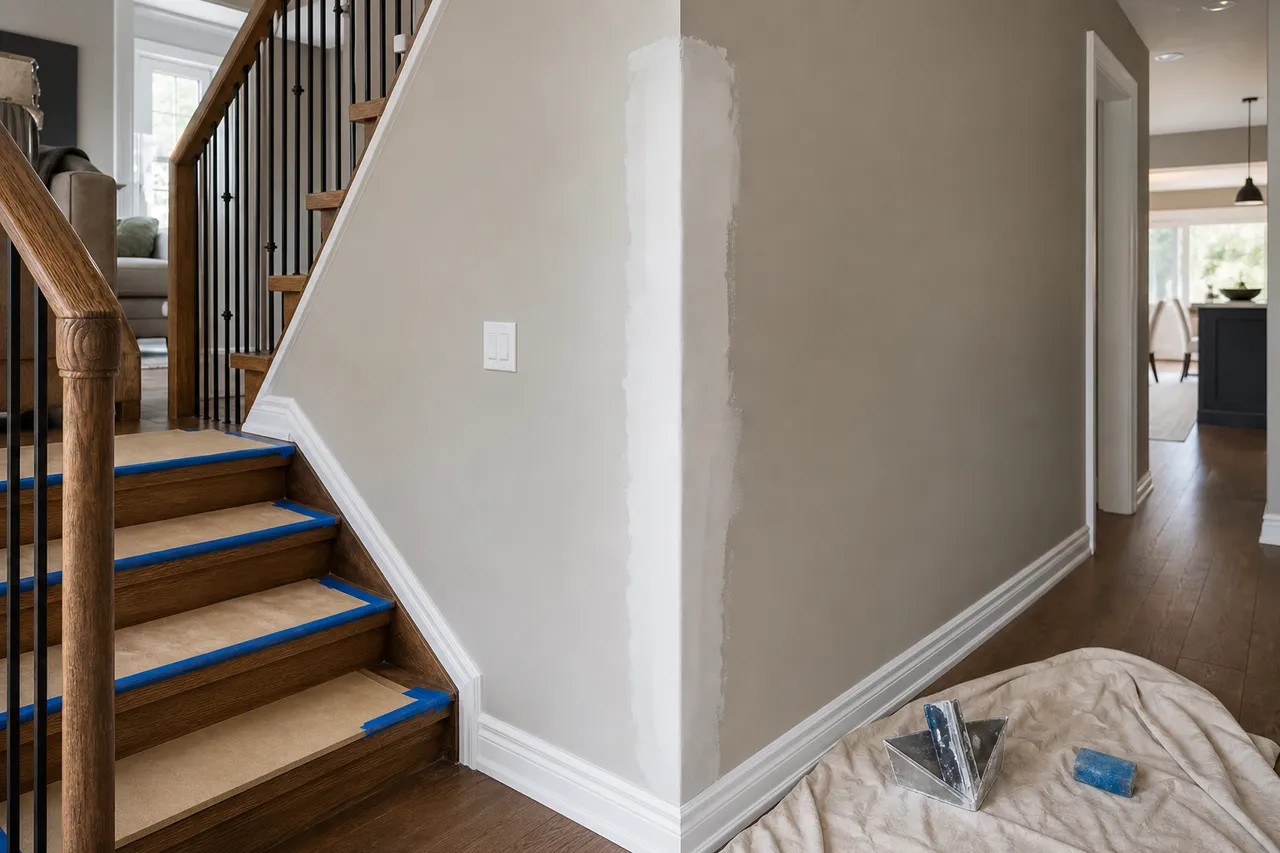
Corner bead drywall repair in Ancaster has to be planned around the way the room will look after paint, not only how the damage looks before compound. Ancaster projects often include larger family homes, finished basements, older plaster-adjacent repairs, stairwells, renovated main floors, and newer subdivision homes with settlement cracks or nail pops. EPF Pro Services treats drywall repair as a finish-quality job: protect the room, stabilize the surface, use proper backing or tape where needed, build compound in controlled coats, sand with dust control, prime correctly, and leave the wall or ceiling paint-ready.
Local context matters across Meadowlands, Old Ancaster, Clearview, Oakhill, Mohawk Meadows, Scenic Woods, and nearby west Hamilton areas. Basement access, tall foyers, stairwell damage, textured older surfaces, and multi-room repairs can change the quote even when the visible drywall damage looks small. A small dent on a low-visibility basement wall is not the same job as a ceiling stain under pot lights, a stairwell crack, a condo wall beside daylight, or a patched main-floor wall that will be painted with a low-sheen finish.
For dented outside corners, cracked edges, moving damage, and chipped hallway corners, use corner bead drywall repair in Ancaster before the damage spreads or gets painted over.
Ancaster drywall repair help
Planning a repair in Ancaster? Send photos to EPF Pro Services or review our corner bead drywall repair in Ancaster options before you repaint, list, or close the wall back up.
Quick answer
Corner bead drywall repair is needed when outside wall corners are dented, chipped, cracked, loose, or visibly rounded from impact. Small chips can often be rebuilt. Loose or crushed bead may need fastening, partial replacement, or full replacement before compound, sanding, primer, and paint-ready finishing.
Common corner bead damage
Dented outside corners
Outside corners take impact from furniture, vacuums, baby gates, moving boxes, laundry baskets, and daily traffic. A dent may look minor, but if the bead is bent underneath, compound alone can crack again. The repair starts by checking whether the bead is stable.
Chipped corner edges
Chipped edges are common in hallways, bedrooms, stairwells, and near door frames. The loose material should be removed so the new compound bonds to a firm edge. The repair then needs to be shaped cleanly so the corner does not become lumpy or rounded.
Cracked corner bead
Cracking along an outside corner can mean movement, poor fastening, impact, or failed compound over the bead. If the bead moves when pressed, it should be secured or replaced before finish work. Covering a loose corner with more compound usually leads to another crack.
Hallway, stairwell, and moving damage
High-traffic areas need sharper repair work because the eye catches corner lines quickly. Stairwells are especially demanding because the corner may be seen from above and below. Moving damage should be repaired before painting or listing so the wall edges look straight again.
Metal corner bead vs paper-faced bead
Metal bead is durable but can dent, rust in moisture-prone situations, or separate if fasteners fail. Paper-faced bead can blend well but may bubble or split if poorly installed or damaged. The repair method depends on the bead type, the amount of movement, and whether the damage is cosmetic or structural to the corner finish.
When corner bead can be repaired
A corner can often be repaired when the bead is still straight and secure, the damage is shallow, and the surrounding drywall is stable. The repair may involve scraping loose compound, reshaping the corner, applying thin coats, sanding straight, priming, and repainting.
When corner bead should be replaced
Replacement is usually better when the bead is crushed, loose, badly rusted, sharply bent, or cracked along a long section. Replacing bead takes more setup, but it creates a stronger base. This is important near stairwells, busy hallways, rental turnover, or homes being prepared for sale.
How to feather compound without a bulky corner
A clean corner bead repair has to keep the edge sharp while spreading compound far enough onto both wall faces. If the compound is too narrow, the repair edge flashes. If it is too heavy, the corner looks swollen. Good sanding and light checks make the difference before primer goes on.
Primer and paint-ready finishing
Raw compound around a corner must be primed before finish paint. Corners catch hand marks and daylight, so skipped primer can leave flashing or uneven sheen. A paint-ready repair means the corner is stable, shaped, sanded, sealed where needed, and ready for the final paint plan.
What affects a Ancaster drywall repair quote
The quote depends on damage size, damage location, surface stability, access, ceiling height, number of repair areas, whether the work is on a wall or ceiling, whether previous patches need to be corrected, whether stain-block primer is needed, and whether painting is included. The same visible mark can price differently if it is beside trim, above stairs, on a ceiling, under harsh light, or inside an occupied room that needs careful protection.
Photos help make the first estimate more accurate. Send one close-up, one wider photo showing the full wall or ceiling, one photo from the doorway, and notes about the cause. Include whether the area was affected by plumbing, electrical work, moving, water, settlement, tape failure, or a previous repair. For Ancaster homes, also mention ceiling height, parking or condo access, and whether the room needs to stay usable during the repair.
EPF Pro Services prices around the full repair sequence, not only the patch size. A proper quote should account for floor protection, loose material removal, backing, tape, compound coats, drying time, sanding, primer, cleanup, and the paint plan. That keeps the scope clear before work starts and avoids surprise expectations after the repair is already sanded.
When to call EPF for corner bead drywall repair in Ancaster
Call when the repair is in a visible room, when paint quality matters, when the damage is larger than a simple nail hole, when the repair is overhead, when tape has failed, when water staining is involved, or when a previous patch still shows through paint. These are the situations where the repair method matters more than a quick coat of compound.
EPF Pro Services is a practical fit when you want dust-controlled sanding, clean protection, stable backing, proper taping, paint-ready finishing, Level 4 or Level 5 judgement, and a clear photo-based quote. We do not treat drywall repair as a cosmetic smear. The goal is a surface that can be primed and painted without pulling your eye back to the damaged spot.
Ancaster drywall repair help
Planning a repair in Ancaster? Send photos to EPF Pro Services or review our Ancaster drywall repair quote options before you repaint, list, or close the wall back up.
Related local pages and drywall terms this guide covers
For the local service overview, start with Ancaster drywall repair services. If the repair is part of broader renovation work, compare drywall installation in Ancaster and interior painting services. For scheduling, send photos through the drywall repair quote page.
Terms covered on this page include drywall repair Ancaster, drywall patching Ancaster, paint-ready drywall repair, drywall sanding, drywall primer, drywall tape repair, corner bead repair, nail pop repair, wall dent repair, ceiling drywall repair, water stain repair, and Level 4 or Level 5 finish decisions.
How EPF plans corner bead drywall repair from photos
A useful photo quote starts with context. A close-up shows the damaged material, but it does not show access, room size, lighting, ceiling height, trim, flooring, furniture, or whether the repair sits in a high-visibility area. That is why EPF Pro Services asks for both close and wide photos. The repair method may change once we see whether the damage is on a flat wall, outside corner, stairwell, ceiling, finished basement, condo wall, or main-floor feature wall.
For Ancaster homeowners, the first photo set should include the damaged spot, the whole wall or ceiling, and the room entrance. If water, plumbing, electrical, moving, shelving, or previous DIY work caused the damage, mention that history. If the room has pot lights, strong window light, dark paint, glossy paint, or a smooth ceiling, mention that too. Those details help us decide whether a simple patch is enough or whether wider feathering, primer, repainting, or board replacement should be discussed before booking.
The goal of photo review is not to replace professional judgement on site. It is to narrow the scope so the homeowner understands likely steps, timing, access needs, and finish expectations. A clear quote conversation prevents the common problem where a homeowner expects an invisible painted finish, but the priced scope only included a rough patch or unprimed compound.
Protection and dust control during drywall repair
Drywall repair can be dusty when it is unmanaged. EPF Pro Services plans protection before sanding starts. Floors, nearby furniture, trim, and traffic paths may need covering. In occupied homes, the work area should be kept organized so drywall dust does not drift through bedrooms, kitchens, basements, or condo hallways. Vacuum-assisted sanding and careful cleanup help keep the job practical for families who need the room back quickly.
Protection is especially important when the repair is near finished hardwood, stair runners, kitchen cabinets, built-ins, closets, electronics, or freshly painted surfaces. The amount of setup depends on the repair size and location. A small wall dent may need light protection. A ceiling repair, tape seam, corner bead replacement, or multi-area pre-paint repair needs more staging because compound, sanding, primer, and cleanup all touch a larger part of the room.
Dust control does not mean the work is magically dust-free. It means the process is planned: isolate what should be isolated, sand only when compound is ready, avoid overworking the surface, vacuum as work progresses, and leave the room in a condition that is ready for primer or paint. That difference matters in Ancaster homes where the repair is often happening inside finished living space, not an empty construction shell.
Finish levels, lighting, and why some patches show
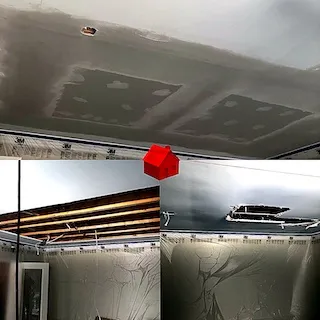
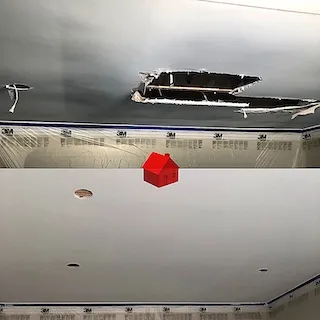
A drywall patch can be structurally sound and still look wrong after paint. The reason is usually finish quality, lighting, primer, or paint blending. Long walls, smooth ceilings, low-angle daylight, pot lights, and darker colours reveal ridges and sanding scratches. A small patch beside a window may need wider feathering than a larger patch in a closet because light decides what the eye sees.
Level 4 and Level 5 language can be useful, but homeowners do not need to memorize trade terms to make a good decision. The practical question is this: how visible is the surface, and how smooth does it need to look after paint? A standard repair may be right for a laundry room or low-visibility wall. A smoother finish may be needed for ceilings, feature walls, open-concept rooms, and areas under critical light.
Primer is part of finish quality. Raw compound is more porous than painted drywall, so paint can dry differently over the repair. That creates flashing, dull spots, or a visible halo. A paint-ready drywall repair should make primer needs clear. Sometimes the painter or homeowner handles primer and paint after EPF completes the repair. Other times the repair and painting should be planned together so the final wall or ceiling blends properly.
Common mistakes to avoid with corner bead drywall repair
The first mistake is rushing dry time. Compound that is coated too quickly can shrink, crack, or sand poorly. The second mistake is patching too narrowly. A small visible defect may need a wider repair so the edge disappears gradually. The third mistake is painting raw compound without primer. The fourth mistake is assuming touch-up paint will blend when the existing paint is older, faded, or a different sheen.
Another common mistake is ignoring the cause. A water stain should not be patched until the source is stopped and the drywall condition is understood. A recurring crack should not be treated like a one-time scratch. Loose corner bead should not be buried under compound. Bubbling tape should not be painted flat and called repaired. The visible mark is only the starting point.
DIY repairs can be reasonable for very small nail holes or low-visibility marks. Professional repair becomes more valuable when the surface is visible, the damage has returned before, the repair is overhead, the area needs a sharp corner, the wall will be repainted, or the homeowner is preparing for photos, buyers, tenants, or a renovation handoff.
How to prepare your Ancaster home before the repair
Before the crew arrives, clear small items away from the damaged wall or ceiling where practical. Move fragile decor, loose furniture, and anything that blocks access. If the repair is in a condo, confirm elevator, parking, loading, and quiet-hour requirements. If the repair is in a basement, stairwell, or tight hallway, note any access limits in advance so protection can be planned properly.
If the damage came from a leak, confirm the leak has stopped. If you suspect mold, repeated moisture, contaminated water, or a musty smell, contact the proper remediation or inspection professional before cosmetic drywall repair. EPF Pro Services does not make mold remediation or medical claims. Drywall finishing should happen after the underlying concern has been addressed and the area is ready to rebuild.
For painting, decide whether you want EPF to leave the surface paint-ready only or whether you also need repaint planning. Paint-ready means the drywall repair is stable, sanded, and ready for primer or paint. It does not guarantee that old paint will match a new touch-up. That distinction protects the homeowner from disappointment and keeps the quote honest.
What a clean handoff should include
At the end of a professional drywall repair, the homeowner should understand what was repaired, what still needs primer or paint, and whether a touch-up or full wall repaint is the better finish choice. The surface should be stable, sanded, and free of obvious ridges. The work area should be cleaned enough that the next step is practical, whether that next step is primer, painting, listing photos, or moving furniture back.
A clean handoff also means the quote matched the scope. If the job changed because damaged drywall was soft, tape was loose, corner bead moved, or a previous patch failed under paint, that should be explained. Homeowners deserve a repair that solves the actual condition, not only the part visible in the first photo.
Ancaster drywall repair help
Planning a repair in Ancaster? Send photos to EPF Pro Services or review our Ancaster drywall repair services options before you repaint, list, or close the wall back up.
Related local pages
drywall repair services — Main drywall repair service page for Ancaster homeowners needing holes, cracks, stains, tape repairs, and paint-ready patching.
Ancaster drywall contractor — Broader drywall contractor support for mixed repair, installation, finishing, and renovation scopes.
interior painting services — Useful when the repaired wall or ceiling needs repainting after compound, sanding, primer, or stain blocking.
Ancaster drywall repair quote — Send photos, room details, ceiling height, and timing for a clear written quote.
FAQ
Can dented corner bead be repaired in Ancaster?
Yes if the bead is still secure and mostly straight. Loose, crushed, or long damaged sections may need partial or full replacement.
Why do outside drywall corners crack again?
Corners crack again when the bead is loose, bent, poorly fastened, or covered with compound without stabilizing the base.
Does corner bead repair need painting?
Usually yes. The compound should be primed and the repaired corner painted. A full wall repaint may blend better than a small touch-up.
Field photos
Inspiration for your project
Drywall terms this page covers
Useful terms to compare scopes, finish levels, and scheduling before you book.
- corner bead drywall repair Ancaster
- drywall repair Ancaster
- drywall patching Ancaster
- paint-ready drywall repair Ancaster
- drywall contractor Ancaster
Article Review
AuthorAlex - EPF Pro Services
Reviewed byEPF Pro Services
UpdatedJune 11, 2026
Plan your drywall scope
Get a drywall quote today
Share photos, room sizes, and timing. We reply the same day with Ancaster drywall availability and a clearer written scope.
• Clear finish-level scope and drywall sequencing
• Basements, ceilings, condos, and commercial buildouts
• Flexible scheduling for occupied homes, condos, and active sites
Quick next step
Send photos and room sizes through the main quote page, or call for a same-day reply.
Keeping the form on the main quote page helps this article stay lighter and faster.